With the beginning of the year 2026, people have started showing enthusiasm about Makar Sankranti across the country. Celebrated as the Sun enters Capricorn and the beginning of Uttarayan, this festival is not only associated with religious faith, but is also directly to nature, farming and Indian traditions. Makar Sankranti, which falls every year in the middle of January, will be celebrated this time also on 14 January.
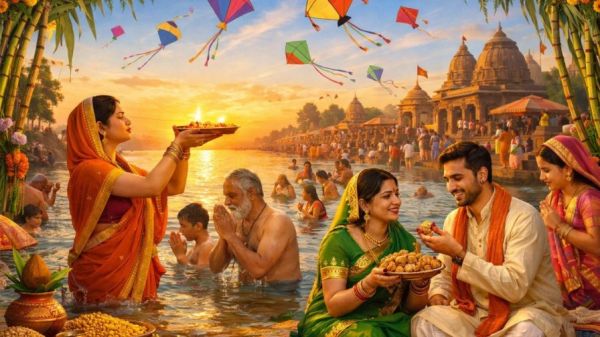
On this occasion, traditions of bathing in holy rivers, sun worship, charity and offering of sesame and jaggery are followed. In different parts of the country it is celebrated with names like Uttarayan, Pongal, Lohri and Magh Bihu. According to religious beliefs, Uttarayan period is considered auspicious and virtuous deeds done on this day yield special results. For this reason, Makar Sankranti is considered a festival of self-purification, new beginnings and social harmony, preparations for which have now intensified in the entire country.
Makar Sankranti is celebrated every year on 14 or 15 January. In the year 2026, Makar Sankranti will be celebrated on 14 January. It is one of the few Hindu festivals whose date remains fixed almost every year, as it is based on the position of the Sun and not the Moon.
According to the Vedic calendar, the festival of Makar Sankranti will be celebrated on the Ekadashi date of Krishna Paksha of Magh month. This date will start on 14th January 2026.
Makar Sankranti holy period- On January 14, 2026, it will be from 3:13 pm to 5:45 pm.
Makar Sankranti Maha Punya Kaal- On January 14, 2026, it will be from 3:13 pm to 4:58 pm.
Makar Sankranti is celebrated on the day when Sun God leaves Sagittarius and enters Capricorn. This astronomical event is called Uttarayan of the Sun. From this day, the Sun moves towards the north and the days become longer and the nights become shorter. It is considered a sign of moving from darkness to light, hence this festival is considered a symbol of positivity, energy and new beginnings.
According to Hindu beliefs, Uttarayan period is considered the day of the gods. The results of donations, chanting, penance and virtuous deeds done during this period increase manifold. Makar Sankranti is also a festival to agriculture, because at this time the new crop comes home. Farmers express gratitude to Sun God on this day and wish for prosperity.
According to the legend, on this day Sun God visits his son Shani Dev. Shani Dev is the lord of Capricorn, hence this day is considered a symbol of the union of father and son. For this reason, Makar Sankranti is also called the festival of ending mutual differences and bringing sweetness in relationships.
According to another belief, the great warrior of Mahabharata, Bhishma Pitamah, sacrificed his body on this day. He waited for Uttarayan because in this period one attains salvation by sacrificing one’s body.
On this day, there is a tradition of bathing in holy rivers, offering prayers to the Sun, donating sesame and jaggery, making khichdi, sesame laddus and dishes made from jaggery. Sesame and jaggery are considered to retain heat in the body, hence its consumption is also beneficial from health point of view.
This festival is celebrated with different names in different parts of the country. It is celebrated with great pomp as Makar Sankranti in North India, Uttarayan in Gujarat, Lohri in Punjab, Magh Bihu in Assam and Pongal in Tamil Nadu.