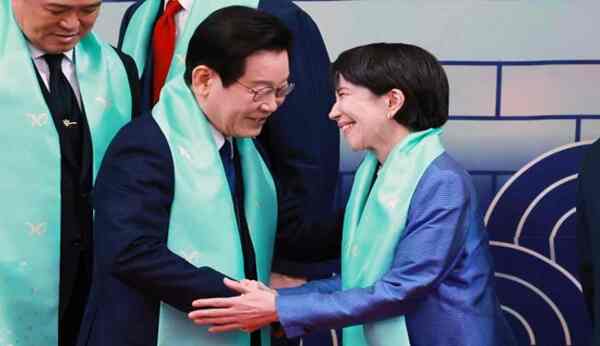
South Korea: In the midst of tensions between Tokyo and Beijing, South Korean President Lee Jae Myung came in Japan on Tuesday for summit discussions with Japanese Prime Minister Sanae Takaichi. The two leaders are anticipated to address bilateral relations as well as regional and international concerns.
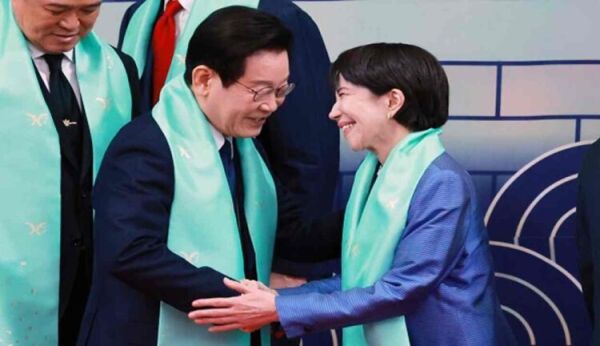
As part of reciprocal leader-level trips known as “shuttle diplomacy,” which aims to maintain the current momentum in better ties, Lee will spend two days in Takaichi’s home prefecture of Nara.
It will be Lee’s third meeting with Takaichi since she took office in October and his second journey to Japan after he visited in August to speak with Shigeru Ishiba, Takaichi’s predecessor.
In late October, Lee and Takaichi had their first summit discussions on the fringes of the Asia-Pacific Economic Cooperation conference in Gyeongju. In November, they had a short reunion at the Group of 20 leaders’ meeting in South Africa.
The meeting takes place in the midst of increased tensions between Beijing and Tokyo as a result of Takaichi’s comments on Taiwan, just days after Lee’s official visit to China for summit talks with President Xi Jinping.
Lee emphasized that South Korea’s “relations with Japan are as important as relations with China” in an interview with Japan’s NHK on Monday. He also said that Seoul would not “engage in or intervene in” their Taiwan-related problems.
The prohibition on South Korean seafood imports from eight Japanese prefectures is also anticipated to be discussed, as Tokyo has long called for Seoul to remove the 2013 restrictions due to radiation fears after the Fukushima nuclear accident in 2011.
In the interview, Lee said that it would take some time for the public’s fears to be allayed before the limits were loosened. However, he pointed out that the matter is a significant part of Seoul’s diplomatic agenda as it looks to Tokyo for assistance in its effort to join the Comprehensive and Progressive Agreement for Trans-Pacific Partnership.
Given that both presidents have shown an openness in interacting with Pyongyang, North Korea is also expected to be mentioned, according to Yonhap news agency.
Lee praised Takaichi’s declaration that he intended to discuss the abduction problem with North Korean leader Kim Jong-un, proposing to help facilitate communication between Tokyo and Pyongyang and perhaps assist the two countries in moving toward diplomatic relations.
As part of the Lee administration’s “two-track” strategy to increase future-focused cooperation while also addressing unsolved wartime history concerns from Japan’s 1910–1945 colonial control of Korea, historical issues are also anticipated to be on the agenda.
Wi Sung-lac, the national security adviser, expressed optimism that the next discussions would promote collaboration in attempts to retrieve the remains of Korean forced workers from the Chosei underwater coal mine in Yamaguchi Prefecture in western Japan, where a flood in 1942 murdered 136 Koreans.
The two leaders will visit Horyuji Temple, Japan’s first UNESCO World Heritage Site and home to the oldest surviving wooden constructions in the world, as part of their official engagements on Wednesday.
Before heading back home later in the day, Lee is also expected to meet with Korean community members in Japan.