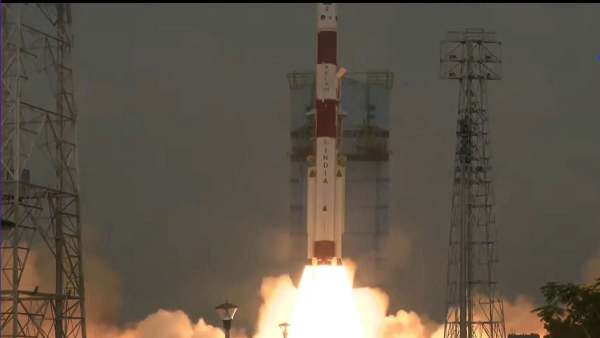
ISRO's PSLV-C62 mission failed, losing 16 satellites due to a third-stage anomaly. The mission aimed to place satellites, including EOS-N1, in orbit. ISRO chief V Narayanan confirmed a detailed analysis is underway.
In a significant blow to India's space ambitions, the Indian Space Research Organisation (ISRO) lost 16 satellites following the failure of its Polar Satellite Launch Vehicle (PSLV-C62) mission. The rocket, which lifted off from the Satish Dhawan Space Centre in Sriharikota, experienced an anomaly during the third stage of its flight, causing disturbances that deviated the vehicle from its intended path and prevented the deployment of payloads into the desired orbit. This marks a recurrence of issues in the third stage, similar to a previous PSLV failure in 2025 that also stemmed from problems in the same phase, highlighting potential vulnerabilities in ISRO's workhorse launcher.
The mission was intended to place the primary Earth observation satellite EOS-N1 and 14 co-passenger satellites into sun-synchronous orbit, along with a KID Capsule on a re-entry trajectory. ISRO chief V Narayanan addressed the anomaly, noting that performance was nominal until the end of the third stage, and assured that data analysis is underway for a detailed report.
Here are all of the details that we could gather on the 16 satellites that are now lost into space:
1. EOS-N1
This 1,696 kg Earth observation satellite served as the primary payload, designed for monitoring purposes, though specific applications were not detailed in the mission overview. It was developed by ISRO.
2. Anvesha
A classified surveillance satellite built by the Defence Research and Development Organisation (DRDO), Anvesha was equipped for advanced imaging capabilities to support defence needs.
3. CGUSAT
Developed by Hyderabad-based Dhruva Space, this satellite focused on technology demonstration, though its exact objectives remained unspecified in the mission details.
4. DSUSAT
Another technology demonstration satellite from Dhruva Space, created in collaboration with university students, with no further specifics on its intended functions.
5. MOI-1
Built jointly by Dhruva Space and Takeme2Space, both Hyderabad-based entities, MOI-1 aimed to allow users to run large artificial intelligence models directly onboard the satellite.
6. Thybolt-3
Originating from Dhruva Space, this satellite's purpose was not elaborated upon in the available information.
7. LACHIT
Also from Dhruva Space, details on LACHIT's role or applications were not provided in the mission description.
8. AyulSat
A dedicated tanker satellite developed by Chennai-based startup OrbitAid Aerospace, with its specific functions left undisclosed.
9. Sanskarsat
Constructed by students from Laxman Gyanpith in Gujarat, Sanskarsat's intended purpose was not specified.
10. Munal
This satellite came from Nepal's Antarikshya Pratishthan, developed in partnership with India's Ministry of External Affairs, though its objectives were not detailed.
11. KID Capsule
A collaborative effort between Spain and France, the KID Capsule was destined for a re-entry trajectory, with no additional information on its purpose.
12. Edusat
From Brazil-based AlltoSpace, Edusat was designed to demonstrate Internet of Things (IoT) sensors.
13. Uaisat
Another AlltoSpace creation from Brazil, Uaisat focused on collecting agricultural data.
14. Galaxy Explorer
Developed by AlltoSpace in Brazil, this satellite aimed to measure radiation levels and interface with IoT sensors.
15. Orbital Temple
From Brazil's AlltoSpace, Orbital Temple was intended to receive ground-based antenna communications.
16. Aldebaran-1
The final AlltoSpace satellite from Brazil, Aldebaran-1 was meant to assist in rescuing fishing vessels in distress along the Maranhao coast.