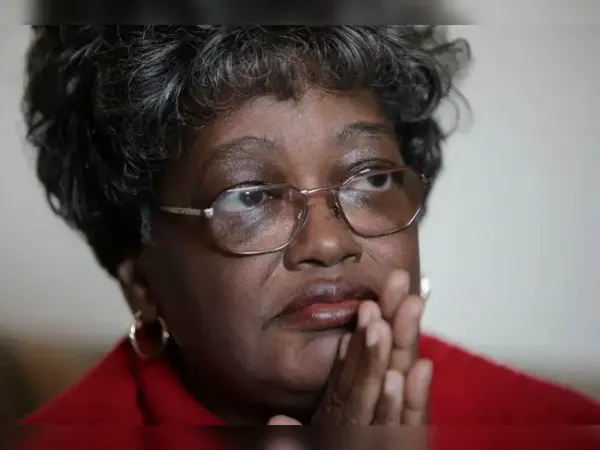
Claudette Colvin, a civil rights pioneer whose refusal to obey segregation laws on a Montgomery bus helped lay the groundwork for the modern Civil Rights Movement, died at the age of 86 on January 13, 2026. Claudette Colvin’s death was confirmed by the Claudette Colvin Foundation, which did not disclose a cause.
Colvin was just 15 years old when she challenged Alabama’s bus segregation laws on March 2, 1955, nine months before Rosa Parks’ more widely known act of defiance. A high school student in Montgomery, she refused to give up her seat to a white passenger on a city bus, despite being ordered twice by police to move.
According to The Montgomery Advertiser, Colvin was seated near the back of the bus when a white woman boarded and the driver demanded that Black passengers make room. While three other students complied, Colvin remained seated. She later said she believed she was not breaking even the segregation law and felt compelled by history to stay where she was.
Police officers forcibly removed her from the bus, handcuffed her, and arrested her. As reported by KRIS 6 News and WSFA, Colvin was charged with violating segregation ordinances, disorderly conduct, and assaulting an officer. Following her arrest, she was made a ward of the state and placed on indefinite probation.
Though her case did not immediately spark a boycott, Colvin went on to play a critical role in dismantling segregation. She was one of four Black women plaintiffs in Browder v. Gayle, the landmark lawsuit that successfully challenged segregated bus seating in Montgomery. The case, argued by civil rights attorney Fred D. Gray, led to a 1956 Supreme Court decision that ended bus segregation and influenced desegregation across public transportation in the United States.
The Claudette Colvin Foundation described her as a “beloved mother, grandmother, and civil rights pioneer,” noting that while she became a figure of history, to her family she was remembered for her faith, resilience, sharp wit, and unwavering belief in justice and human dignity. Memorial arrangements will be announced later by the foundation.
Colvin was just 15 years old when she challenged Alabama’s bus segregation laws on March 2, 1955, nine months before Rosa Parks’ more widely known act of defiance. A high school student in Montgomery, she refused to give up her seat to a white passenger on a city bus, despite being ordered twice by police to move.
What happened on March 2, 1955?
According to The Montgomery Advertiser, Colvin was seated near the back of the bus when a white woman boarded and the driver demanded that Black passengers make room. While three other students complied, Colvin remained seated. She later said she believed she was not breaking even the segregation law and felt compelled by history to stay where she was.
Police officers forcibly removed her from the bus, handcuffed her, and arrested her. As reported by KRIS 6 News and WSFA, Colvin was charged with violating segregation ordinances, disorderly conduct, and assaulting an officer. Following her arrest, she was made a ward of the state and placed on indefinite probation.
How did Claudette Colvin help end bus segregation?
Though her case did not immediately spark a boycott, Colvin went on to play a critical role in dismantling segregation. She was one of four Black women plaintiffs in Browder v. Gayle, the landmark lawsuit that successfully challenged segregated bus seating in Montgomery. The case, argued by civil rights attorney Fred D. Gray, led to a 1956 Supreme Court decision that ended bus segregation and influenced desegregation across public transportation in the United States.
The Claudette Colvin Foundation described her as a “beloved mother, grandmother, and civil rights pioneer,” noting that while she became a figure of history, to her family she was remembered for her faith, resilience, sharp wit, and unwavering belief in justice and human dignity. Memorial arrangements will be announced later by the foundation.