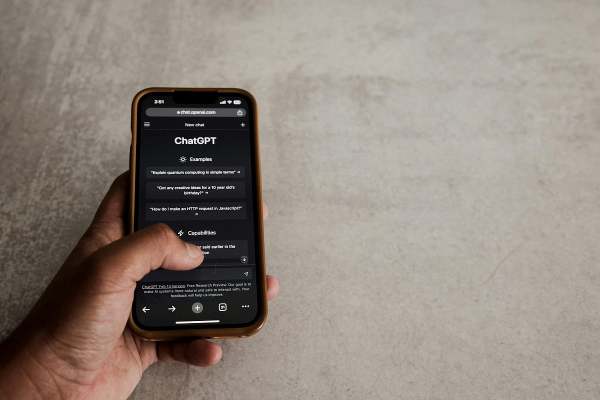
Apple and Google announced a multi-year deal to integrate Gemini AI models into Siri, replacing ChatGPT. This decision follows Apple's internal AI struggles and aims to enhance Siri's reliability, positioning Google as a key partner.
Apple and Google made a big announcement yesterday. The two entered a multi-year deal wherein Gemini AI models will be powering Siri and Apple's Foundation Models moving forward. This inevitably means that ChatGPT, which was the AI model that was tapped for certain queries on the iPhone, would now be redundant. While Apple maintains that nothing is changing with its existing OpenAI arrangement, a joint statement with Google reveals that the actual brain behind Siri will be Gemini.
This is a big decision. One that Apple hasn't taken overnight. After making big promises in 2024, and announcing delays in 2025, it is without a doubt, a well thought out decision.
In any case, the Apple Google partnership positions the ChatGPT maker as the unequivocal biggest loser. As Apple prioritises 'quality' and reliability, the decision reflects Google's growing dominance while highlighting OpenAI's vulnerabilities in scaling consumer-grade AI.
Apple's struggles with internal AI development
Apple's journey into advanced AI began with bold promises at WWDC 2024, where it unveiled a hybrid architecture for a revamped Siri capable of understanding personal context and executing cross-app actions. However, internal challenges quickly mounted. Software chief Craig Federighi candidly admitted that the hybrid approach 'wasn't going to get us to Apple quality,' citing unreliability as a core issue. By March 2025, Apple delayed the Siri upgrade, acknowledging it would take longer to perfect.
Leadership shake-ups further compounded the woes. AI chief John Giannandrea was removed from Siri development, with responsibilities shifting to Federighi and Mike Rockwell. A talent drain from Apple's Foundation Models team exacerbated the problems. Chief architect Ruoming Pang moved to Meta, joined by others frustrated by the pivot to external tech and lured by better compensation. Ultimately, Apple concluded its in-house models 'don't work reliably enough to be an Apple product,' forcing the company to seek external partners after a year-long evaluation process involving prototypes like 'Linwood' (internal models) and 'Glenwood' (external tech).
Why ChatGPT got benched: OpenAI's reliability woes
Despite an existing integration allowing Siri users to tap ChatGPT for complex queries, promoted heavily in iOS 26 and marketing campaigns, Apple sidelined OpenAI for the core Siri revamp. The turning point came during evaluations last summer, where OpenAI competed alongside Anthropic and Google but fell short.
OpenAI's GPT-5, launched in August, disappointed with a 'colder' tone and struggles on basic queries, necessitating months of tweaks for warmth and consistency, issues Apple deemed unacceptable. CEO Sam Altman's 'code red' memo in December highlighted urgent needs for improvements in personalisation, speed, reliability, and query handling, delaying projects like advertising and AI agents. Anthropic's Claude model initially led due to strong performance and safety, but its steep pricing alienated Apple, paving the way for Google.
OpenAI, once the darling of the AI boom since ChatGPT's 2022 debut, now faces a stark setback. Boasting 800 million weekly users, the company nonetheless grapples with profitability amid staggering $100 billion annual burns and a projected need for $200 billion in revenue by 2030 to break even. Losing the Apple core deal deprives OpenAI of crucial scale and revenue from consumer integrations. Google bagging the Apple deal erodes OpenAI's perceived dominance in the market as well.
In a joint statement, Apple and Google noted that "after careful evaluation, Apple determined that Google's AI technology provides the most capable foundation." While the OpenAI deal persists for niche queries, Gemini now anchors Apple Intelligence, effectively diminishing ChatGPT's prominence.
Google-Apple pact: Gemini takes center stage
The multi-year agreement, announced recently, will see Google's Gemini power the next-gen Siri and Apple Intelligence features starting with iOS 26.4 in spring 2026 (likely March or April). This integration enables advanced capabilities, such as Siri locating a podcast from old texts or emails, all while upholding Apple's privacy standards through on-device processing and Private Cloud Compute servers.
Google customised a Gemini model over the summer to run on Apple's infrastructure, leveraging its cloud prowess and experience from deals like powering Samsung's AI. Though financial details are undisclosed, estimates peg Apple's annual payment at around $1 billion, akin to Google's $20 billion deal for Safari's default search engine.