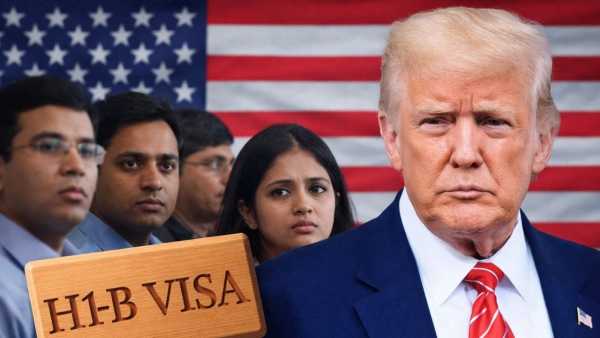
US President Donald Trump has currently imposed a tariff of 50 percent on India, due to which there are already problems regarding trade. But, Trump's decision on H-1B visa has put people in more trouble, signs of which are now visible. Due to delay in visa stamping, H-1B visa holders stuck in India may have to face problems like loss of job, reduction in salary and paying taxes in India.
Many Indians working in America under H-1B visa, who came to India for visa renewal, are now stuck here. The reason for this is that the Trump administration has started strict scrutiny of the social media activity of visa applicants, due to which the stamping process has slowed down. According to immigration experts, the jobs of many people are in danger due to the interviews being postponed to March, April or even beyond.
This risk is especially high for those professionals who work in startups or small companies. Apart from this, concern regarding tax has also increased, because people who are living in India for a long time may have to pay Indian income tax. Whether they are non-resident or tax resident.
According to the Economic Times report, many American companies, whose employees are stuck in India, are taking advice from immigration experts and lawyers to understand the tax and legal rules. Some companies are even directly contacting the US Embassy and Consulate to get early visa appointments for their employees.
Parizad Sirwala, partner and national head of Tax Global Mobility Services at KPMG, said that if for some reason employees of American companies are forced to spend more time in India, then it can have tax implications not only on the employees but also on the American companies, which needs to be examined carefully.
Ankita Singh, founder of law firm Sarvank Associates, said that if an H-1B visa holder stays in India for 182 days or more in a financial year, then he will be considered a resident of India for tax purposes. Some American companies are allowing such employees to do limited remote work from India or are temporarily deploying them in their subsidiaries based in India.
Experts say that companies will also have to see whether the foreign employer is liable to pay any corporate tax in India due to the work done by the employees while staying in India. According to Singh, US companies are more cautious about tax and legal risks than immigration rules while allowing remote work from India. Meanwhile, Tanmay Banthia, Partner, Tarax Lawyers & Consultants, said that during the delay in visa stamping, the issue of remote work from India is being handled through temporary and precautionary measures rather than any clear law.
Due to the delay in visa for months, some employers have come forward to help the employees and are trying to get appointments from the embassy quickly. However, many big companies are setting limits on the work they can do from India. Apart from this, Singh of Sarvank Associates said that in such cases, families also get divided, somewhere the husband or wife or children stay in America, and somewhere the main earning member of the family is stuck in India. He told that many people keep paying house rent, car installment and electricity and water bills to run their life in America, while during this time they either do not get salary or are getting less salary.