Spanish satellite survives ISRO's PSLV-C62 mission failure, sends back data
13 Jan 2026
In a surprising turn of events, the Kestrel Initial Demonstrator (KID) capsule from Spanish start-up Orbital Paradigm has survived the failure of ISRO's latest PSLV-C62 mission.
The company announced that their satellite managed to separate from the rocket's fourth stage and transmit critical data back to Earth despite extreme re-entry conditions.
The 25kg prototype separated "against all odds" yesterday, after being launched as a co-passenger with EOS-N1 (Anvesha), a DRDO strategic imaging satellite and multiple other payloads.
KID capsule withstands extreme re-entry conditions
Resilience
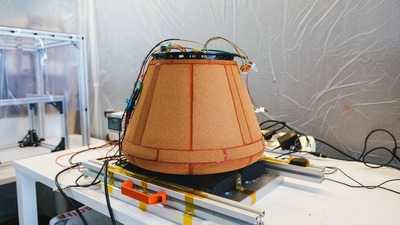
The KID capsule, which is about the size of a football, was designed for re-entry testing toward a splashdown in the South Pacific Ocean.
It survived peak deceleration forces and thermal stresses that could have destroyed most experimental hardware.
Orbital Paradigm announced on X that their KID capsule "separated from PSLV C62, switched on, and transmitted data over 3+ minutes."
They are now reconstructing its trajectory after surviving peak heat and g-load (~28g recorded).
PSLV-C62 mission failure and its implications
Mission setback
ISRO's PSLV-C62, the agency's first launch of 2026 from Satish Dhawan Space Centre, took off at 10:17am IST with EOS-N1 (Anvesha) and 15 co-passengers.
However, tragedy struck during the PS3 stage's final burn, preventing an orbital insertion and losing almost all satellites onboard.
ISRO Chairman Dr. V Narayanan confirmed a "deviation" in the third stage but no official failure has been declared yet.
KID's success marks milestone for private space ventures
Achievement
The survival of the KID capsule is a major achievement for private space ventures. Developed with French partner RIDE, it validates Orbital Paradigm's reusable re-entry technology, which is vital for future satellite servicing as well as de-orbiting.