If the internet is anything to go by, it might seem like you're helping the environment by skipping words like "please" and "thank you" when asking questions to ChatGPT. The argument goes that the more words, the more processing and energy consumption. OpenAI chief Sam Altman himself has admitted that this cost increases at the scale of billions of questions. But the truth is, it would be an exaggeration to say that just polite words have a significant environmental impact. The energy consumption of a few extra words is insignificant compared to the massive data centers that power systems like ChatGPT. Nevertheless, this thinking does highlight one important point: people are beginning to understand that AI isn't magic that happens out of thin air. Rather, it requires real machines, electricity, and resources, which have a real impact on the world.
Data Centers and Infrastructure Are Real Costs
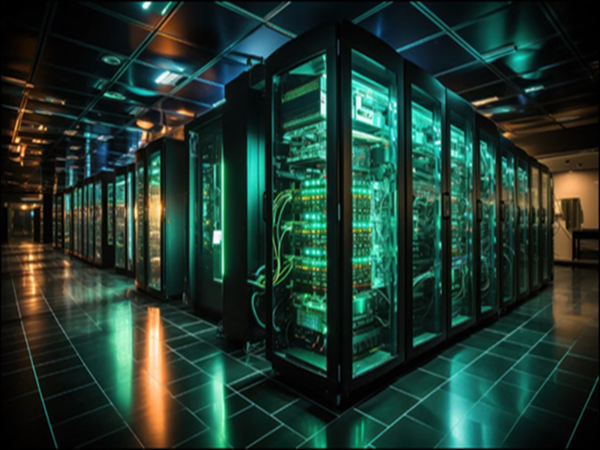
Artificial Intelligence (AI) requires large data centers to run. These systems are equipped with very powerful computers that consume a lot of electricity. Keeping these machines cool requires constant cooling, which consumes both water and energy. This is why AI is directly linked to resources like electricity, water, and land. As the use of AI increases, so too does its environmental impact. Therefore, the real issue isn't how we word AI questions, but how often and how extensively we use these systems.
Why does every AI question have an 'energy cost'?
There's a crucial difference between AI and our everyday digital services, such as video streaming, that's important to understand. In traditional software, when you open a document or watch a video, the system mostly displays pre-existing data. It doesn't do much new processing, so it consumes less energy. This isn't the case with AI models. When you ask AI a question, it generates a new answer for you every time. This is technically called 'interference.' This means that AI has to perform the entire calculation again for every question, which consumes new energy each time. This is why AI is different from normal software. It functions like a large infrastructure. The more it is used, the more energy it requires.
Not Just Electricity, Water Is Also an Issue
The International Energy Agency has warned that data center power consumption could double by the end of this decade. But the issue isn't limited to just electricity.
Water: Data centers use a lot of water to cool their servers.
Resources: Building and operating them also require land and various other materials.
Although AI services are used worldwide, their impact is most visible at the local level. They put additional pressure on the electricity and water supplies of the data centers.
Why does this myth matter?
Consider countries like New Zealand, where most of their electricity is generated from renewable energy. Despite this, when new data centers are built, they put pressure on the local power grid. The reason is simple: the electricity used to run servers is not available for other purposes. Therefore, instead of considering AI merely a digital convenience, we should view it as a physical system that requires real power and resources.
The idea of not saying "please" or "thank you" when talking to ChatGPT may not have much scientific impact, but it is certainly a signal. It shows that people are beginning to understand that AI also has an impact on the environment. This thinking needs to be taken seriously so that we can determine how to best integrate AI infrastructure with our energy plans and society. There's no need to dismiss AI, as it is proving to be very beneficial in areas like research and healthcare. But like any other industry, it also has its advantages and disadvantages. If we consider AI only as 'invisible software', we will not be able to understand its true value and impact.
Disclaimer: This content has been sourced and edited from Amar Ujala. While we have made modifications for clarity and presentation, the original content belongs to its respective authors and website. We do not claim ownership of the content.