Uttar Pradesh: The Indian judicial system is steadily moving toward modernization, and Uttar Pradesh has taken a significant step in this direction with the foundation stone laying of a major Integrated Court Complex in Chandauli. This landmark initiative reflects a broader vision to strengthen access to justice through improved infrastructure, better facilities, and a more dignified working environment for judges, lawyers, and litigants. The project also symbolizes strong coordination between the judiciary and the state government to support democratic values and efficient governance.
During a two-day visit to Uttar Pradesh, Justice Surya Kant arrived in Chandauli and formally laid the foundation stone for an Integrated Court Complex with an estimated cost of around 1500 crore rupees. He was warmly received by Yogi Adityanath. The ceremony was attended by several distinguished members of the judiciary, including Supreme Court Justices and senior judges from the Allahabad High Court, making the occasion highly significant for the state’s legal history.
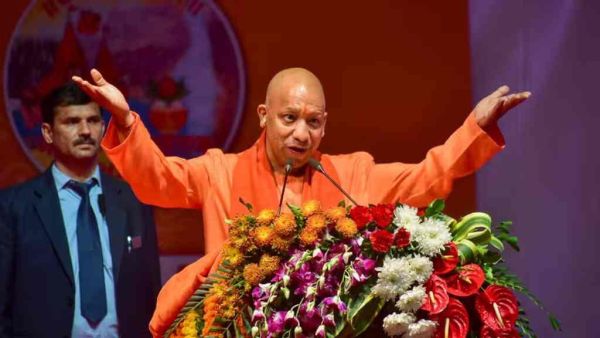
Speaking at the event, the Chief Minister emphasized that the new complex would provide all essential amenities required for efficient judicial functioning. These include adequate parking, modern courtrooms, administrative offices, and a well-equipped canteen. One of the most important aspects of the project is the focus on improving conditions for advocates, who for years have worked in overcrowded and poorly maintained chambers. The proposed high-rise structure will offer organized, safe, and professional spaces, ensuring dignity and comfort for legal professionals.
The initiative is not limited to Chandauli alone. The state government has announced that similar facilities are being developed simultaneously in six districts: Chandauli, Mahoba, Amethi, Shamli, Hathras, and Auraiya. These districts have been selected as part of a pilot phase aimed at testing and refining the integrated court model. According to the Chief Minister, work in four additional districts will also be completed in the coming months, further expanding the reach of modern judicial infrastructure across Uttar Pradesh.
The Chief Minister highlighted that a strong and independent judiciary is the backbone of a healthy democracy. Easy and timely access to justice depends not only on laws and judges but also on the physical infrastructure that supports judicial work. Modern court complexes help reduce delays, improve coordination, and create a citizen-friendly environment. He expressed confidence that this initiative would be remembered as a golden chapter in India’s judicial journey.
Reiterating the government’s dedication, the Chief Minister stated that whenever responsibilities related to the judicial system are entrusted to the state, they are fulfilled without unnecessary delay. He made it clear that there is no shortage of financial resources for such projects. According to him, the only essential requirement is strong willpower and dedicated execution. The government remains fully committed to strengthening judicial institutions as part of its broader goal of good governance.
In addition to the six pilot districts, the state plans to develop similar integrated court complexes in other important cities of Uttar Pradesh, including Prayagraj and Varanasi. Senior members of the Supreme Court also acknowledged the importance of these cities, especially Varanasi, due to its cultural, historical, and administrative significance. These future projects aim to create a uniform standard of judicial infrastructure throughout the state.
While discussing law and order, the Chief Minister assured that every district in the state should eventually have such modern judicial complexes. He acknowledged the long-standing demands raised by judicial officers and advocates, particularly in Chandauli, where the legal community had repeatedly highlighted infrastructure issues. The state government, in collaboration with the High Court, is now working to fast-track remaining requirements through dialogue and cooperation rather than confrontation.
The Chief Minister also recalled earlier discussions with the Chief Justice, where the idea of integrated, single-roof judicial models was emphasized to ensure universal access to justice. He connected this vision with national reforms introduced after 2014, aimed at improving ease of living and ease of doing business. Significant investments in infrastructure across the country have laid the foundation for such projects, and the integrated court complex is a continuation of that larger reform-driven approach.
Addressing the gathering, the Chief Justice praised Chandauli for its cultural and religious heritage. He described the new court complex as a “judicial temple,” acknowledging the efforts of the Uttar Pradesh government in creating an institution dedicated to justice, fairness, and constitutional values. His remarks reinforced the symbolic importance of the project beyond its physical structure.
The foundation stone laying of the Integrated Court Complex in Chandauli marks a transformative moment for Uttar Pradesh’s judicial system. It demonstrates a shared commitment by the judiciary and the executive to modernize institutions, empower legal professionals, and make justice more accessible to citizens. With continued cooperation and determined execution, such initiatives have the potential to redefine the future of judicial administration in India.