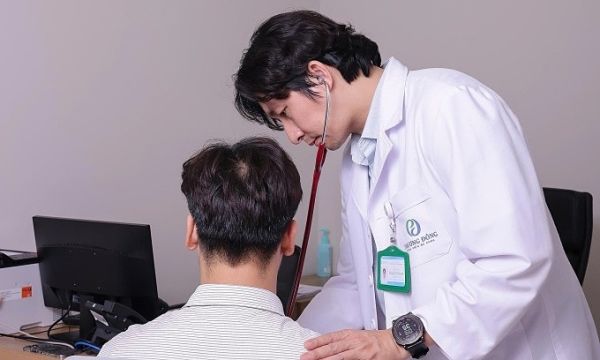
“The patient is the family’s breadwinner and is now completely immobile,” the deputy director of the International Cardiovascular and Stroke Center at Phuong Dong General Hospital said.
He was struggling to find an appropriate treatment regimen that would prevent complications, he said. The man was admitted with an ischemic stroke and remained immobile with an uncertain prognosis.
He had regularly relied on cigarettes and energy drinks to cope with overnight long-haul trips and financial pressure. “Some nights he would finish an entire case of soft drinks and smoke several packs of cigarettes just to make it until morning,” a family member said.
The man’s final social media post before slipping into a coma said he was feeling “exhausted, short of breath and chest tightness” and that he was “risking my life to make money but seeing none of it.” His family is now saddled with enormous medical costs and financial instability after losing its sole source of income.
According to Manh, “SOS signals” are not a medical term but refer to the early warning signs the body sends when it is under excessive strain, which, in this case, had been persistent fatigue, shortness of breath and chest tightness. “He was risking his life to earn a living by using cigarettes and energy drinks as temporary painkillers to suppress those signals.”
|
Dr. Manh treats his patient at Phuong Dong General Hospital, Hanoi. Photo courtesy of Dr. Manh |
At another emergency room in Hanoi, a 30-year-old man with no previous health problems was admitted with acute myocardial infarction. He worked as an office employee and had risk factors similar to the driver, including being overweight, high sugar consumption, lack of exercise, and prolonged stress.
Medical experts said an imbalanced lifestyle can gradually lead to stroke in young people without obvious warning signs.
A stroke occurs when blood supply to the brain is suddenly cut off or a cerebral blood vessel ruptures. Experts said chronic stress, sleep deprivation, physical inactivity, unhealthy diets, and alcohol use progressively damage the cardiovascular system. When warning signs are ignored for too long, blood flow can be completely obstructed or vessels can rupture, triggering a stroke and severely damaging overall health.
The World Health Organization reports that people under 45 account for 10-15% of stroke cases worldwide, a proportion that is rising in Vietnam.
Ignoring SOS signals from the body can result in high treatment costs, long-term disability, loss of working capacity, and even death. When a young breadwinner collapses, their family is pushed into financial hardship and long-lasting psychological distress.
Dr. Hoang Tien Trong Nghia, head of neurology at Military Hospital 175 in HCMC, said mounting work pressure toward the end of the year often coincides with stronger SOS signals that are easily overlooked.
He advised people to pay attention to early symptoms such as unusual headaches, shortness of breath and irregular heartbeats and seek medical attention early.
Resting, exercising and having regular health checkups are effective ways to address risk factors such as high cholesterol and hypertension, he said.
Strokes are becoming increasingly common among younger people. Those at high risk include people over 50, people with a prior stroke, a family history of stroke, especially early-onset cases under 40, hypertension, congenital or coronary heart disease, atrial fibrillation, diabetes, and people who smoke, drink alcohol, have unhealthy diets, are physically inactive, or are obese.
SOS signs of stroke can appear just minutes before onset or several hours in advance. Some people may fall into a coma after going to bed feeling normal, or wake up with weakness or paralysis on one side of the body.
Stroke signs can be identified using the F.A.S.T. method. F is for Face: check for facial drooping or asymmetry. A is for Arm: see if one arm is weak or numb. S is for Speech: notice slurred or unclear speech. T is for Time: call emergency services immediately if any symptom appears.
Nghia said: “Do not risk your life to earn money, only to spend it all trying to buy back your health in a hospital bed. Value and respond to the SOS signals from your body today.”