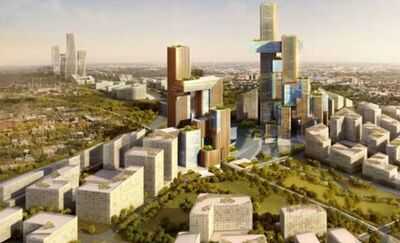
Across Africa, several ambitious new developments have been announced over the years, but few captured attention quite like a plan to build a brand-new smart city on the edge of Johannesburg in South Africa. It was marketed as a futuristic hub that would rival the most glamorous cities and transform thousands of hectares of unused land. Developers even promised it would become the "New York of Africa". But more than a decade later, the reality on the ground looks very different.
The project was first unveiled in 2014 by Chinese real estate group Zendai Developments. At the time, the company announced that it would invest roughly $8 billion (around £4.2 billion today) to turn a 1,600-hectare site in Modderfontein into a modern city packed with homes, offices and high-tech infrastructure. The intention was to build nine separate zones, including a new central business district, entertainment areas, residential neighbourhoods and several education and healthcare centres.
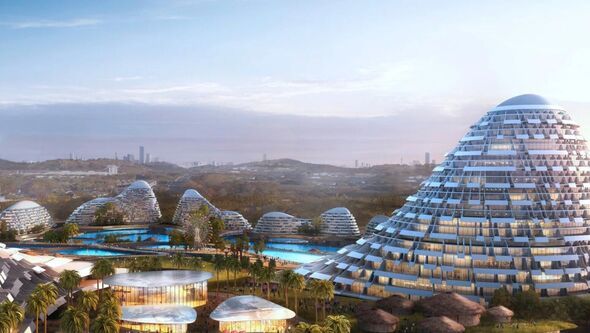
According to the plans, the new city would eventually house around 30,000 families and create up to 200,000 permanent jobs.
Zendai said the scale of the project would reshape the region and take advantage of Modderfontein's location on the Gautrain route between OR Tambo International Airport and central Johannesburg.
When the project was announced, Zendai's chief operating officer Du Wendui said it would "become the future capital for the whole of Africa".
The vision depended heavily on advanced technology. Zendai signed an agreement with PCCW Global, a Hong Kong-based telecoms firm, to provide cloud computing, e-commerce services and integrated IT systems.
The idea was to build a smart city with the latest telecommunications networks, modern transport links and new commercial districts connected through digital services.

Construction was expected to run for 15 years, with completion originally targeted for 2030.
Early work began after the sale of the land, which had previously housed an explosives factory owned by AECI.
The site had long been earmarked for redevelopment, and the launch of the Gautrain made it more attractive to businesses and future homeowners.
But progress quickly stalled. Zendai and its chairman, Dai Zhikang, were unable to secure enough funding to build essential infrastructure on such a large site.
The company looked for outside partners and investors, but interest was limited.
The situation changed further in 2015 when Zhikang sold his shares in Shanghai Zendai Property to China Orient Asset Management Company (COAMC). That deal made COAMC the controlling shareholder of the Modderfontein project.
COAMC had little appetite for a mega-development of this size and soon began selling off the land.
By 2016, a 17% stake had been sold to Chinese firm Fuxing, and the remaining 83% was purchased by South African developer M&T Development.
The Competition Tribunal approved the sale in 2017 for a reported R1.8 billion (£80 billion).
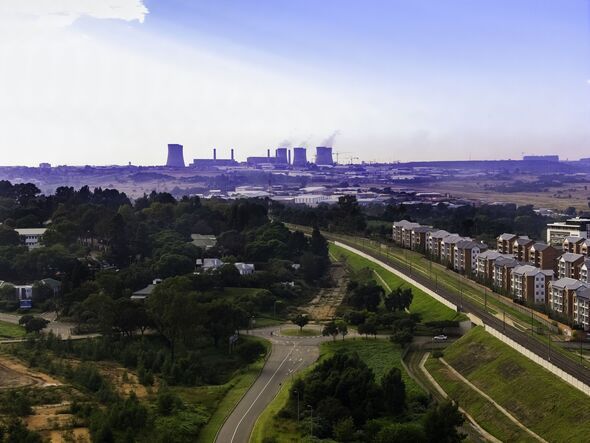
Today, Modderfontein looks nothing like the city once promised, but it is far from abandoned.
The new owners have invested heavily in roads, residential estates, office parks, schools and shopping centres.
While these projects are nowhere near the original skyscraper-filled masterplan, they show steady growth and renewed confidence in the area.
The region also now has upgraded transport routes, new security estates and plenty of ongoing construction.