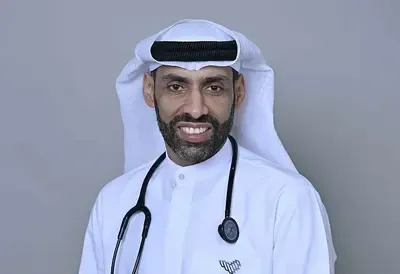
A UAE hospital is making early cancer detection easier and more accessible with a simple blood test that can spot more than 70 types of cancer — even before symptoms appear.
The non-invasive test, Trucheck™ intelli, offers citizens and residents a chance to catch the disease early, when treatment is most effective, and could transform preventive healthcare in the country.
This has been introduced by Burjeel Hospitals and is designed for asymptomatic individuals, especially those over 40. Notably, it requires no fasting or preparation and delivers rapid results.
Stay up to date with the latest news. Follow KT on WhatsApp Channels.
For Prof. Humaid Al Shamsi, CEO of Burjeel Cancer Institute and Adjunct Professor at Harvard Medical School, the launch addresses a long-standing gap in cancer screening.
In an exclusive interview with Khaleej Times, he emphasised that earlier research shows public hesitation continues to be a significant obstacle.
“We conducted a study on more than 1,000 members of society a few years ago, and we found that almost 60 per cent were not very keen on early detection and screening. The reasons included the fear of the information — they do not want to know — and fear of the colonoscopy or mammogram processes."
A simple blood test that screens for over 70 cancersThe simplicity of Trucheck, he explained, is meant to overcome these fears.
“This method is very simple. It’s a simple blood test, where you can pick up a blood sample without fasting, without preparation. It can discover up to 70 different types of cancer." He added that unlike a mammogram or colonoscopy When we do a mammogram, we only try to find out about breast cancer. When we do a colonoscopy, we are only trying to find out if there is colon cancer.”
Unlike traditional screening methods that target one cancer at a time, the new test screens for multiple cancers — including pancreatic, gastric and brain cancers — many of which currently have no routine screening options.
“There are many cancers — pancreatic cancer, gastric cancer, brain cancer — for which there is no (routine) screening.
And as a physician, I face many patients, and the most common question is, ‘Doctor, how come I have stage four pancreatic cancer?’"
"In fact, even this week, I had a patient in her mid-forties who said, ‘Doctor, how come I have stage four pancreatic cancer and I have no symptoms?’
The reality is, cancer is silent.”
That silence, he said, is what makes early blood-based detection so critical.
“That’s why you need to do a test that can pick up many cancers through the blood. It can be very effective. It will increase diagnosis of cancer early, so we can cure more patients.”
While the test detects more than 70 cancers, Prof. Alshamsi clarified that it does not screen for blood cancers such as leukemia and lymphoma.
“It does not detect blood cancers such as leukemia and lymphoma, because they are different, with mechanisms of blood called circulating tumour cells."
Cost and accessibility were also key considerations, he said, especially when compared to multiple individual screening tests, which can prove to be very expensive.
“(However) for this blood test, the cost will range between Dh7,000-8,000, and it can be done once a year. This can be very cost effective in the long term, and you’ll be testing for more (types of cancer) at reduced costs.”
In terms of reliability, Prof. Alshamsi noted the test’s high accuracy, while acknowledging the importance of patient counselling.
“The accuracy of this test is 95 to 98 per cent. The only problem is that you can get a false positive, but this chance is only one per cent. Any test in the world has a chance of false positive. We have to counsel the patient about these risks and be mindful of patients before they undergo this test.”
Why doctors say early detection after 40 can save livesHe also pointed out that the UAE has taken a global lead in adopting this technology, with Abu Dhabi’s Department of Health making it available to Emirati citizens over 40.
“It was rolled out a few months ago, and now the Abu Dhabi health sector and the Department of Health are making it available for Emirati citizens over the age of 40. This is considered to be the first country globally to adopt this very new technology for cancer screenings particularly, the first country globally to adopt it for their citizens.”
The age threshold, he said, is based purely on cancer risk.
“Above 40 is simply because a person’s chance of getting any cancer is higher post-40 — that’s the only reason —and it’s more cost effective. I think in the future this will change, actually (the age and the cost may go down). But as we get older, there’s a higher risk of having cancer.”
Despite the promise of Trucheck, Prof. Alshamsi stressed that it should complement — not replace — existing screening programmes.
“My advice is to consider cancer screening above the age of 40. We still have ... all the other ways of testing — colonoscopy, fecal occult blood test, mammogram, cervical screening, and also PSA screening. These tests are very important. We should always continue to screen for cancer, because cancer is a silent killer.”
62% women screened for breast cancer in UAE first-timers, healthcare group says Early detection on wheels: Burjeel Cancer Institute’s drive to make breast cancer screening accessible for all UAE: Breast cancer detected during pregnancy, early screening saves Emirati mother