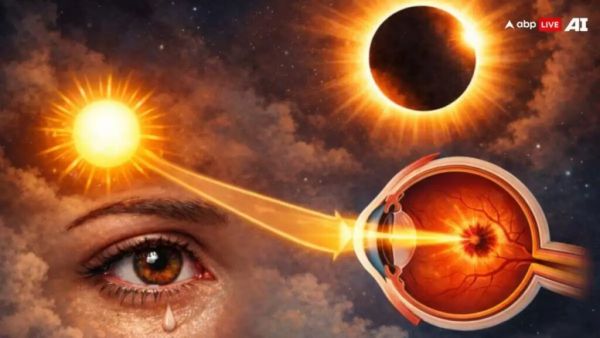
The first solar eclipse of this year will occur on Phalguna Amavasya on Tuesday, February 17, 2026. However, it will not be visible from India. It will be visible from South Africa, southern Argentina and parts of Antarctica. Let us tell you how it affects your health.
How does science look at solar eclipse and health?
From a scientific point of view, a solar eclipse in itself is not harmful. The real danger comes when people try to look directly at the sun without any protection. Even during an eclipse, the sun’s rays can damage the retina of the eyes, causing a condition called solar retinopathy, which can lead to permanent vision loss. Therefore, experts always recommend using eclipse glasses or other safe methods to view the eclipse. Some research also suggests that such astronomical events may have a mild impact on the sleep and body clock of some people. A sudden decrease in light can temporarily confuse the body’s biological clock, causing some people to feel tired or restless.
Changes in mood and energy
Psychologists believe that rare events like a solar eclipse can affect people emotionally. Although science doesn’t directly link mood swings to the eclipse, the sudden change in lighting and atmosphere may make some people feel uneasy or sad. Sometimes, this time also awakens feelings of introspection and peace. Experts say that people who are already struggling with stress or anxiety may experience an increase in stress hormones during this period.
Traditions and rules of eating and drinking
Solar eclipse is given special importance in Indian traditions. In ancient times, it was advised to avoid cooking or eating food during an eclipse. It is believed that during this time harmful rays spoil the food. Scientifically, there is no solid evidence for this, but some microbiologists believe that in ancient times, food was left open for longer periods during eclipses, increasing the chances of spoilage. Maybe this tradition started from this. Even today, in many homes, food prepared before the eclipse is thrown away, and fresh food is prepared afterward.
pregnancy concerns
Pregnant women are advised to stay indoors during the solar eclipse. It is believed that the eclipse may affect the unborn child. However, science does not confirm any such effects. But it is true that it is important to avoid stress and fatigue during pregnancy. Because there is often an atmosphere of fear and anxiety in many places during an eclipse, the elders might have made this rule for the safety and mental health of pregnant women.