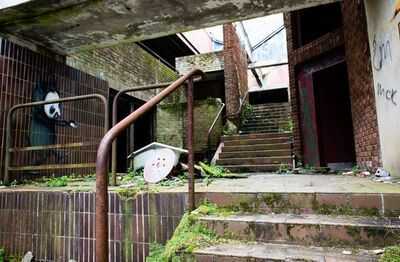
What was once built to facilitate a growing oil industry has now become ruins. Polphail, located in Argyll and Bute, Scotland, is a tale of the past: the village, which was never occupied, is now demolished. The area was part of the many sites along the Scottish coast that were developed for the construction of oil rig platforms.
In the 1970s, the land was purchased by the Government as it provided a sheltered port, which was necessary to build a dry dock and a construction yard for the construction of the deep water oil gravity platforms, and for two years, between 1975 and 1977, work was carried out to build the village. While it was projected to house up to 500 workers, that didn't happen.
The plan was that the village would be operated by those living in it, but unfortunately, structural design challenges due to the oil gravity platforms, cost implications and the inflexibility in the oil industry at the time caused the plans to fall flat, and as a result, it became a ghost village.
Polphail never became a home to anyone since it was constructed; it was deserted from the very beginning, and little did people know that its decline would only deepen.
News of the village's demolition spread in 2009, prompting an artistic collective known as Agents of Change to create a graffiti art gallery featuring paintings of figures, faces, abstract designs, and haunting imagery.

The village was finally demolished in December 2016 at a cost of £300,000, and a planning application for a craft distillery to be built on the site was submitted.
At present, the plans for the distillery are on hold as HMRC investigates the development's ties to Manu Sharma, the super-rich son of a powerful politician who shot dead a celebrity barmaid for refusing to serve him a drink, reports Press and Journal.
HMRC confirmed in April 2025 that final approvals on whether a company can be granted a licence while a person with his criminal record is involved can only be granted after a facility is fully built.
An HMRC spokesperson said: "We can only approve and issue alcohol producer licences and warehouse approvals once premises have been built.
"We must be satisfied that those involved are law-abiding and production can only begin once all licences and approvals have been granted."