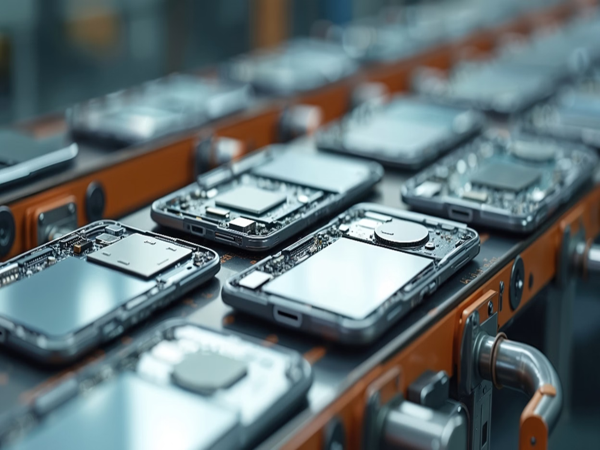
What makes a smartphone smart isn't just the software it runs; the various metals used in its construction play an equally important role in making the design thin, lightweight, and durable. In fact, a smartphone is made using approximately 60 different types of metals and minerals, sourced from all corners of the world. It's impossible to make a smartphone from just one metal, and even if it were possible, the phone would be so heavy that you wouldn't be able to use it. From the phone's body to the battery, screen, camera, and speakers, every small and large part relies on a specific metal. Let's find out which metals are used to make the different parts of your smartphone.
These metals make the smartphone body strong.
When you hold a smartphone, it feels light and premium. This is thanks to aluminum and magnesium. Aluminum provides strength to the phone's frame, preventing it from breaking if dropped, while magnesium keeps it lightweight and protects the phone from electromagnetic interference (EMI). Steel is used in internal support structures and essential parts like screws, ensuring the phone can withstand everyday shocks.
These metals are used in circuits and electronics.
Inside the phone is a tiny brain that we call the circuit board. To ensure the smooth flow of electricity, the circuit is made of copper. But the most interesting part is that it uses very thin layers of real gold and silver. Gold is used because it never corrodes, making the phone durable for years. Capacitors, which control the flow of electricity, use precious rare earth metals like palladium.
Metals are also used in the battery.
A smartphone is incomplete without a lithium-ion battery. Lithium is the main metal in the battery, and it has the capacity to store a large amount of energy. Cobalt stabilizes the battery and helps extend its lifespan, making the phone safer and more durable.
Screen and Display
Your screen isn't just a piece of glass. It contains a transparent mixture of metals like indium and tin, which allows the screen to register your touch. Potassium and silicon are used to prevent the screen from breaking and to make it flexible.
Camera, Speaker, and Vibration
When your phone rings or vibrates, rare earth metals are at work. Neodymium is used to create very powerful small magnets, which are part of the speaker and vibration motor. The heavy metal tungsten is used to add weight to the phone's vibration mechanism.
More Than Just Metals
Along with all these metals, smartphones also use silicon, ceramics, and special types of glass, which are all minerals. All of these components together give a smartphone its form. The next time you hold your smartphone, remember that it contains not just chips and wires, but dozens of precious metals extracted from the earth, which truly make it "smart."
Disclaimer: This content has been sourced and edited from Amar Ujala. While we have made modifications for clarity and presentation, the original content belongs to its respective authors and website. We do not claim ownership of the content.