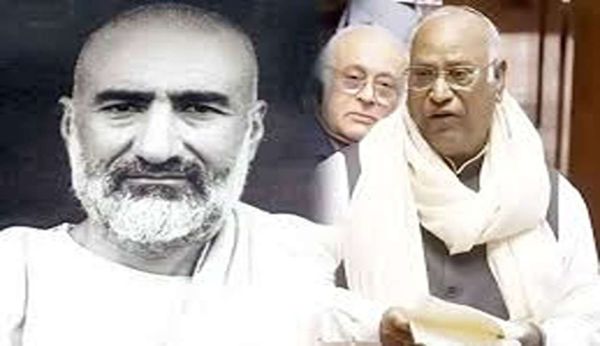
Mallikarjun Kharge: The legacy of Khan Abdul Ghaffar Khan continues to resonate deeply in the history of India’s freedom movement and the broader struggle for peace in South Asia. On his death anniversary, Congress President Mallikarjun Kharge paid a heartfelt tribute to the revered leader, recalling his lifelong dedication to nonviolence, harmony, and human dignity. Through his message, Kharge emphasized that the values upheld by Ghaffar Khan remain relevant even today, offering guidance in times marked by social and political challenges.
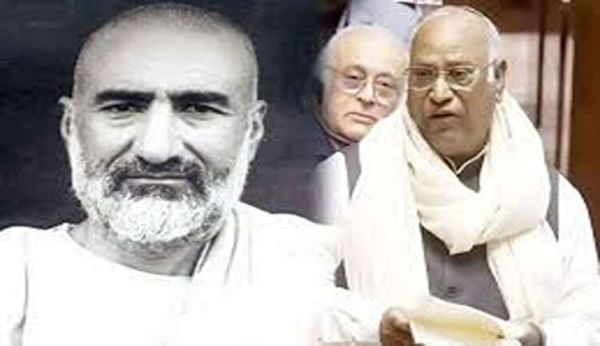
Mallikarjun Kharge shared his thoughts through a public message, reflecting on the enduring influence of Khan Abdul Ghaffar Khan, popularly known as Frontier Gandhi or Bacha Khan. He described him as a guiding light of peace whose life journey continues to inspire millions of people across India and South Asia. According to Kharge, Ghaffar Khan’s philosophy of peaceful resistance stands as a powerful reminder that meaningful change can be achieved without violence or hatred.
Khan Abdul Ghaffar Khan occupies a unique place in the narrative of India’s independence. Known for his unwavering commitment to nonviolence, he emerged as one of the most respected leaders of the freedom movement. Kharge recalled him as a towering personality who devoted his entire life to the cause of freedom, justice, and equality. His leadership extended beyond political boundaries and focused on uplifting society through ethical values and moral strength.
One of the defining aspects of Ghaffar Khan’s life was his steadfast belief in nonviolent resistance. Influenced by Mahatma Gandhi, he firmly believed that peace was not a sign of weakness but a powerful force for social transformation. Kharge highlighted that this commitment was not merely theoretical but deeply practiced, even in the face of immense personal suffering. Ghaffar Khan’s approach proved that courage and compassion could coexist in the fight against oppression.
Kharge also reflected on the hardships endured by Ghaffar Khan during the freedom struggle. Despite repeated imprisonment and severe hardships, he never abandoned his principles. His willingness to suffer for the sake of his beliefs demonstrated extraordinary moral strength. These sacrifices, Kharge noted, underline the depth of his dedication to human dignity and freedom, making his life an example of selfless service.
Another important aspect highlighted in the tribute was Ghaffar Khan’s long and meaningful association with the Indian National Congress. He served for several years as a member of the Congress Working Committee, contributing actively to shaping the party’s vision during critical phases of the freedom movement. His election to the Constituent Assembly further reflected the trust and respect he commanded among his peers and the wider public.
Khan Abdul Ghaffar Khan’s contribution to India was formally recognized when he was awarded the Bharat Ratna, the country’s highest civilian honor. Kharge emphasized that this recognition symbolized not just his role in the freedom struggle, but also his lifelong advocacy of harmony, peace, and social unity. The honor stands as a reminder of the values he championed and the moral legacy he left behind.
Throughout his life, Ghaffar Khan worked tirelessly to promote communal harmony and peaceful political engagement. Operating largely in the North-West Frontier Province, he mobilized people through nonviolent methods and encouraged dialogue over conflict. Kharge noted that his efforts to bridge divides and foster understanding remain especially relevant in today’s polarized world.
In concluding his tribute, Mallikarjun Kharge подчеркed that Ghaffar Khan’s life continues to inspire millions. His dedication to nonviolence, harmony, and human dignity serves as a reminder of the shared ideals that bind societies together. Even decades after his passing, his message encourages individuals and nations alike to pursue justice through peace and compassion rather than conflict.