: Rising geopolitical tensions between Europe and the United States have once again brought Greenland into the global spotlight. Recent discussions at the World Economic Forum in Davos highlighted how questions of sovereignty, security cooperation, and trade policy are becoming increasingly interconnected. As global power dynamics shift toward the Arctic, leaders on both sides of the Atlantic are attempting to balance national interests with long-standing alliances, while avoiding economic and diplomatic escalation.
During the Davos meeting, European Commission President Ursula von der Leyen engaged in intensive discussions with a bipartisan delegation from the United States Congress. The talks were not limited to one issue but covered a wide strategic agenda that included Arctic security, economic cooperation, and the broader future of transatlantic relations.
Von der Leyen used the opportunity to emphasize that mutual respect and dialogue remain the foundation of cooperation between Europe and the United States. According to her statements, political unity and trust are essential at a time when global uncertainty continues to grow, particularly in regions of emerging strategic importance such as the Arctic.
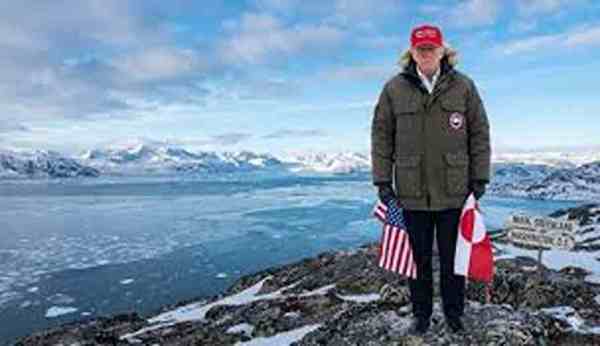
One of the most sensitive topics discussed was the renewed rhetoric from former US President Donald Trump regarding the potential acquisition of Greenland. Von der Leyen clearly underlined that the sovereignty of Greenland and the Kingdom of Denmark must be respected at all times. She described this principle as essential for maintaining strong and stable transatlantic relations.
From the European perspective, any challenge to territorial integrity risks undermining international norms. Respect for sovereignty is not only a legal principle but also a political signal that alliances are built on equality rather than pressure. This message was aimed at reinforcing Europe’s unified stance on the matter.
Beyond sovereignty, security cooperation formed a central pillar of the Davos discussions. Von der Leyen called for closer coordination between the European Union, the United States, and NATO to address emerging risks in the Arctic. As melting ice opens new maritime routes and access to natural resources, competition in the region has intensified.
The Arctic is no longer a remote frontier but a strategic zone with global implications. Increased activity from major powers has raised concerns over military presence, infrastructure development, and control of shipping lanes. Europe has made it clear that it stands ready to work with Washington and its allies, in partnership with Denmark, to ensure stability and collective security in the High North.
Trade was another critical issue addressed during the meeting. Von der Leyen warned that tariffs could undermine the shared economic interests of Europe and the United States. Transatlantic trade and investment have long been considered a cornerstone of global economic stability, supporting millions of jobs and fostering innovation on both sides of the Atlantic.
She stressed that protectionist measures run counter to these shared interests and risk weakening economic growth. In an era of global supply chains and digital commerce, cooperation rather than confrontation is seen as the most effective path forward for sustainable prosperity.
The discussions come amid renewed threats by Trump to impose tariffs on Denmark and other European nations unless negotiations over Greenland progress. He has argued that US national security concerns justify a stronger American role in the territory, pointing to growing interest from China and Russia. Proposed tariffs, potentially starting at 10 percent and rising significantly, have raised alarms across Europe.
Reacting to this stance, UK Prime Minister Keir Starmer publicly criticized the idea of using economic pressure against allies. He described such an approach as fundamentally wrong and reaffirmed that Greenland belongs to its people and to Denmark. For Starmer, respect for sovereignty is non-negotiable and forms the basis of credible international partnerships.
Starmer also highlighted how climate change is transforming the Arctic into a focal point of global geopolitics. As ice recedes, new shipping routes and resource opportunities are emerging, increasing both economic potential and strategic rivalry. He argued that the High North will require greater attention, investment, and stronger collective defense mechanisms in the coming years.
This perspective aligns with broader European concerns that climate change is not only an environmental issue but also a driver of geopolitical competition. Managing these changes responsibly will require cooperation, long-term planning, and adherence to international norms.
The Davos meeting underscored a clear message from European leaders: dialogue, respect, and cooperation remain the preferred path for addressing complex global challenges. Whether dealing with Arctic security, economic ties, or territorial integrity, Europe continues to advocate for partnership over pressure. As the strategic importance of Greenland and the Arctic grows, the choices made today will shape the future of transatlantic relations for decades to come.