China: naval modernization has accelerated at a pace unmatched by most other major powers. While countries such as the United States face budget constraints, industrial bottlenecks, and long timelines in building new warships and submarines, China has demonstrated an ability to design, construct, and commission complex naval platforms at scale. The past year highlighted this momentum clearly, with the People’s Liberation Army Navy continuing to expand both in numbers and in technological sophistication.
China’s shipbuilding ecosystem plays a central role in this growth. State-backed shipyards operate with long-term planning, steady funding, and a clear strategic mandate. As a result, the navy inducted a significant number of vessels within a single year, even as it maintained secrecy around sensitive programs, particularly submarine production. This balance between visibility and concealment has become a defining feature of China’s maritime strategy.
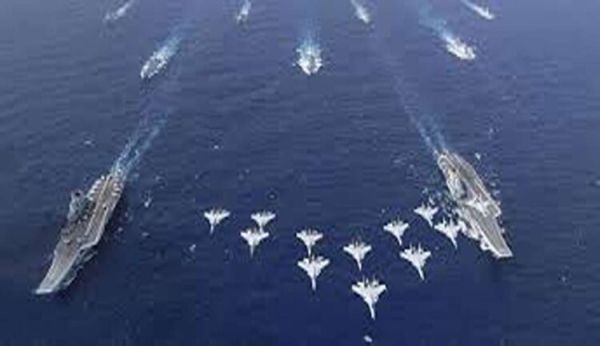
One of the most symbolic milestones was the induction of China’s largest and most advanced aircraft carrier to date. This vessel represents a clear leap from earlier designs, especially due to its adoption of electromagnetic aircraft launch technology. Unlike the ski-jump systems used on previous carriers, this launch method enables heavier aircraft to take off with greater fuel and payload, significantly enhancing operational reach.
The carrier underwent extensive testing before entering service, hosting multiple new aircraft types designed specifically for carrier operations. These trials demonstrated China’s growing competence in integrating air power with naval platforms. The presence of advanced early warning aircraft further strengthens fleet situational awareness, bringing Chinese carrier strike capabilities closer to those of established naval powers.
China has also invested heavily in amphibious assault ships, signaling a strong focus on expeditionary and near-seas operations. New landing helicopter dock vessels provide the navy with flexible platforms capable of deploying helicopters, drones, landing craft, and armored vehicles. These ships are essential for rapid troop deployment, humanitarian missions, and large-scale amphibious operations.
Alongside these vessels, the introduction of next-generation amphibious assault ships indicates a shift toward unmanned and drone-centric operations. Flight decks optimized for unmanned systems suggest that future amphibious campaigns will rely heavily on surveillance drones, logistics drones, and potentially armed unmanned platforms to shape the battlefield before troops land.
Surface combatants remain the backbone of China’s naval presence. The continued commissioning of modern destroyers and frigates highlights a focus on air defense, anti-ship warfare, and fleet command capabilities. Incremental upgrades in radar systems, weapons integration, and combat management software show a pattern of continuous improvement rather than radical redesign.
Among these vessels, larger cruisers stand out for their ability to carry extensive missile payloads. These ships are designed to escort carriers, defend task groups, and project power across long distances. Their size and armament reflect China’s intention to operate far from its home waters with credible combat strength.
China’s submarine fleet remains the most opaque element of its naval expansion. However, available assessments suggest a steady shift toward nuclear-powered submarines. These platforms offer greater endurance, speed, and strategic reach compared to diesel-electric boats. The emphasis on guided-missile nuclear submarines indicates a dual focus on sea denial and long-range strike missions.
Ballistic missile submarines form the core of China’s sea-based nuclear deterrent. Delays in next-generation designs may have prompted extended production of existing models, ensuring continuity in strategic capabilities. The ability to operate submarines in challenging environments, including under polar ice, is increasingly seen as a long-term objective.
Recent intelligence assessments point to growing Chinese interest in Arctic operations. While surface vessels may rarely appear in these waters, submarines offer a discreet means of presence. The Arctic provides shorter missile trajectories and natural concealment under ice, making it strategically attractive for nuclear deterrence patrols.
Analysts suggest that any future Chinese submarine activity in the Arctic would be focused on strategic stability rather than commercial sea routes. This reflects a broader shift in global naval thinking, where undersea capabilities are central to maintaining credible second-strike options.
Beyond combat vessels, China continues to build auxiliary ships that sustain long-range naval operations. Hospital ships, replenishment oilers, and large supply vessels ensure that task groups can remain deployed for extended periods. These platforms may lack offensive weapons, but they are essential for blue-water operations and humanitarian outreach.
Logistical strength is often overlooked, yet it determines how far and how long a navy can operate. China’s growing fleet of support ships underscores its ambition to maintain a persistent presence across multiple oceans.
Innovation remains a defining element of China’s naval development. Experimental amphibious barges and large-scale coordination of civilian fishing fleets illustrate how military planners are exploring unconventional methods to control contested maritime spaces. These tactics blur the line between civilian and military activity, complicating responses from potential adversaries.
Looking ahead, the trajectory suggests continued expansion in 2026 and beyond. New vessels, improved submarines, and advances in unmanned systems are likely to emerge. China’s navy is not only growing in size but also evolving in doctrine, technology, and strategic ambition, positioning itself as a central force in future maritime geopolitics.