Bengaluru-based startup NeoSapien has secured a patent for Neo 1, which it claims is India’s first AI-native wearable. The patent covers its adaptive AI coaching system that converts long-term goals into real-time micro-tasks. The milestone highlights India’s shift towards original innovation in AI hardware, moving beyond imitation of Western technology models.
In a pathbreaking development for India's tech sector, Bengaluru-based startup NeoSapien has secured a patent for its flagship device, Neo 1, which the company claims is the country's first AI-native wearable. The patent covers the device's adaptive AI coaching system, which breaks down long-term goals into real-time micro-tasks, positioning NeoSapien as a pioneer in hardware-driven AI solutions. This milestone comes amid growing interest in wearable AI tech, and it highlights India's emerging role in innovation rather than imitation of Western models.
What is Neo 1?
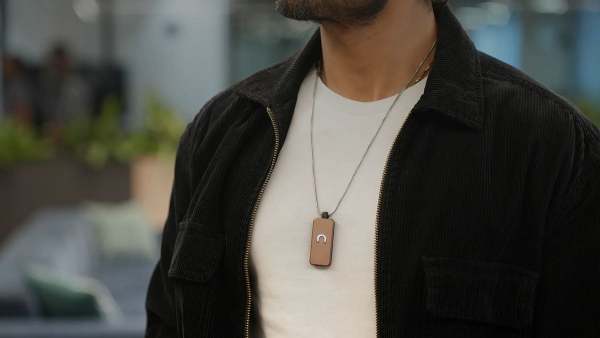
Founded in 2024 by brothers Dhananjay Yadav and Aryan Yadav, NeoSapien aims to create a 'second brain' ecosystem through hardware-native AI. Neo 1 is designed as a pendant-style wearable that functions as a personal assistant, capturing and organising daily conversations and actions without disrupting the user's routine. After capturing the conversation, it can then transcribe, offer summaries, and answer key questions regarding the conversation. NeoSapien calls it 'you own Infinite Memory', which means that the device will store all your conversations, and offer context and key highlights through the Neo AI bot.
Key features of Neo 1 include real-time audio capture up to two meters, emotion analysis to decode interpersonal dynamics, generation of contextual summaries and insights, and support for over 100 Indian and global languages. The device runs on the proprietary Second Brain OS, which emphasises privacy with ISO 27001 certification and no long-term audio storage after processing.
Physically, Neo 1 is ultra-light for all-day wear, pairs seamlessly with iOS and Android devices via an app, and offers intuitive controls. It charges fully in under three hours and provides 2-3 days of battery life, depending on usage. However, it requires an internet connection through a paired phone and is not water-resistant, which could limit its appeal in certain scenarios. The company's broader vision includes expanding to other form factors like glasses and rings, along with a NeoCore SDK for businesses to build custom applications.
Neo 1 is currently available for purchase in India through the company's official website and platforms like Amazon, with an offer price of Rs. 11,999. Color options include Black, Gunmetal, Copper, and Silver. Shipping is listed to typically occur within 1-2 business days. However, the product is not yet available for international shipping, limiting its reach to domestic buyers for now.
Why is this patent significant?
This patent is significant because it underscores India's push toward self-reliant innovation in the AI space. Unlike many tech products that follow trends set by US giants like Apple or Google, Neo 1 represents a homegrown effort to lead in AI-native wearables. With over 20 B2B enterprise partnerships and 15,000 devices already deployed in corporate settings, NeoSapien is demonstrating rapid scaling. For India, this is monumental. It signals a shift from being a consumer of global tech to a frontrunner, bolstering the country's intellectual property landscape and potentially inspiring more startups to invest in hardware R&D. Dhananjay Yadav, CEO and co-founder, stated, "This patent safeguards our core invention and establishes us as leaders in AI-driven personal assistance."
Financially, NeoSapien is gaining traction. The startup recently raised $2 million (approximately Rs.18 crore) in seed funding, led by Merak Ventures and backed by investors including Awais Ahmed of Pixxel, Anupam Mittal of Shaadi.com, Sameer Mehta of boAt, Namita Thapar of Emcure Pharmaceuticals, and Aprameya Radhakrishna of Koo. Additionally, the company appeared on Shark Tank India Season 4, securing Rs. 80 lakhs in funding, which has helped amplify its visibility.
While the device's features sound promising and early reviews, its real-world performance strengths remain largely untested by a broad user base. NeoSapien's journey will be one to watch as it navigates the challenges of scaling innovative hardware in a global AI landscape.