Kabul Restaurant: The recent attack on a Chinese restaurant in Kabul has triggered intense political reactions and renewed debate about militancy, regional rivalry, and international investments in South and Central Asia. Following the incident, prominent Sindhi nationalist leader Shafi Burfat issued a strong statement accusing elements within Pakistan’s military and intelligence structure of playing a role in destabilizing Afghanistan through indirect or direct support to extremist violence.
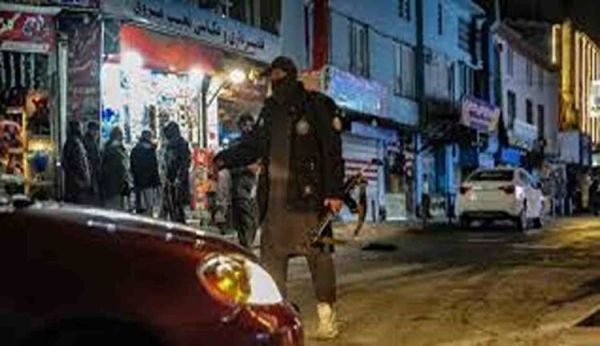
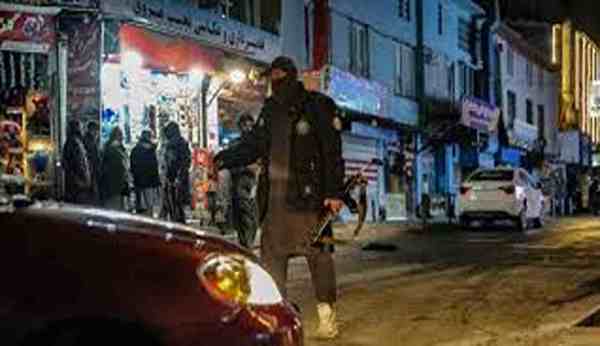
An explosion occurred outside a Chinese restaurant in Kabul on January 19, resulting in multiple casualties, including the death of one Chinese national. The incident immediately drew global attention because of the involvement of Chinese citizens and the symbolic targeting of a location associated with foreign presence. Afghan authorities launched an investigation, while international observers viewed the attack as another reminder of the fragile security environment in the country.
The attack also raised concerns among foreign investors who have cautiously shown interest in Afghanistan’s economic potential following recent political changes. Incidents of this nature are widely seen as damaging to confidence and long-term stability.
Shafi Burfat, the chairman of the Jeay Sindh Muttahida Mahaz, publicly condemned the attack and described it as part of a larger pattern rather than an isolated act of violence. According to Burfat, militant and extremist groups operating in the region do not function independently but are often shaped, protected, or redirected by state actors pursuing strategic goals.
He alleged that Pakistan’s army and its intelligence agency, the Inter-Services Intelligence, have historically used non-state actors as instruments of foreign policy. In his view, the Kabul restaurant attack fits into this broader framework of proxy warfare and covert influence.
Burfat outlined two main objectives that he believes motivated the attack. The first objective, he claimed, was to discourage China’s expanding economic and strategic engagement in Afghanistan. China has shown interest in infrastructure development, trade routes, and mineral resources in the region, which could potentially reduce Pakistan’s own strategic leverage.
The second objective, according to Burfat, was to deliberately project Afghanistan as an unsafe and unstable country. Such a perception, he argued, weakens the Afghan government on the international stage and creates doubt among potential investors. By portraying Afghanistan as unfit for foreign investment, attention and capital could be diverted elsewhere, particularly toward Pakistan.
In the broader geopolitical context, Burfat suggested that Pakistan seeks to reassert its relevance by acting as a proxy for powerful global players. He claimed that this strategy involves reorganizing and redeploying militant networks inside Afghanistan to maintain influence over regional developments.
He further alleged that extremist organizations, including ISIS, are being revived and empowered to operate across Afghanistan and neighboring areas. According to his statement, such groups are allegedly encouraged to target interests linked to China and India, thereby creating instability that serves multiple strategic calculations.
Burfat warned that these actions pose a serious threat not only to Afghanistan but also to regional peace and international security. The continued use of militant proxies undermines principles of sovereignty, non-interference, and mutual respect among states. He argued that such practices risk turning Afghanistan once again into a battleground for competing interests, with devastating consequences for civilians.
The Sindhi leader also highlighted what he described as duplicity in Pakistan’s foreign policy posture. While projecting an image of partnership with major powers such as the United States and China, he claimed that Pakistan’s military establishment simultaneously pursues parallel policies that undermine the interests of these same countries through indirect violence.
In his concluding remarks, Burfat urged the international community to take a firm stance against what he described as state-sponsored terrorism. He called for global institutions and influential nations to hold Pakistan’s military establishment accountable for using extremist violence as a strategic tool.
According to him, ignoring these patterns would only embolden militant networks and prolong instability in an already volatile region. He emphasized that sustainable peace in Afghanistan and surrounding areas depends on transparency, regional cooperation, and the rejection of proxy-based conflicts.