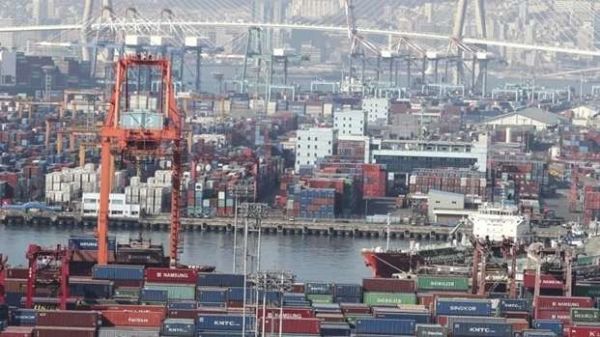
South Korea: export performance has shown a notable upswing in the early days of January, reflecting renewed momentum in global trade and solid external demand. According to recently released customs data, the country recorded a sharp year-on-year rise in outbound shipments during the first twenty days of the month. This early performance suggests that Asia’s fourth-largest economy has entered the new year with confidence, supported mainly by technology-driven exports and stable overseas demand.
During the January 1–20 period, South Korea’s total exports reached 36.36 billion US dollars, representing an increase of nearly fifteen percent compared with the same period last year. This growth rate mirrors the rise in daily average exports, indicating that the improvement is not linked to calendar effects but to genuine expansion in shipment volumes and values. The number of working days remained almost unchanged from the previous year, reinforcing the view that export strength is rooted in market demand rather than temporary factors.
While exports showed strong momentum, imports also registered a moderate increase. Inbound shipments rose by a little over four percent year on year, reaching close to 37 billion US dollars. As a result, South Korea posted a trade deficit of around 600 million US dollars during the period. Although the deficit may appear concerning at first glance, economists often view short-term imbalances cautiously, as they can be influenced by energy prices, raw material purchases, and seasonal factors.
One of the most influential factors behind the export growth has been robust demand for semiconductors. The global technology sector continues to rely heavily on advanced chips for applications ranging from artificial intelligence to electric vehicles and consumer electronics. South Korea, being a major semiconductor producer, has benefited significantly from this trend. Strong chip exports have helped offset weaknesses in other industrial categories and reinforced the country’s position as a critical supplier in the global tech supply chain.
Beyond semiconductors, several traditional industries also contributed to export activity, though with mixed results. Petroleum product exports increased by over seventeen percent, reaching approximately 2.46 billion US dollars. This growth reflects stable energy demand and favorable pricing conditions in international markets. Steel exports edged up slightly, recording a modest increase to around 2.4 billion US dollars, suggesting steady but not spectacular demand from construction and manufacturing sectors abroad.
In contrast, some industries faced headwinds. Automobile exports declined by nearly eleven percent compared with the previous year, falling to about 2.87 billion US dollars. This drop may be linked to shifting consumer preferences, supply chain adjustments, or heightened competition in overseas markets. Shipbuilding-related exports also experienced a noticeable decrease, with vessel shipments falling by more than eighteen percent to roughly 1.33 billion US dollars.
From a regional perspective, South Korea’s exports showed particularly strong performance in major overseas markets. Shipments to China, the country’s largest trading partner, surged by over thirty percent year on year, reaching 8.45 billion US dollars. This increase points to a recovery in Chinese demand, especially for intermediate goods and components used in manufacturing.
Exports to the United States also recorded a solid rise of more than nineteen percent, totaling 6.66 billion US dollars during the period. This growth came despite ongoing trade policy uncertainties and tariff-related challenges. The data suggests that demand for Korean products in the US market remains resilient, supported by competitiveness and technological strengths.
The positive start to January builds on a strong performance seen at the end of last year. In December, South Korea’s exports expanded by more than thirteen percent year on year, reaching nearly 70 billion US dollars. This marked the eleventh consecutive month of annual export growth, highlighting a sustained recovery in external trade.
Looking at the broader picture, outbound shipments for the full year reached a record high of 709.7 billion US dollars. This milestone underscores the resilience of South Korea’s export-driven economy and its ability to adapt to changing global conditions. Analysts remain cautiously optimistic about the outlook for the coming months, particularly if semiconductor demand stays strong and global economic conditions remain stable.