Why Is Radha Worshipped Beside Krishna in Most Temples but Rarely Alone?
Times Life January 21, 2026 07:40 PM
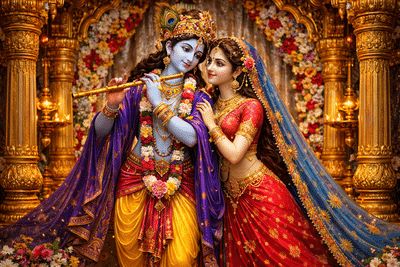 If you pause for a moment inside a Krishna temple anywhere in North India, you will notice something deeply human about the divine.
Krishna is almost never alone.
Radha stands beside him, calm and luminous, not as an ornament, but as presence.
If you pause for a moment inside a Krishna temple anywhere in North India, you will notice something deeply human about the divine.
Krishna is almost never alone.
Radha stands beside him, calm and luminous, not as an ornament, but as presence.
Yet temples dedicated only to Radha are rare. This is not because Radha is secondary, lesser, or overlooked. It is because her spiritual meaning unfolds only in togetherness. Radha’s worship was never meant to stand apart. It was meant to stand beside.
1. Radha Exists Through Love, Not Independence
 Divine love blooming with spring
Radha’s identity is love itself. She is not imagined as a divine figure seeking recognition or authority. Her entire being flows toward Krishna. In devotional thought, Radha does not ask who she is without Krishna, because her answer already lies in loving him.
That is why she is worshipped beside him. Radha alone would lose the very meaning she represents. Her divinity is relational, not individual.
2. Radha Is the Feeling, Krishna Is the TruthKrishna represents divine truth, consciousness, and eternity. Radha represents the feeling that reaches for that truth. One is the source. The other is the response.
In temples, they stand together because spirituality is not only about knowing God. It is about feeling drawn to God. Radha without Krishna would be emotion without direction. Krishna without Radha would be truth without tenderness.
3. Radha Shows How to Love God, Not Replace GodRadha is not worshipped as an alternative to Krishna. She is worshipped as the one who shows how God is to be loved. Her devotion becomes the path the devotee walks.
People do not bow to Radha to stop at her. They bow to learn from her. That is why she is always facing Krishna, always oriented toward him. Her worship teaches devotion, not dominance.
4. Bhakti In North India Was About Relationship
 Temple worship
North Indian bhakti traditions grew around intimacy, not distance. God was not imagined as unreachable or stern, but as close, playful, and emotionally present.
Radha belongs to this world of closeness. She anchors Krishna in everyday emotion. Her presence beside him keeps devotion warm, personal, and alive. Worshipping her alone would break that relational rhythm that bhakti held sacred.
5. Radha Reflects the Human SoulRadha is often understood as the awakened human soul. Krishna is the eternal divine reality. Their bond mirrors what every seeker longs for. Union.
The soul does not exist for itself. It exists to recognize its source. That is why Radha is never isolated in worship. Her place beside Krishna allows devotees to see their own longing reflected in her presence.
6. Stories and Songs Kept Them Together

Poetry, songs, and devotional literature never spoke of Radha seeking her own shrine. They spoke of her waiting, yearning, loving, surrendering. Through her emotions, Krishna became reachable.
Temples followed the stories people sang and believed. Radha remained central, but always within the shared space of love. Her power was never solitary. It was shared.
7. Grace Feels Safer When Love Is VisibleMany devotees feel emotionally closer to Radha. She feels gentle, understanding, and compassionate. But even that closeness points toward Krishna.
Radha beside Krishna reassures the devotee that love leads somewhere. That tenderness opens the door, but the door opens toward union, not separation. Grace works best when it guides, not replaces.
8. Togetherness Is the Highest Spiritual TruthAt the deepest level, Radha and Krishna together represent wholeness. Truth and love. Consciousness and surrender. Calling and response.
Indian temples communicate philosophy visually. By placing Radha beside Krishna and rarely alone, they quietly say this. God is not fully known in isolation. God is known where love stands beside truth and refuses to leave.