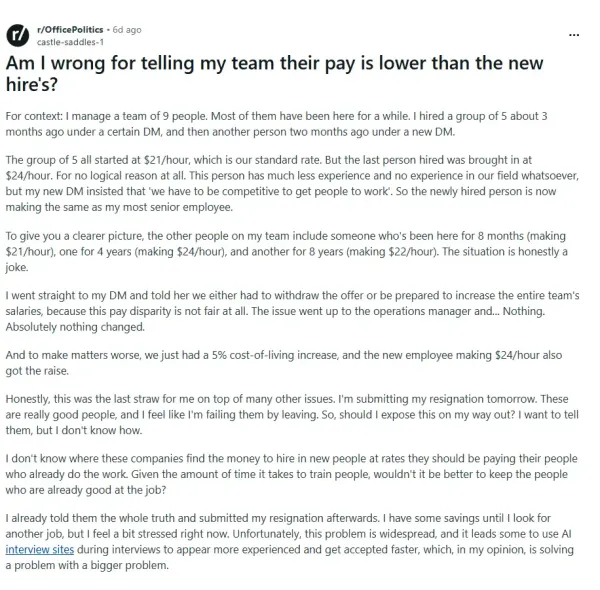
Ever been in a situation where fairness is completely out the window, and the people in charge just seem to shrug it off? That’s exactly what happened to a manager on r/OfficePolitics this week. The OP manages a team of nine employees, most of whom have been with the company for years and worked diligently under consistent pay standards. About three months ago, they hired a group of five new employees at the team’s standard rate of $21/hour. But just two months later, under a new decision-maker, a single new hire was brought in at $24/hour despite having far less experience and no relevant background in the field.
To give you a clearer picture, the manager shared that the other people on the team include someone who's been there for eight months (making $21/hour), one for four years (making $24/hour), and another for eight years (making $22/hour). The situation, as the OP puts it, is “honestly a joke.”
The OP immediately raised the issue with the new DM, asking either to withdraw the inflated offer or adjust the team’s salaries to make things fair. The matter even reached the operations manager, but nothing changed. Meanwhile, the new hire also received a 5% cost-of-living increase alongside the existing employees, deepening the pay disparity and leaving the OP frustrated and questioning their next move.
Also Read: Data analyst contacted by 'toxic' boss six months after quitting; now she wants a favor, and he turns it into a paid opportunity
Frustrated and feeling like they were failing their loyal team, the manager decided to submit their resignation. But before leaving, they wondered: should they tell their team the truth about the new hire’s salary?
The Reddit community had plenty to say about the OP’s dilemma. A user noted, “Discussing pay is technically allowed by law. In practice, you could get canned. But if you’re on the way out anyway, then by all means do so. Just open your mouth.” Others urged caution, highlighting the potential risks of disclosing salaries without consent.

Another warned, “Uh, pretty sure you aren't allowed to go around disclosing other employees' pay without their consent,” while a user, u/WannaCryy1, added nuance: “If you work in the public sector, salaries are public information. For private companies, there’s no federal law stopping you from sharing this info, but watch out for company policies.”
Many commenters suggested finding a middle ground, negotiating transparency carefully, or keeping things general to avoid legal or personal repercussions. Ultimately, for the OP, it’s a question of ethics, responsibility, and timing: should they expose the unfair pay to their team or walk away quietly, knowing they’ve already done all they could?
To give you a clearer picture, the manager shared that the other people on the team include someone who's been there for eight months (making $21/hour), one for four years (making $24/hour), and another for eight years (making $22/hour). The situation, as the OP puts it, is “honestly a joke.”
The OP immediately raised the issue with the new DM, asking either to withdraw the inflated offer or adjust the team’s salaries to make things fair. The matter even reached the operations manager, but nothing changed. Meanwhile, the new hire also received a 5% cost-of-living increase alongside the existing employees, deepening the pay disparity and leaving the OP frustrated and questioning their next move.
Veteran underpaid, new hire paid more, manager quits.
Also Read: Data analyst contacted by 'toxic' boss six months after quitting; now she wants a favor, and he turns it into a paid opportunity
Manager resigned after facing loyalty test
Frustrated and feeling like they were failing their loyal team, the manager decided to submit their resignation. But before leaving, they wondered: should they tell their team the truth about the new hire’s salary?
Reddit remained divided
The Reddit community had plenty to say about the OP’s dilemma. A user noted, “Discussing pay is technically allowed by law. In practice, you could get canned. But if you’re on the way out anyway, then by all means do so. Just open your mouth.” Others urged caution, highlighting the potential risks of disclosing salaries without consent.
Unfair pay drama rocks team, Reddit reacts.
Different scenarios for private and public employees
Another warned, “Uh, pretty sure you aren't allowed to go around disclosing other employees' pay without their consent,” while a user, u/WannaCryy1, added nuance: “If you work in the public sector, salaries are public information. For private companies, there’s no federal law stopping you from sharing this info, but watch out for company policies.”
Many commenters suggested finding a middle ground, negotiating transparency carefully, or keeping things general to avoid legal or personal repercussions. Ultimately, for the OP, it’s a question of ethics, responsibility, and timing: should they expose the unfair pay to their team or walk away quietly, knowing they’ve already done all they could?