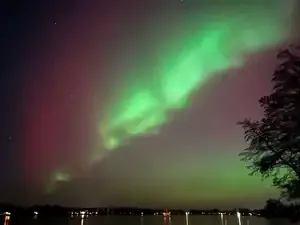
A rare and powerful energy flare from the Sun has reached Earth, triggering what scientists describe as the most intense solar radiation storm in nearly two decades. While the event is of major scientific interest, it is also expected to produce dazzling displays of the northern lights in regions that rarely experience them, turning an otherwise invisible space phenomenon into a visible spectacle.
The storm is driven by heightened solar activity and has been closely monitored by space-weather agencies as it evolved over the past several days. Beyond its visual impact, officials are carefully assessing the potential for disruptions to satellites, communications systems, and power infrastructure.
Solar radiation storms occur when the Sun releases intense bursts of high-energy particles that travel rapidly through space. When these particles collide with Earth’s magnetic field, they can disrupt satellites and other high-altitude technologies, while also energising the atmosphere to produce vivid auroral displays. An S4-level storm is classified as severe and is rarely observed, typically occurring during periods of heightened solar activity near the peak of the Sun’s 11-year cycle.
According to reports, the main impact is expected to be felt by space- and high-altitude systems, including satellite operations, space launches and aviation routes, particularly those near the polar regions. High-frequency radio communications are likely to be completely disrupted in polar areas for the duration of the storm.
Streaks of shimmering green and red bands exploded in the dark skies above Alaska’s largest city Tuesday as the aurora provided a light show for early morning dog walkers, joggers and commuters.
Anchorage was not alone in seeing vivid displays of the aurora following a major disturbance in the Earth’s magnetic field.
The aurora didn’t disappoint, and its reach overnight Monday and into Tuesday was wide. Social media was lit up with stunning aurora photos from places including Alaska, San Francisco, Chicago, Canada and across Europe.
The intense displays came amid intense geomagnetic and solar radiation storms, according to the National Oceanic and Atmospheric Administration’s Space Weather Prediction Center.
In November, solar storms brought vibrant auroras to parts of Europe including Hungary and the United Kingdom, and as far south in the United States as Texas.
Why Solar Storms Create Auroras
Auroras are produced when charged particles from the Sun collide with gases in Earth’s upper atmosphere. These collisions release energy in the form of light, creating spectacular curtains of color, including green, pink, and purple.
During massive solar storms, Earth’s magnetic field is impacted more strongly, allowing auroras to appear at latitudes that don’t normally experience them. These events transform a complex interaction between the Sun and Earth into one of the planet’s most striking natural displays.
How Long the Storm Will Last
Solar radiation levels are expected to remain elevated for several days, though they may fluctuate as the storm evolves. Intensity could rise and fall over time, but space weather agencies will continue monitoring the situation and issuing updated alerts as needed.
The storm is driven by heightened solar activity and has been closely monitored by space-weather agencies as it evolved over the past several days. Beyond its visual impact, officials are carefully assessing the potential for disruptions to satellites, communications systems, and power infrastructure.
Severe S4 solar radiation storm reaches Earth
The Space Weather Prediction Center (SWPC) of the US National Weather Service has confirmed that Earth is currently passing through a severe solar radiation storm, rated S4 on a five-point scale. The agency said this is the strongest storm of its kind since October 2003, marking a significant moment in the ongoing solar cycle.Solar radiation storms occur when the Sun releases intense bursts of high-energy particles that travel rapidly through space. When these particles collide with Earth’s magnetic field, they can disrupt satellites and other high-altitude technologies, while also energising the atmosphere to produce vivid auroral displays. An S4-level storm is classified as severe and is rarely observed, typically occurring during periods of heightened solar activity near the peak of the Sun’s 11-year cycle.
According to reports, the main impact is expected to be felt by space- and high-altitude systems, including satellite operations, space launches and aviation routes, particularly those near the polar regions. High-frequency radio communications are likely to be completely disrupted in polar areas for the duration of the storm.
Streaks of shimmering green and red bands exploded in the dark skies above Alaska’s largest city Tuesday as the aurora provided a light show for early morning dog walkers, joggers and commuters.
Anchorage was not alone in seeing vivid displays of the aurora following a major disturbance in the Earth’s magnetic field.
The aurora didn’t disappoint, and its reach overnight Monday and into Tuesday was wide. Social media was lit up with stunning aurora photos from places including Alaska, San Francisco, Chicago, Canada and across Europe.
The intense displays came amid intense geomagnetic and solar radiation storms, according to the National Oceanic and Atmospheric Administration’s Space Weather Prediction Center.
In November, solar storms brought vibrant auroras to parts of Europe including Hungary and the United Kingdom, and as far south in the United States as Texas.
Why Solar Storms Create Auroras
Auroras are produced when charged particles from the Sun collide with gases in Earth’s upper atmosphere. These collisions release energy in the form of light, creating spectacular curtains of color, including green, pink, and purple.
During massive solar storms, Earth’s magnetic field is impacted more strongly, allowing auroras to appear at latitudes that don’t normally experience them. These events transform a complex interaction between the Sun and Earth into one of the planet’s most striking natural displays.
How Long the Storm Will Last
Solar radiation levels are expected to remain elevated for several days, though they may fluctuate as the storm evolves. Intensity could rise and fall over time, but space weather agencies will continue monitoring the situation and issuing updated alerts as needed.