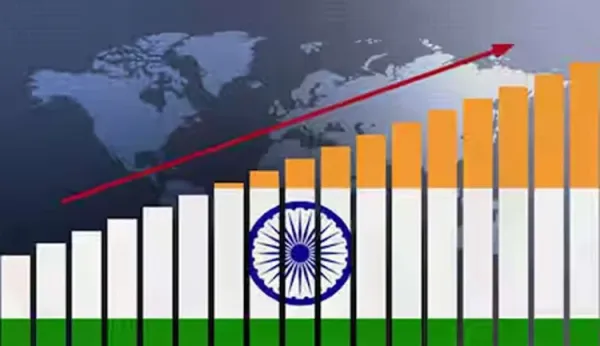
India Economic: Amid persistent global uncertainty and shifting economic conditions, India’s macroeconomic outlook continues to inspire confidence among policymakers, investors, and international institutions. Recent assessments indicate that India is well positioned to maintain its status as the world’s fastest growing major economy in the coming financial year, supported by strong domestic demand, resilient institutions, and ongoing structural reforms.
According to the latest assessment released by the Reserve Bank of India, the first advance estimates of real GDP growth for the financial year 2025–26 highlight the underlying strength of the Indian economy. Despite a challenging external environment marked by geopolitical tensions, fluctuating commodity prices, and uneven global recovery, India’s growth drivers remain largely domestic. Consumption demand, public investment, and improving private sector confidence have played a central role in sustaining economic momentum.
High-frequency economic indicators for December further reinforce this outlook. Data related to industrial output, services activity, and mobility trends point toward continued buoyancy in growth impulses. Demand conditions have remained upbeat, reflecting stable income growth and improving employment prospects across several sectors of the economy.
A key element of India’s medium-term growth strategy has been the diversification and strengthening of its export base. Policymakers have focused on reducing vulnerability to external sector risks by expanding market access and enhancing competitiveness across manufacturing and services exports. As part of this approach, India is actively engaged in trade negotiations with 14 countries or regional groups, collectively representing nearly 50 nations.
These negotiations include major partners such as the European Union, Gulf Cooperation Council countries, and the United States. In December, India successfully concluded trade negotiations with New Zealand and Oman, signaling progress toward deeper economic integration and improved export opportunities. These agreements are expected to support sectors such as agriculture, pharmaceuticals, engineering goods, and digital services.
Inflation dynamics have also remained broadly supportive of growth. Headline consumer price inflation edged up slightly in December but stayed below the lower tolerance threshold set under the monetary policy framework. This moderation in inflation has provided room for stable financial conditions, helping sustain credit growth and investment activity.
The flow of financial resources to the commercial sector has increased steadily over the past year. Both banking and non-banking financial institutions have contributed to this credit expansion, reflecting improved balance sheets and stronger risk appetite. Increased access to credit has supported business expansion, infrastructure development, and household consumption.
The year 2025 has been marked by several important economic reforms aimed at strengthening India’s long-term growth prospects. These include rationalisation of tax structures to improve efficiency, implementation of labour codes to modernise the labour market, and selective financial sector deregulation to enhance competition and innovation. Together, these measures are expected to improve productivity, attract investment, and create a more flexible economic environment.
The Reserve Bank’s Report on Trend and Progress of Banking in India 2024–25 underscores the resilience of the financial system. Indian banks continue to benefit from strong capital buffers, improved asset quality, and robust profitability. Macro stress test results published in the latest Financial Stability Report indicate that banks and non-banking financial companies are well equipped to absorb potential losses under adverse scenarios while maintaining capital well above regulatory requirements.
Looking ahead, policymakers are focused on maintaining a careful balance between innovation and stability. Emphasis on consumer protection, prudent regulation, and effective supervision is expected to support sustainable financial development. With a stable macroeconomic framework, resilient institutions, and ongoing reforms, India’s economic outlook remains positive, reinforcing its role as a key engine of global growth in the years ahead.