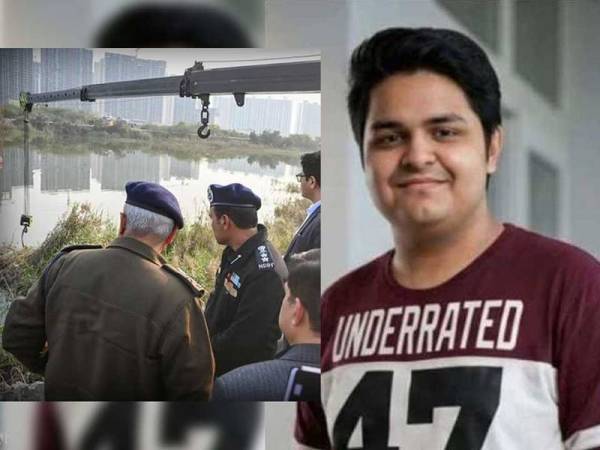
Noida: The recent death of a young software professional in Noida has ignited a nationwide debate on governance, administrative responsibility, and public safety in rapidly developing urban areas. The tragic incident, which occurred at a construction site in Sector 150, has exposed glaring lapses in infrastructure management and emergency response, prompting sharp political reactions and public outrage.
The victim, a 27-year-old tech professional working in Gurugram, was returning home late at night when his car plunged into a deep, water-filled pit at an under-construction site. Dense fog, poor visibility, and a broken boundary wall reportedly contributed to the accident. The pit, located near an active construction zone, had allegedly been left inadequately secured, raising concerns about compliance with safety norms.
According to eyewitness accounts, the victim survived the initial fall and attempted to signal for help. He reportedly climbed onto the roof of his partially submerged vehicle and used his mobile phone flashlight to draw attention. Despite crying out for help for nearly two hours, rescue efforts were slow and insufficient, ultimately leading to his death.
The incident has been widely described as a clear failure of the administrative system. Opposition leaders have criticized the state government, alleging that negligence by local authorities directly contributed to the loss of life. Questions have been raised about why earlier complaints regarding the dangerous condition of the site were ignored and why preventive measures were not enforced.
The suspension of a senior official has been announced, but critics argue that this action alone does not address the deeper issues of accountability. They claim that higher-ranking officials responsible for oversight continue to remain in their positions, reflecting a pattern of selective action rather than comprehensive reform.
Several political leaders have voiced strong criticism, stating that such incidents undermine public trust in governance. They argue that forming investigative committees after tragedies often serves as a temporary measure to calm public anger rather than delivering real justice. The repeated use of investigation panels, critics say, has become a way to delay accountability until public attention fades.
There has also been concern expressed over the need for grieving families to personally appeal to top leadership for assurance and support. Many believe that a responsive system should proactively provide relief, transparency, and corrective measures without requiring public pressure.
The rescue operation itself has come under intense scrutiny. Reports indicate that local police and fire department personnel hesitated to enter the freezing water due to extreme cold and safety risks posed by under-construction structures. The absence of proper rescue equipment further delayed efforts, highlighting gaps in disaster preparedness.
Specialized rescue forces were eventually deployed, but by the time coordinated action began, it was too late. Experts have pointed out that urban areas with large-scale construction projects must be equipped with rapid response mechanisms to handle such emergencies effectively.
A Special Investigation Team has been constituted to probe the incident and determine responsibility. The team has reportedly registered fresh cases against construction companies associated with the site for alleged violations of environmental and safety regulations. Multiple departments have been asked to provide detailed records of construction approvals, safety audits, and traffic management plans in the area.
The investigation is expected to examine whether standard operating procedures were followed and if lapses by private developers and regulatory authorities collectively led to the tragedy. The findings of the report are awaited and are expected to play a crucial role in determining future action.
This incident has reignited discussions on urban planning, construction oversight, and citizen safety in fast-growing cities. Experts warn that unchecked development without strict enforcement of safety standards can lead to more such tragedies. There is a growing demand for stronger regulations, regular inspections, and clear accountability frameworks to prevent loss of life.
As public debate continues, the incident serves as a grim reminder that development without responsibility can have devastating consequences. Whether this tragedy leads to meaningful reform or becomes another forgotten headline remains to be seen.