4 Powerful Adi Shankaracharya Teachings for Inner Awakening
Times Life January 24, 2026 03:39 AM
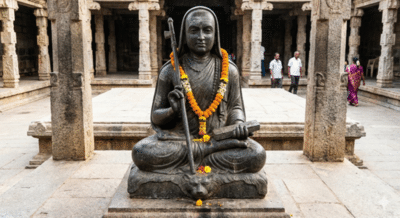 Adi Shankaracharya is one of the greatest and illuminating philosophers who lived in India. His teachings can enlighten our vision like the effulgence of sun falling on earth. Born in 8th century CE at Kalady of Kerala, Adi Shankara travelled throughout India on foot, spreading his profound philosophy of Advaita Vedanta. Even though he lived only for 32 years, he thrived like a shooting star in the intellectual landscape of India. In this article, we will explore 4 of the most powerful teachings of Adi Shankara for attaining spiritual enlightenment and deep inner calm in the modern world of distractions and unruly sensual pursuits.
1. Realising Oneness Through Advaita
 The concept of Advaita lies at the core of his teachings. It means “not two.” According to Shankaracharya, Brahman is the ultimate truth in this universe. It is the boundless, formless and ever-present reality.
In fact, Atman or the individual Soul is not different from Brahman. Every sensual distraction and the perceived duality that we experience in the outside world are all maya or illusion. Moksha can be achieved by realising the truth of oneness of the personal Self or Atman and the omnipresent Brahman.
2. Jnana Yoga of Shankaracharya
According to Shankara, the consistent pursuit of knowledge can sharpen our minds to such an extant that even the doors of Moksha will get opened in front our flaming intellects. The main question that we should take up is “Who am I?” In his classic works such as Brahma Sutra Bhashya, Upanishad Bhashyas and so forth, Shankaracharya pointed out that this continuous seeking of the truth about one’s own existence will lead us into the realisation “Aham Brahmasmi” or “I am Brahman.”
The realisation of this truth at an experiential level will free us from all kinds of bondages of cravings and aversions. Our souls will get filled with empathy towards the entire universe. When there is no duality, how are we different? What is the meaning of difference in sects or nationalities? Everyone is equal and everyone deserves to receive equal amounts of dignity and respect.
3. Shankara’s Snake-rope Analogy
But after a while, some light falls on his way from somewhere and the man sees the truth i.e., it was a rope that was lying in front of him and not a snake. Suddenly, like a switch that got activated in his brain, the man comes back to his normal state of mind and moves forward easily. This story points out the liberating power of truth. If we have truth on our side, then nothing can make us vulnerable, afraid or weak. If truth be with us, who can be against us?
4. The Transient Nature (Mithya) of World
 All thoughts, emotions and beliefs that people are holding within them are transient. They are all constantly changing. Whatever that takes birth, will die. Therefore, there is no meaning in holding on to these temporary realities. Realising this truth, we should begin our journey towards Moksha. Constant study and critical thinking is one of the best ways to grasp this truth. We can read and re-read the teachings of Shankaracharya. Additionally, seeking the guidance from an enlightened guru will also support our journey very strongly.
Explore the latest trends and tips in Health & Fitness, Spiritual, Travel, Life Hacks, Trending, Fashion & Beauty, and Relationships at Times Life!
Frequently Asked Questions (FAQs)