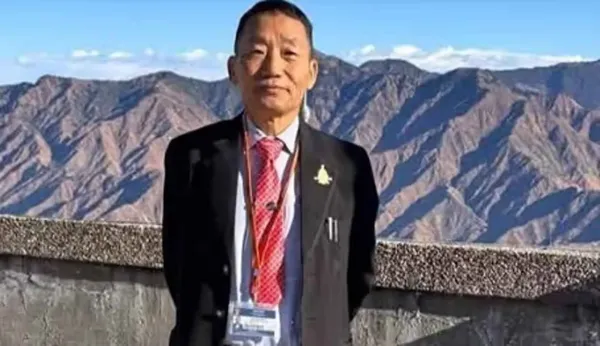
Gauhati High Court: has overturned a lower court order that granted bail to IAS officer Talo Potom, who is accused in connection with a 19-year-old man’s suicide case. The decision has drawn attention to judicial scrutiny in sensitive criminal investigations and the standards applied while granting bail in serious offences involving allegations of abetment to suicide.
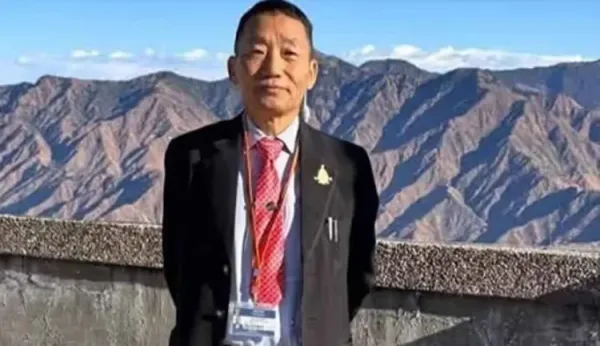
Talo Potom, an officer from Arunachal Pradesh, was serving as Special Secretary in the Public Works Department under the Government of Delhi at the time of his arrest last year. He was taken into custody after being named in suicide notes left by a 19-year-old, who was found dead at his rented accommodation in Lekhi village of Papum Pare district on October 23.
Despite the gravity of the allegations, Potom was released from judicial custody within seven days after the District and Sessions Court at Yupia granted him bail. This decision later became the subject of a challenge before the High Court.
In a detailed order, Justice Yarenjungla Longkumer of the High Court’s Itanagar Bench directed that Potom be immediately taken back into custody. The court observed that the trial court had failed to apply proper judicial reasoning while granting bail to the accused, who is facing charges of abetment to suicide.
The High Court noted that the order of bail was passed without considering the seriousness of the offence and the impact it had on society at large.
The father of the deceased approached the High Court by filing a criminal petition under Section 483(3) of the Bharatiya Nagarik Suraksha Sanhita. He sought quashing of the bail order, arguing that crucial evidence and material facts had been ignored by the lower court.
According to the petition, the suicide notes explicitly named Potom and another senior engineer, Likwang Lowang, accusing them of prolonged sexual exploitation, mental harassment, coercion, and threats. The deceased reportedly wrote that continuous humiliation forced him to take the extreme step.
Based on the complaint, police registered an FIR accusing the two officials of abetment to suicide, sexual exploitation, mental harassment, and corruption. In a tragic turn of events, Likwang Lowang, who was serving in the state’s Rural Works Department, died by suicide just hours after the FIR was filed.
These developments added further sensitivity to the case and raised concerns about misuse of power, abuse of authority, and the vulnerability of young individuals facing harassment.
The single-judge bench strongly criticised the District and Sessions Court at Yupia, stating that relevant materials were completely ignored while granting bail. The High Court observed that the findings of the trial court were contrary to settled legal principles governing bail in serious criminal cases.
The bench emphasized that the offence had shocked the collective conscience of society, a factor that should have been given due weight while deciding on bail.
While acknowledging that cancellation of bail should not be done routinely, the High Court clarified that the law permits quashing of a bail order if it is unjustified, perverse, or passed without considering material facts. The court held that releasing an influential person like an IAS officer at an early stage of investigation, despite the existence of a clear prima facie case, could derail the investigation process.
The order reinforced the importance of judicial responsibility and the need to balance individual liberty with the interests of justice, especially in cases involving serious allegations and public trust.