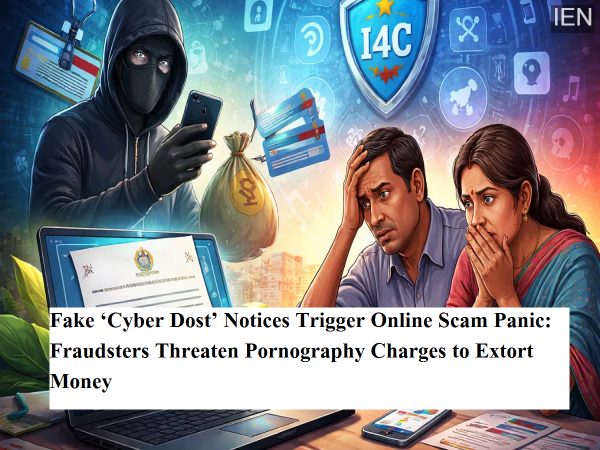
Cybercriminals in India are adopting increasingly aggressive tactics, now exploiting the names of trusted government initiatives to intimidate and extort money from unsuspecting citizens. In the latest case, fraudsters are circulating fake notices in the name of “Cyber Dost”, a cyber awareness campaign run by the Indian Cyber Crime Coordination Centre (I4C) under the Ministry of Home Affairs.
The scam involves threatening individuals with serious criminal charges, including allegations related to child pornography, and demanding immediate payment to avoid arrest. Authorities have confirmed that these notices are entirely fraudulent and are part of a growing trend of fear-based cyber extortion.
Cyber Dost, the official cyber safety outreach initiative of I4C, recently issued a public warning on social media after discovering that forged government-style letters were being widely shared online. These letters falsely claim to be official communications from cybercrime authorities.
The documents are designed to look authentic, carrying fake signatures of senior cybercrime officials and official-sounding language. Victims are accused of involvement in illegal online activities and are instructed to transfer a specified amount of money within 24 hours to avoid legal action, arrest, or prosecution.
To prevent panic, Cyber Dost publicly marked one such viral letter with a bold disclaimer stating “THIS IS FAKE”, making it clear that the document had no legal validity.
Officials associated with Cyber Dost and I4C have categorically stated that no government agency sends legal notices via email, WhatsApp, SMS, or random phone calls. Any communication related to investigations or legal proceedings follows a formal and verifiable legal process.
The authorities emphasized that cybercriminals rely on fear, embarrassment, and urgency to pressure victims into acting without verification. Once money is transferred, it becomes extremely difficult to trace or recover.
Scammers deliberately choose sensitive and socially stigmatized accusations, such as pornography-related crimes, to silence victims and discourage them from seeking help. Many people panic due to fear of reputational damage and comply without questioning the authenticity of the message.
Cybercrime experts note that this method has already resulted in significant financial losses, with victims transferring large sums to fraudsters out of fear rather than guilt.
Authorities have shared key indicators that can help people differentiate between real and fake communications:
Government agencies do not demand money to stop investigations
Legal notices are never issued through instant messaging platforms
Threats demanding immediate action within hours are a major red flag
Official letters always provide verifiable case numbers and contact channels
Poor formatting, spelling errors, or unusual payment requests signal fraud
If any message creates panic and demands secrecy, it should be treated with suspicion.
Cyber Dost has advised citizens to follow these steps if they receive any threatening or suspicious communication:
Do not respond to the message or sender
Do not share personal details, banking information, or OTPs
Avoid clicking on links or downloading attachments
Immediately report the incident by calling 1930, the national cybercrime helpline
File an online complaint at the official cybercrime reporting portal
Timely reporting can help authorities block fraudulent accounts and prevent further victims.
This case highlights a worrying trend where cybercriminals are increasingly misusing the names, logos, and authority of government institutions to appear credible. Targeting an awareness initiative like Cyber Dost itself shows how sophisticated and deceptive online scams have become.
Experts warn that as digital services expand, criminals will continue to exploit trust-based systems unless users remain alert and informed.
No legitimate authority will ever threaten arrest or demand money through informal digital channels. Any such communication is a scam—no exceptions. Awareness, verification, and prompt reporting remain the strongest tools to stay safe in an era of rising cybercrime.
Staying calm, questioning unexpected threats, and reporting suspicious activity can prevent financial loss and protect others from falling into the same trap.