Ishan Kishan vs Sanju Samson: India’s messy top-order puzzle once Tila
Sanjeev Kumar January 25, 2026 10:22 AM
Sanju Samson's quiet New Zealand series isn't just putting his own place under the microscope - it is reopening a selection problem India thought it had parked.
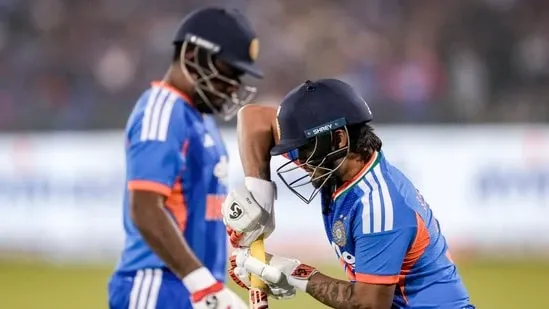
The top order is in flux, Tilak Varma is expected back soon, and Ishan Kishan has already produced one innings that forces the management to reconsider the opening combination. In that squeeze, Samson risks becoming the easiest name to move. But India's decision cannot be reduced to form vs patience. It has to be made as a structural call: what kind of top order makes India hardest to bowl to when the first-choice XI returns. Why Samson is being judged differently to others Sanju Samson is not being picked only as a batter. His value is tied to the shape he gives the line-up. India's T20 batting group is naturally left-leaning. Abhishek Sharma is a left-hander at the top, Tilak (when fit) is a left-hander who likely bats in the top four, and India often carries at least one more left-handed option later in the order. In that context, Samson becomes the obvious right-handed break at the top. That right-handed break is not aesthetic. It changes matchups. It forces captains to change angles and fields, and it reduces the opposition's ability to lock into a simple early-overs plan built around left-arm pace or left-arm spin. In short: Samson's presence makes India less predictable in the powerplay. That is why his failures are louder. When he falls early, India loses a wicket and loses a key piece of balance. What Ishan Kishan's innings actually changes Kishan's strong showing in the second match is not just a personal comeback story. It alters the selection conversation because he offers the same core package as Samson: wicketkeeper plus top-order intent. If India are looking for quick powerplay momentum, Ishan Kishan can provide it. If India are looking for a keeper who can open, he fits. And once a player delivers a match-defining innings, the why not him? question becomes unavoidable. The complication is that Kishan's case becomes far stronger while Tilak is missing - and far trickier once Tilak returns. Tilak's return is the real decision point India can delay the verdict through this series against New Zealand because the XI is not yet in its intended shape. Once Tilak is available again, the top four structure becomes the central issue.
If Abhishek opens and Tilak bats at No. 3, then India have a choice for the remaining top-order slot:
  • keep Samson to preserve the right-left rhythm in the top three, or
  • replace him with Kishan and risk a left-left-left top three
A left-left-left top order is not automatically flawed. It can be explosive on flat pitches. But it is also easier to plan against. Opponents can attack with repeatable angles, similar fields, and clearer matchup bowling in the first six overs. At World Cup level, "easy to map" becomes a genuine weakness. That is where Samson's selection argument still holds, even with modest runs: he keeps India's top order from becoming one-note. So should India drop Samson or keep him India should keep Samson for now - but only with a clear, short runway. Keeping him is sensible because it preserves the balance India are likely to want when Tilak returns. Dropping him immediately would solve one short-term problem while creating a longer-term one: a top order that can tilt heavily left and become easier to control in the powerplay. However, India cannot keep carrying early dismissals indefinitely. Samson doesn't need to score a fifty every game to justify selection. What he needs is consistent powerplay involvement - innings that do not end before the fielding restrictions have even been properly exploited. If the pattern continues - rushed shots, early exits, minimal powerplay influence - then India should move on. But if India move on, they should not do it in a way that makes the top three uniformly left-handed once Tilak is back.
The clean solution if Samson continues to fail If Samson's failures continue beyond the window, India should separate two ideas:
  • dropping Samson the player, and
  • removing the right-handed function from the top order
They should drop Samson if required, but still aim to keep a right-hander in the top three. That could mean using Suryakumar Yadav at three, while Ishan Kishan opens he innings with Abhishek Sharma and Tilak Varma slots in at number four. That approach preserves Kishan's value without making India's powerplay blueprint predictable. The verdict India should not drop Samson simply because Kishan has produced one loud innings. Samson's place is tied to a tactical need India will feel even more sharply when Tilak returns: maintaining a right-left rhythm at the top. But Samson's selection can no longer be unconditional. The next phase - the moment Tilak is fit again - should be treated as the true audition window. Either Samson provides the kind of powerplay contribution that justifies his structural value, or India should replace him and still protect the balance that makes them hardest to bowl to.
© Copyright @2026 LIDEA. All Rights Reserved.