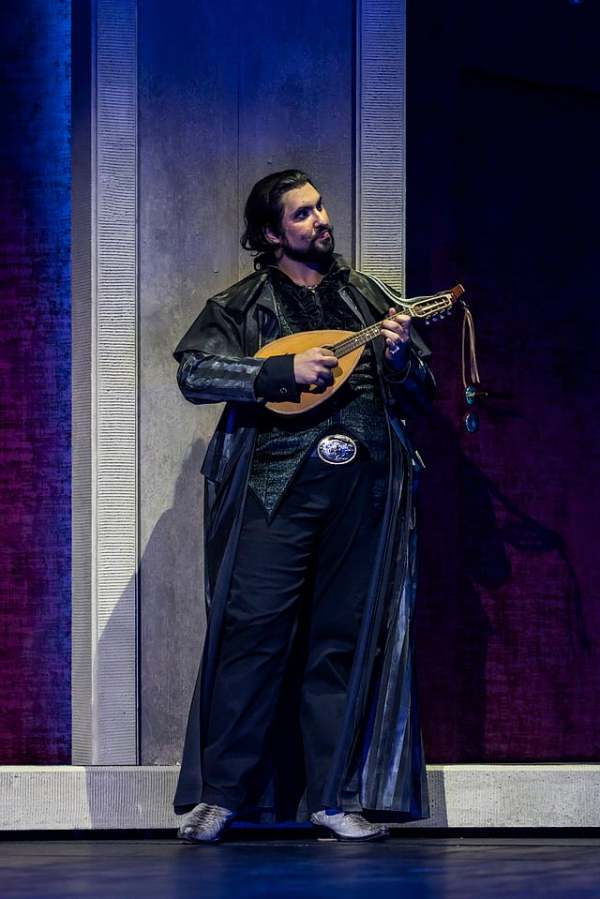
Raised in Mumbai, baritone Frazan Adil Kotwal isn’t the typical teenage musical prodigy. In fact, he got exposed to opera, the genre that he eventually specialised in, when he was 19. The sudden love for the art form made him take it up seriously, and he moved to Germany in 2017. Ever since, he has performed several iconic operatic roles on professional European stages, including the Count in Mozart's Le Nozze di Figaro and the title role in Don Giovanni.
Kotwal made his India debut on January 21 at the Royal Opera House, Mumbai. Accompanied by pianist Nadine Jo Crasto, he performed a set that blended the drama of the opera world with the poetic introspection of German songs or lieder. Titled From Dawn To Dream, the show was organised in collaboration with the Consulate General of Germany in Mumbai, Royal Opera House, Avid Learning, Steinway and Furtados. In an interview, the singer speaks about his journey.
Excerpts from the interview:
You’ve grown up in Mumbai. How did you feel about actually performing here, after singing in Europe for some time?
Europe has given me training, discipline and perspective as a musician, but Mumbai carries my memories, my family, my roots. Performing here is not about proving anything. It is about sharing. Sharing what I have grown into, with the city that quietly gave me the courage to dream.
How did you choose the programme?
The programme reflects different parts of my artistic life. Some of the music has been with me for many years and grown alongside me, while other pieces mark important milestones in my journey. I chose works that allow honesty on stage. Music where I can simply tell a story and trust that it will reach people, even if they do not understand every word.
How did you get exposed to opera?
Opera was not something I grew up with. In fact, it felt very distant at first. My early musical world was much broader and eclectic. When I finally heard opera properly at the age of 19, it was the voice that caught me. The sheer visceral human sound of it. That was the moment something shifted. It felt raw, emotional and larger than life, yet deeply personal at the same time.
At what age did you begin training and from whom?
I began my official training at the age of 24 with world-renowned soprano Ulrike Sonntag in Stuttgart. She taught me not only to sing but what it is like to be a disciplined musician. I have been incredibly fortunate to be guided by incredible mentors who shaped not only my technique but also my artistic thinking. Currently, I am being trained by legendary voice teacher Jack LiVigni who’s taking my voice to a new level.
You also studied mass communication in Mumbai. At what point did you decide music would be your career?
For a long time, music was something I loved deeply but did not dare to claim as a profession. Studying mass communication gave me structure and perspective, but music kept pulling me back. The decision came quietly, not dramatically. There was a moment when I realised that if I did not give music an honest chance, I would regret it forever. I took the leap and it’s worked out well.
What were the challenges in the early part of your stay in Germany?
I settled in Germany since 2017, and the early phase was challenging on every level. Language, culture, expectations and competition were all new. Building trust takes time, especially in something as tradition-bound as classical music. Challenges like not speaking German fluently enough, or not being completely vocally ready for a certain role got in the way. Looking back, those early struggles taught me resilience and patience.
When did you get exposed to lieder? How is the approach different, when you do opera and lieder?
I discovered lieder during my time in Mumbai, and it changed my relationship with singing. Lieder demands absolute honesty. There is nowhere to hide. Opera allows grandeur and theatricality, while lieder asks for intimacy and restraint. As a singer, it forces me to listen more closely, to the text, to the piano, and to my own inner voice.
How do you keep your voice in shape? Is there a daily regimen? Do you have certain restrictions in terms of diet and rest?
Consistency is key. I warm up daily, even on days I am not singing. Rest is non-negotiable, and I have learned to listen to my body. I am mindful of what I eat, how I sleep, and how much I speak, especially before performances. For me talking really tires the voice. So complete vocal rest is essential before big shows.
Los Angeles–Based Carnatic Singer Aditya Prakash On His Journey And The Making Of Room-i-NationYou’ve done many roles in famous works like Le Nozze Di Figaro and Don Giovanni. How do you prepare?
Each role begins with the text. Preparation is a mix of musical work, language and psychological exploration. But it’s a lot of ground work before I start singing the first note. Don Giovanni holds a special place for me because of its complexity and contradictions, and also it has been the toughest and longest role have sung till date. I am blessed that I am the first Indian ever to sing this on a professional stage. But every role teaches me something new about myself as an artiste and as a person, and pushes me to my limits.