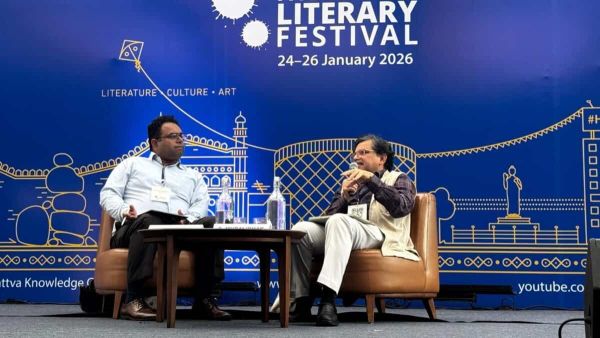
Hyderabad: The Aravallis judgement and its rollback shows that the Supreme Court is unsure about where it stands on certain issues, Justice S Muralidhar said in Hyderabad on Sunday, January 25, drawing on what he said were “immense disagreements within benches.”
“The Supreme Court is polyvocal, with multiple benches sometimes taking different positions,” the former Orissa High Court Chief Justice and now a senior Supreme Court advocate said.
Justice Muralidhar also flagged concerns over the functioning of the top court, prolonged undertrial incarceration and executive influence in judicial appointments during a panel discussion titled “(In)Complete Justice? Supreme Court at 75” on Day 2 of the Hyderabad Literary Festival.

Referring to the impact of stringent criminal statutes such as the Unlawful Activities (Prevention) Act (UAPA) and narcotics laws, Justice Muralidhar said they had altered the balance between liberty and detention.
“The presumption of innocence is central to the rule of law,” he said, adding that delays in criminal trials meant many accused persons remained in jail for years without verdicts. “What extraordinary laws do is saying with one hand tied behind your back, you have to bowl, field and win the match, which is impossible,” he said.
“This is a failure of the judicial system in not being able to expedite trials,” he said, adding that prosecutions under UAPA were often based on the assumption that proceedings would end within two or three years.
“That is far from the truth,” he said, referring to the Bhima Koregaon case. The consequences for accused persons were severe, he said, particularly in the absence of any consistent compensation regime.
“Tomorrow, that person gets acquitted after a full-fledged trial, which may take 10 years. There is no compensation for the lost years,” he said. “So, you cannot say delay in trial is not an issue. It is very much an issue,” Justice Muralidhar said.
If Parliament chose to retain stringent laws, he said, courts had to ensure that trials moved swiftly. “If it is going to be treated just like any other criminal case when it comes to trial, there can be no excuse to say, ‘let him spend some more years in jail and we’ll see later,’” he said.
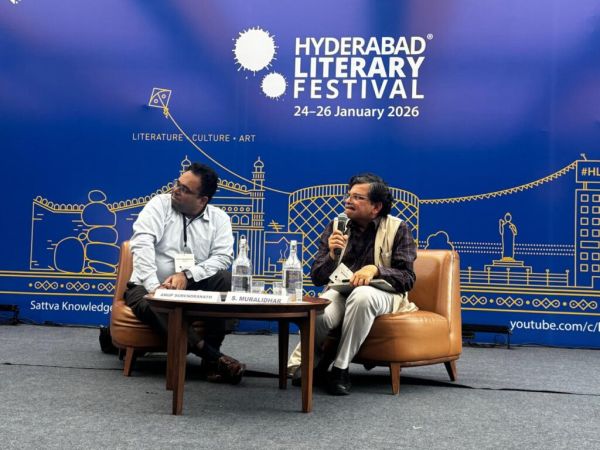
Explaining the theme of the session, which was also named after the book he edited, Justice Muralidhar said the phrase “incomplete justice” was drawn from Article 142 of the Constitution, which empowers the Supreme Court to pass orders necessary to do “complete justice” in cases before it.
“While we talk about what the judiciary has done right, we must also be willing to highlight where justice has failed or fallen short,” he said. Law shaped almost every aspect of daily life, he added, making the Supreme Court’s role central to constitutional governance.
Justice Muralidhar also spoke about the Chief Justice of India’s (CJI) administrative authority as “master of the roster,” which involves assigning cases and constituting benches. “That power can determine the outcome of cases,” he said.
On the criticism of judicial appointments right from the early years after Independence, Justice Muralidhar said concerns about executive involvement had become sharper in recent times.
“There is a growing perception that some judges know what awaits them after retirement,” he said, adding that such developments were “very troubling” for the credibility of institutions. He warned that acceptance of post-retirement political positions could affect public confidence in judicial autonomy.
Justice Muralidhar also urged greater transparency within the judiciary and stressed the importance of courts continuing to scrutinise executive action.
“If the judiciary is seen as becoming opaque or hesitant to question the executive, that is a serious concern,” he said.