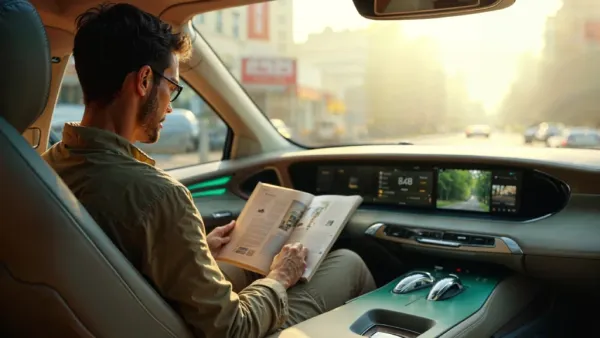
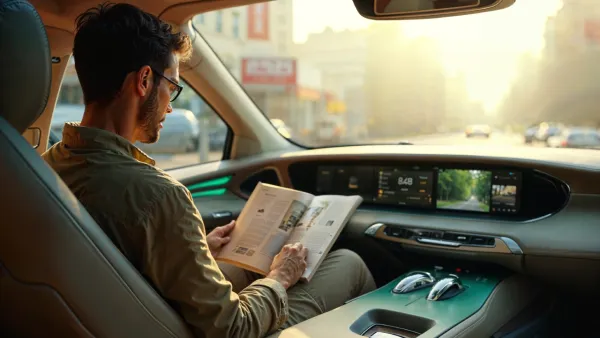
By the year 2025, the automobile industry will have completely switched to an entirely new business model based on software control and will no longer rely on mechanical parts. The development of sensors, AI, connectivity, and regulations has all played a significant role in the evolution of cars to be their designated places of use. Still, the public’s talk about the rapid introduction of self-driving cars is only sometimes accurate.
The more accurate picture of the time is that of “smart cars“, where there is a mix of gradual automation, constant software upgrades through the air, and an increase in the disparity between the various regulatory approaches in different areas. Hence, to comprehend 2025 automotive technology, one has to cut through the marketing hype and explore the interplay of software, sensing, and governance as a real-world phenomenon.
The main characteristic of the smart cars in 2025 would not just be their electric power source, but the emergence of the software-defined vehicle. The newest generation of automobiles is built around a centralised processing system instead of a large number of independent electronic control units. The transition made it possible for producers to change the operating characteristics of a vehicle after it has been sold, to make the driver-assistance system better, and even to release new software-based functions.
The updates that use ian nternet connection have become a primary factor in distinguishing one competitor from another. Cars are now expected to enhance their performance over the years just like smartphones. This change has not only shifted customer expectations but also manufacturers’ responsibilities, as ongoing software support and cybersecurity protection have become just as vital as engine reliability was in the past.
One of the features, Full Self-Driving (FSD), although still considered as an advanced driver assistance system rather than true autonomy, is a perfect example of Tesla’s data-driven strategy.
Customer reviews regularly highlight Tesla’s surefire ability to roll out frequent over-the-air updates that not only improve the driving assistance behaviour but also the interfaces and energy efficiency. The company’s choice of camera-based perception over LiDAR has created a lot of debate. Advocates of this choice claim that the vision-based systems can be scaled better and are likewise closer to human driving, whereas critics refer to edge-case failures and regulatory scrutiny.
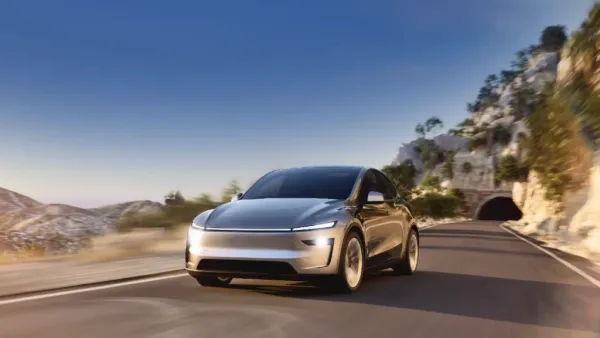
Most often, in the year 2025, Tesla vehicles are going to offer some of the most sophisticated driver assistance that requires active participation, but they are also going to be a case in point of the danger of using marketing language that is so aggressive and ahead-of-time that it can outstrip the regulatory definitions of autonomy.
The difference can be seen clearly in examining the systems that are designed for conditional autonomy. Mercedes-Benz has adopted a very cautious but government-regulated method with its Drive Pilot system. The Drive Pilot, which is licensed for use in some regions of Germany and the USA, allows for hands-free driving only in predetermined conditions, e.g., slow-moving traffic on the highway.
The difference is very noticeable when comparing systems which have been explicitly made for conditional autonomy. The Drive Pilot system from Mercedes-Benz has indeed taken a very conservative but also regulatory-aligned approach. The Drive Pilot, which has been permitted in limited areas of Germany and the U.S., allows a non-driver in certain situations, like low-speed highway traffic, to drive. Reviews frequently point to the carmaker’s insistence on redundancy, clear operational limits, and legal accountability as positive aspects. Although it may not be as daring as some competitors’ systems, Drive Pilot is still one of the few features available in the market that approach Level 3 autonomy.
The dispute between Tesla and Mercedes illustrates a larger division within the automobile industry: rapid iteration versus guaranteed regulation. Neither area has claimed the top spot yet, but they both are responsible for the smart car experience in 2025.
With the government backing it, the automobile industry in China is said to be the priciest and best innovation hub globally; meanwhile, the country with the largest population also comes with the biggest demand for smart cars. As well as one of the strongest domestic competitions in the world. BYD, for example, is one of the companies that best represent this trend. The production of BYD is not only focused on electric platforms but also on integrated software, driver-assistance systems, and connectivity features, which are designed specifically for the local digital ecosystem, making them more and more suitable for the market.
The reviews of BYD’s premium models accentuate the perfect harmony of navigation, voice assistants, and semi-autonomous features that are all part of China’s larger smart-city infrastructure. The cars usually give priority to digital experiences inside and fast feature rollout rather than to complete autonomy. Their marketing outside China brings up issues such as software localisation, data governance, and regulation.
Connectivity has shifted from being a nice-to-have feature to being an obligatory requirement. The vehicles that are going to be marketed as smart in 2025 will be the ones that are permanently to be connected to the cloud for various purposes such as navigation, diagnostics, entertainment and even fleet learning. The ability to connect with the cloud opens the door to a number of advanced features like predictive maintenance, real-time traffic optimisation, and collaborative working for more sophisticated driving-assistance systems, amongst others.
On the downside, the constant connection exposes the system to potential attacks. The issue of security in the digital world has become one of the top concerns for both regulators and car manufacturers. The software that is running in the car must be secured from getting hacked for the whole period that the car is operational, and in case of a hack, the safety consequences of that might be way more than just the disruption of the infotainment system. The most trusted smart cars are usually the products of manufacturers who have provided proof of good reputation regarding secure update deployment and long-term support.
Nevertheless, the public is mainly focused on consumer cars, whereas the cutting-edge technology that can actually make cars self-driving in 2025 is still mostly used in commercial operation under tight control. The case of deploying autonomous systems in logistics, robo-taxis, and industrial fleets is where such systems often outstrip private automobiles in terms of capabilities, and that is because they operate under predefined, strict environments. The mentioned developments do have an indirect impact on consumer vehicles by speeding up the process of sensor refinement, simulation, and regulatory learning, although full autonomy is still limited in the case of personal transport.
Global regulatory actions have been the main driving force determining the direction of development and the pace of progress in tandem with smart car technology. US authorities are still allowing tests to be carried out on-site, thus leading to varying degrees of technology implementation and public discussions about it. The European Union’s attitude is one of caution, as it insists on compliance with safety standards, certifications, and the clarity of liability, which, while it slows the rollout of the technology, it also fosters the trust of the institutions. China adds smart cars to its digital governance network, thus allowing faster scaling under the control of central authorities.
These differences mean that a “smart car” in 2025 is not a uniform product worldwide. Software features, autonomy levels, and even user interfaces vary significantly depending on jurisdiction.
In spite of the exceptional advancements at the onset of 2025, the smart cars are still relying on the drivers basically. Not a very specific level of autonomy or complete self-driving for end users has been achieved. In rare edge cases, complex urban settings, and bad weather, the systems do not perform well. Therefore, human monitoring in any form, either active or conditional, is still very important.
Also, the rapid complexity in automobile manufacturing raises the limitations of repair, the cost of ownership in the long run, and the gap between digital haves and have-nots as the main issues. As cars transform into software platforms, it is the access to updates and services that will mainly determine their value.
Smart cars of 2025 are a revolutionary yet decisive point in automotive history. Driving experience is now more than ever a function of software, sensors, and connectivity rather than engines. Tesla, Mercedes-Benz, and BYD are among the leading companies that offer different yet influential models of integrating digital and autonomous approaches. However, the movement is still inconsistent and highly associated with regulations and social acceptance. The fate of the smart cars will not be defined only by the technological capability but it will also be shaped by the way societies will choose to rule, adopt, and adapt to the vehicles that are no longer simple machines, but increasingly complex digital systems.