This incident was not ordinary, it was a proof of Ram's mature thinking and deep vision of life.
Ravana was also a great scholar
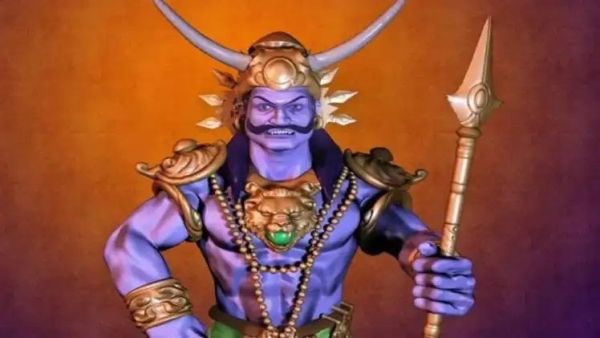
We often know Ravana as a villain, the kidnapper of Sita, an arrogant king. But at the same time, he was also an incomparable scholar, a great scholar, an expert in the Vedas and scriptures, and a great devotee of Shiva. Ravana, who received a boon from Brahma, was proficient in politics, Ayurveda, astrology and ethics. Ram knew this very well. He only punished Ravana's actions and did not negate his knowledge.
Learn not from the enemy, but from his mistakes
When Ravana was on his deathbed, Rama told Lakshmana to go and get the final knowledge from him. Ram knew that the war may have ended, but the real struggle continues throughout life, between ego and knowledge. Ravana became an example even after being defeated in this war.
Ram's sentence was
 Ramayan
“Guru Prachch Sushastram Ravanam Param Dwijam.
Nanyaḥ Panditāmeti Yatha Rāvanapungavaḥ.”
That means no one is as learned as Ravana. Go, get knowledge from him.
Laxman's hesitation and Ram's vision
Lakshman was astonished. Now he wanted to learn from the demon against whom he had fought, due to which Mother Sita was abducted, but Ram's vision was different, he was not seeing the person, he was seeing the knowledge hidden within him. When Lakshmana asked Ravana standing at his head, Ravana remained silent. Ram said, "If you are going to attain knowledge, then go as a disciple, not an enemy. Sit at his feet."
Ravana gave these three teachings to Laxman
When Lakshman sat down politely, Ravana gave his last three teachings.
- Good work should never be postponed: the sooner a good work is done, the better it is.
- Misdeeds should be avoided as much as possible: The more you stay away from bad deeds, the more peaceful your life will be.
- One should never underestimate the enemy: narcissism and overconfidence lead to destruction.
Ram's victory is not on body, but on thoughts.
Ravana died, his body vanished, but his knowledge remained immortal. Rama ensured that his knowledge was not erased. He showed that one can hate one's mistakes, but not one's knowledge. This very approach makes him 'Maryada Purushottam', where justice is accompanied by compassion, and where there is humility to learn even in the midst of hostility.
Knowledge can be acquired even from the enemy
In today's era, where ideologies are at loggerheads, where disagreement is converted into enmity, this viewpoint of Ram becomes extremely relevant. This teaches us to learn to separate the idea from the person. Truth and knowledge can be found even where we least expect it, even from the enemy.
Rama not only saw Ravana as an evil being, but also respected him as a wise man. By sending Lakshman to learn from the 'defeated' Ravana, he laid the foundation of a new culture of learning from the enemy also. This is the most beautiful victory of Ramayana, not over ego, but over faith in knowledge.