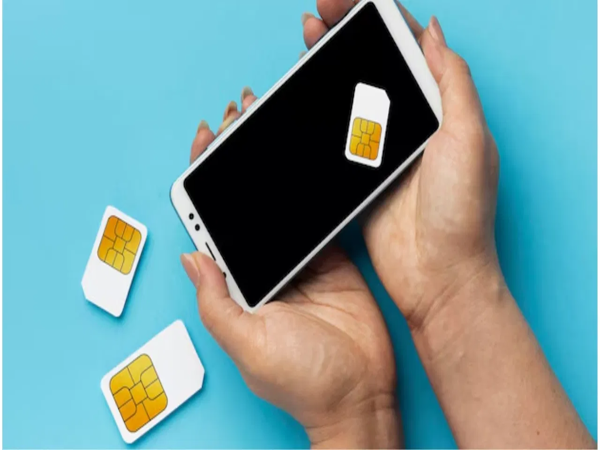
SIM Card Design Technology: Have you ever noticed that every SIM card has one corner cut off? This isn't just for aesthetic purposes. There's a technical reason behind it that protects both your phone and the SIM card from damage. Pick up a SIM card from any country in the world, and you'll always find this corner. This small design change plays a significant role in the safety and proper functioning of your mobile phone.
What does the history of SIM card design tell us?
SIM cards originated in the 1990s, when they were as large as today's ATM cards. As mobile phones became smaller, SIM cards also evolved into mini, micro, and nano SIMs. The European Telecommunications Standards Institute (ETSI) decided to standardize the SIM card design globally. While the size changed, the cut corner remained a constant feature in every SIM card. The purpose was to ensure safe and correct use of the SIM card in every device.
The cut corner acts as a guide.
The gold chip in the middle of the SIM card connects to the phone's SIM reader. If the SIM card is inserted incorrectly, this chip or the phone's SIM slot could be damaged. The cut corner acts as a guide, preventing the user from inserting the SIM card incorrectly. This is why every SIM card, whether mini, micro, or nano, has a cut corner. This small cut prevents significant damage to the phone.
A beneficial design for mobile companies, too
This SIM card design is not only useful for users but also for mobile phone manufacturers. Companies design the SIM tray and slot based on this corner. This reduces the possibility of errors during phone assembly. This is why a phone manufactured anywhere in the world can easily work with a SIM card from any country.
This trend may change with e-SIMs
Now, e-SIM technology is rapidly gaining traction in smartphones. Several companies, including Apple, have launched phones that don't even have a physical SIM slot. An eSIM is completely digital and activated online by the operator. In the future, as the use of eSIMs increases, physical SIM cards may become a thing of the past. However, for now, this design remains an important part of mobile security.
Disclaimer: This content has been sourced and edited from TV9. While we have made modifications for clarity and presentation, the original content belongs to its respective authors and website. We do not claim ownership of the content.