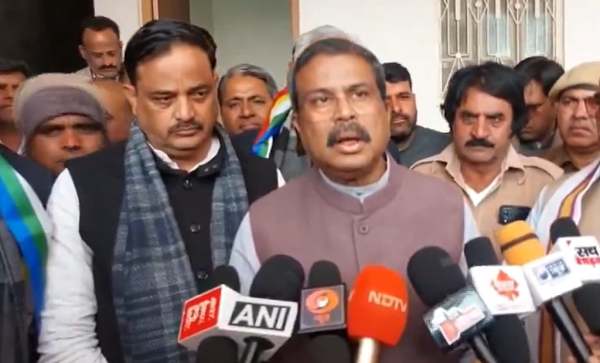
Union Education Minister Dharmendra Pradhan assured that there will be no discrimination or misuse of law under UGC’s new Promotion of Equity Regulations 2026. The rules have sparked protests and concerns over caste-based discrimination definitions.
UGC Anti-Discrimination Policies: Union Education Minister Dharmendra Pradhan on Tuesday tried to assure students and stakeholders over the newly notified regulations by the University Grants Commission (UGC) in the following words: “There will be no discrimination. No one can misuse the law in this regard.”
The UGC has recently notified the Promotion of Equity in Higher Education Institutions Regulations, 2026, which seeks to establish a proper mechanism for grievance redressal and institutional support to disadvantaged sections in universities and colleges.
The notification has received an adverse reaction from certain sections of students, teachers, and society in general, particularly with regard to the definition of “caste-based discrimination.” Critics have raised concerns about possible ambiguity in the language and how it could be interpreted at the institutional level.
Amid the growing debate, students from some upper-caste communities have announced a protest outside the UGC headquarters in Delhi on Tuesday. The protest call comes after reports of unrest among students at various university campuses and hostels in the past few days.
The controversy has also had political implications, with a senior bureaucrat and a BJP youth wing leader resigning recently over differences with the policy.
According to the media reports, to address concerns, Pradhan said the purpose of the regulations is to enhance equity and ensure fair treatment, while also preventing misuse. He emphasised that the policy is intended to ensure inclusion and accountability in higher education institutions.
What is new UGC rules?
Under the new UGC rules, every higher education institution is required to establish an Equal Opportunity Centre. These centres will coordinate with civil society groups, faculty and staff, local media, district administration and police. They will also work with District and State Legal Services Authorities to facilitate access to legal aid for students.
The Equal Opportunity Centre, to be constituted by the head of the institution, will include representation from Other Backward Classes (OBCs), Scheduled Castes (SCs), Scheduled Tribes (STs), Persons with Disabilities (PwDs) and women.
As per the rules, the centers will be responsible for the implementation of equity-related policies and programs, as well as guiding the disadvantaged groups in academic and financial matters, and coordinating with the concerned authorities as well as civil society organisations for addressing grievances.