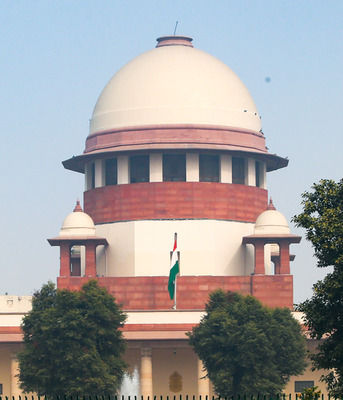
New Delhi: Holding that there is "no place for reformative theory" for acid attackers, a division bench headed by Chief Justice of India (CJI) Surya Kant Tuesday said that "one has to be extremely harsh" with such offenders.
Calling for stricter punishment and measures against acid attackers, the CJI verbally observed that "unless the action is so painful for the accused, it will not work". The bench suggested that immovable assets of such offenders can be attached and auctioned by the prosecuting agencies to compensate victims of acid attacks.
The CJI also asked the counsel for the Central government to "think of some legislative intervention of shifting of the onus (on the offenders).. this is not less serious than dowry death". The CJI further asked the counsel for Centre to consider "carving out an exception to general sentencing policy" in cases of acid attacks.
The development took place during the resumed hearing of a public interest litigation (PIL) seeking directions on dealing with acid attack cases, stressing that punishments in acid attack cases must be strong enough to discourage such attacks.
The Bench also directed all state governments and Union Territories to place detailed information on record regarding acid attack cases across the country.
"Let all States and Union territories furnish a list of incidents of attacks reported year wise, whether chargesheets were filed or not... How many cases are decided and how many are pending," the Bench ordered.
The top Court also sought specific details about each acid attack victim. The Court sought for "the brief particular of each victim of acid attack, her academic qualification; her employment; marital status; medical treatment; expenses incurred or to be incurred; specific rehabilitation scheme for the victim of acid attack if any"
The top court also urged all High Courts "to consider the desirability of issuing administrative for expediting and concluding trials in acid attacks in a time-bound manner and out- of-turn basis".
Calling for stricter punishment and measures against acid attackers, the CJI verbally observed that "unless the action is so painful for the accused, it will not work". The bench suggested that immovable assets of such offenders can be attached and auctioned by the prosecuting agencies to compensate victims of acid attacks.
The CJI also asked the counsel for the Central government to "think of some legislative intervention of shifting of the onus (on the offenders).. this is not less serious than dowry death". The CJI further asked the counsel for Centre to consider "carving out an exception to general sentencing policy" in cases of acid attacks.
The development took place during the resumed hearing of a public interest litigation (PIL) seeking directions on dealing with acid attack cases, stressing that punishments in acid attack cases must be strong enough to discourage such attacks.
The Bench also directed all state governments and Union Territories to place detailed information on record regarding acid attack cases across the country.
"Let all States and Union territories furnish a list of incidents of attacks reported year wise, whether chargesheets were filed or not... How many cases are decided and how many are pending," the Bench ordered.
The top Court also sought specific details about each acid attack victim. The Court sought for "the brief particular of each victim of acid attack, her academic qualification; her employment; marital status; medical treatment; expenses incurred or to be incurred; specific rehabilitation scheme for the victim of acid attack if any"
The top court also urged all High Courts "to consider the desirability of issuing administrative for expediting and concluding trials in acid attacks in a time-bound manner and out- of-turn basis".