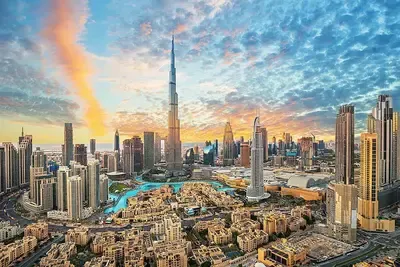
The UAE’s $570 billion economy is entering a new phase of expansion, powered less by hydrocarbons and increasingly by trade, technology, infrastructure and human capital, as global institutions converge on forecasts that place the country among the world’s fastest-growing major economies in 2026.
Nominal gross domestic product climbed to an estimated $569 billion in 2025, lifting gross domestic product (GDP) per capita to about $51,290 and more than $82,000 on a purchasing power parity basis. The transformation marks a decisive break from the early decades after federation, when oil accounted for more than 85% of national output. Today, non-oil sectors generate over 77% of real GDP, according to the Federal Competitiveness and Statistics Centre, highlighting how diversification has become the backbone of economic resilience.
Historical data shows the UAE economy expanded nearly 231-fold between 1971 and 2013 to Dh1.45 trillion. More than a decade later, momentum has not slowed. Policymakers have accelerated reforms to strengthen private-sector participation, attract foreign capital and build next-generation industries spanning logistics, technology, clean energy and advanced manufacturing.
Trade eyes $1 trillion
The rebalancing of the economy is most visible in trade. Non-oil foreign trade surged to Dh835 billion in the first quarter of 2025 alone, driven by rising re-exports, expanding Asia corridors and new trade agreements. Banks estimate total foreign trade could approach the $1 trillion mark by 2026 as the UAE deepens its role as a gateway linking Asia, Europe and Africa.
Tourism continues to break records as Dubai and Abu Dhabi capitalise on major global events, cultural districts and aviation connectivity. Emirates, Etihad and Air Arabia have reinforced the UAE’s status as a global transit hub, while hospitality and leisure sectors benefit from strong international arrivals.
Financial services and fintech activity have also accelerated, supported by regulatory reforms allowing full foreign ownership across most sectors. The UAE President Sheikh Mohamed bin Zayed Al Nahyan has repeatedly linked diversification to national competitiveness, emphasising that future growth will be anchored in knowledge, innovation and technology-led industries.
Forecasts signal strong growth
International institutions reflect growing confidence in the UAE’s outlook. The International Monetary Fund has raised its 2026 growth forecast to about 5%, citing strong non-oil expansion, resilient tourism inflows and rising hydrocarbon output. The World Bank projects growth near 4.9%, supported by infrastructure spending, expanding services and trade-driven gains.
The Central Bank of the UAE is more optimistic. Its latest quarterly review projects real GDP growth of around 5.3% to 5.4% in 2026, driven by a rebound in oil production under revised Opec+ quotas and sustained non-hydrocarbon momentum. Inflation is expected to remain contained between 1.5% and 1.9%, preserving purchasing power and supporting domestic demand.
Private-sector forecasts echo this view. Standard Chartered expects GDP growth of about 5% in 2026, citing supply-chain realignment and expanding trade flows. Mastercard Economics Institute projects growth of about 4.3%, placing the UAE among the Gulf’s top performers.
Supply chains redraw map
Global supply-chain reconfiguration has become one of the UAE’s strongest tailwinds. As companies seek to diversify logistics routes and reduce geopolitical risk exposure, the country has positioned itself as a neutral, efficient and well-connected commercial hub.
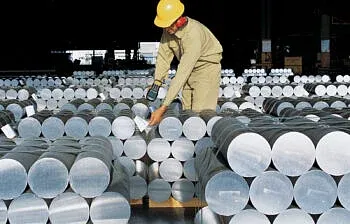
Asia-linked trade alone is projected to account for roughly one-third of total volumes by 2026. Abu Dhabi’s non-oil foreign trade surged nearly 35% in the first half of 2025 to Dh195.4 billion, reflecting rising exports of aluminium, petrochemicals, manufactured goods and high-value re-exports.
Dubai’s non-oil economy expanded by 4.4% during the same period, driven by transport, wholesale trade, hospitality and financial services. These gains are gradually reducing sensitivity to oil cycles and anchoring growth to global demand patterns rather than commodity price swings.
Infrastructure anchors productivity
Infrastructure investment remains central to the UAE’s growth strategy. Federal authorities are advancing transport, logistics and digital projects valued at more than Dh170 billion through 2030. Road expansion initiatives aim to improve network efficiency by more than 70% over five years, while upgrades to major corridors such as Sheikh Mohammed bin Zayed Road and Al Ittihad Road are expected to ease congestion and support urban expansion.
Ports, airports and logistics zones continue to anchor the trade ecosystem. Jebel Ali Port has expanded automation capacity, while the National Maritime Navigation Centre has strengthened maritime safety and shipping efficiency. The UAE’s re-election to the International Maritime Organisation’s Category “B” council reinforces its influence in shaping global maritime standards.
Energy transition accelerates
The energy sector is undergoing a parallel transformation. In 2025, the UAE launched the Global Energy Efficiency Alliance with participation from more than 40 countries and international organisations, positioning itself as a convenor of sustainability initiatives.
Authorities have reaffirmed targets to reduce national energy demand by up to 45% by 2050 under the National Energy and Water Demand Management Programme. Renewable energy investments, hydrogen projects and grid modernisation initiatives are expected to attract billions of dollars in capital while preserving the UAE’s role as a reliable hydrocarbon supplier during the transition phase.
SMEs power expansion
Small and medium-sized enterprises form the backbone of the private economy. SMEs account for more than 94% of registered businesses and contribute over 60% of non-oil GDP. Policymakers aim to double the number of SMEs to one million by 2030.
The UAE has ranked first globally for entrepreneurship for four consecutive years in the Global Entrepreneurship Monitor survey, topping high-income economies in access to financing, government support and regulatory efficiency. About 70% of adults report strong opportunities to start businesses, while nearly four in five new entrepreneurs prioritise social and environmental impact.
Dubai’s network of more than 20 specialised free zones, digital licensing platforms and venture capital programmes continues to attract founders from Asia, Europe and Africa. Digital banks such as Wio have reduced entry barriers, while initiatives such as Make it in the Emirates Accelerator and EDB 360 aim to fast-track industrial startups. The Emirates Development Bank and RAKBank have launched a Dh1 billion fund to support micro and small enterprises in manufacturing, healthcare and renewable energy.
Housing, urban growth
Population growth is reinforcing domestic demand. The UAE’s resident population has crossed 10 million, driving sustained demand for housing, retail and services. In 2025, housing support programmes issued more than Dh2.5 billion in grants and loans, pushing Emirati homeownership to about 91% — among the highest globally.
Urban development projects focused on sustainability, smart infrastructure and mixed-use communities continue to attract foreign investors and long-term residents, strengthening real estate’s contribution to GDP and employment.
Expansion of frontier industries
Beyond traditional sectors, the UAE is expanding into frontier industries. The Mohammed bin Rashid Space Centre has secured a permanent role in Nasa’s Gateway lunar station programme, while satellite launches and deep-space missions are building advanced engineering capabilities.
Projects such as the Rashid Rover 2 lunar mission and the Emirates Asteroid Belt Mission are expected to generate spillover benefits for robotics, materials science and data analytics, reinforcing the UAE’s ambition to embed innovation into the broader economy.
Innovation-driven model
Economists say the most important shift is not headline growth rates but the changing composition of output. Non-oil GDP is projected to expand by nearly 5% annually through 2026, while hydrocarbon output is expected to rebound as Opec+ production constraints ease.
With inflation low, fiscal buffers strong and foreign direct investment rising, the UAE is entering the next growth cycle with structural advantages that few emerging markets possess. Government spending aligned with the “We the UAE 2031” strategy is expected to sustain momentum through infrastructure upgrades, digital transformation and workforce development.
More than five decades after federation, the UAE’s growth story has evolved from oil-led expansion to a diversified, innovation-driven model anchored in global trade, capital flows and human talent — positioning the country for another decade of resilient expansion.