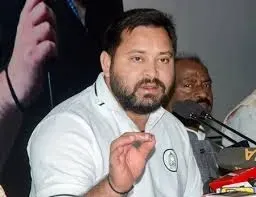
RJD: The Rashtriya Janata Dal has renewed its demand for judicial oversight in the investigation into the death of a young NEET aspirant, urging that the Central Bureau of Investigation conduct the probe under the supervision of a Supreme Court or High Court judge. The party cited prolonged delays, conflicting official statements, and growing mistrust among the victim’s family as reasons for seeking court monitoring.
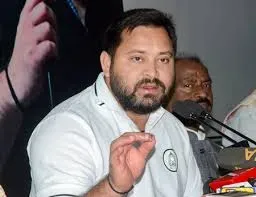
RJD spokesperson Ejaz Ahmad raised questions about the effectiveness of the Bihar Police and the Special Investigation Team, noting that nearly three weeks have passed without any significant breakthrough. He said the absence of clear progress has only deepened public concern, particularly after senior police officials reportedly characterized the death as a suicide while the family continued to dispute that conclusion.
According to Ahmad, the manner in which the investigation has unfolded suggests that justice may remain elusive without independent oversight. He argued that the early framing of the case, despite objections from the family, has undermined confidence in the process.
Although the Bihar government has already recommended a CBI investigation, the RJD questioned whether that alone would be sufficient. Ahmad pointed to the state’s “double-engine government” arrangement, implying that political alignment between the state and the Centre could affect the probe’s independence.
He said a court-supervised investigation would provide an added layer of transparency and accountability, helping to restore trust among the victim’s family and the wider public. Without such supervision, he warned, even a central agency inquiry may fail to deliver credible outcomes.
The victim’s family has sought answers directly from top officials. On Friday, they met Bihar Director General of Police Vinay Kumar but later said they received no concrete assurance regarding a fair investigation. Family members claimed the DGP continued to maintain that the case involved suicide, a stance they strongly contest.
Following that meeting, the family also approached Deputy Chief Minister and Home Minister Samrat Choudhary. However, they later expressed dissatisfaction, saying the discussions did not address their concerns or clarify how the investigation would move forward.
The deceased student’s mother has made serious allegations against the police, claiming that officials involved in the case had been influenced improperly. Her son echoed those claims, alleging that investigators were treating the family with suspicion rather than empathy.
He said the police and the SIT appeared more focused on questioning the family than on identifying those responsible. According to him, this approach has left the family feeling targeted and marginalized at a time when they are seeking justice.
The student, who was preparing for the National Eligibility cum Entrance Test, was found unconscious in her hostel room on January 6. She was taken to a private hospital, where she remained under treatment for several days before succumbing to her injuries on January 11.
The circumstances surrounding her condition at the time she was discovered have remained a central point of contention, with the family consistently disputing the initial conclusions drawn by the authorities.
Early in the investigation, the Patna Senior Superintendent of Police stated that there was no evidence of sexual assault. However, that assessment was later challenged by findings from the post-mortem conducted at Patna Medical College and Hospital and by a report from the Forensic Science Laboratory.
Both reports indicated that sexual assault could not be ruled out. The FSL analysis further confirmed the presence of semen on the victim’s clothing, contradicting the initial police narrative and intensifying calls for a more thorough and impartial probe.
In response to public concern, Patna Police had formed a high-level Special Investigation Team under the supervision of an officer of Inspector General rank. Despite this, the investigation has reportedly made limited headway. The SIT has collected blood samples from more than 15 individuals, including members of the victim’s family.
The case has since been formally transferred to the CBI. Even so, political pressure continues to mount for judicial supervision to ensure that the investigation proceeds transparently and that all findings are placed beyond doubt.