WHY IT'S WAY SMARTER TO JUST USE YOUR HANDS
The announcement last month that Indian Railways will stop using the bandhgala coat, citing its possible 'colonial roots,' as a uniform option, highlights the rawness about Indians espousing anything of 'colonial' origin. It's also emblematic of the strong desire to show pride in materials and designs of indigenous sources.
Attraction towards Western-themed goods and experiences is widespread. One such sought-after experience is food in a 'fancy' restaurant. Marathi playwright PL Deshpande has a comedy bit describing the first experience of attempting to have a snack with his friends in post-Independence Mumbai at the 'high-end' cafe, Monginis.
He laments that their earlier experience of ordering tea and snacks at the local corner stalls had inadequately prepared them to master the menu and ordering systems of the 'high-end' cafe. Because of this lack of preparation and exposure, even reading the sign at the entrance, 'Monginis' filled them with the same dread that one feels when confronted with a 'Beware of the Dog' warning on the door of a house.
My upbringing in a Marathi Pune-based middle-class family proved to be an utterly deficient training program for handling such experiences. A move to the US for higher education and collaboration with American and European professors and subsequent work there did facilitate exposure to, and imbibing of, such experiences ranging from fine-dining to driving fast cars on German autobahns.
There were many screw-ups. But eventually, the faux pas frequency came down. Even now, there are still some jitters at the outset of anything original, and often there's a feeling of 'not fitting into the crowd'. But the allure of such experiences remains.
Is this attraction a result of our subconscious being taken over by Macaulay's Machiavellian wiles? I think it's something simpler. We humans love shiny things. And Western themes simply offer us many such 'shiny' choices.
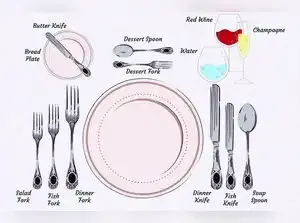
But what is the cause of this anxiety that Western-themed situations provoke? Is it rooted in some inferiority complex? Why should we feel embarrassed at having to ask a few clarifying questions about the menu, the use of various cutlery items, or the correct pronunciation of 'hors d'oeuvres'? After all, it's not a sign of superior intellect to know correct pronunciations of unfamiliar words. Or to know the appropriate usage of a few peculiarly shaped pieces of steel.
Another facet of humans is the ability to form groups and institute group-norms. Such norms serve to bind, but also to 'other' outsiders. Fundamentally, though, any such norms are just information - analogous to a set of directions on a map, or to instructions for setting up some equipment. Possessing knowledge to 'read' these correctly does not correlate with superior abilities.
Now, it doesn't make sense to enter any setting completely unprepared, and thereby fall foul of even the basic rules and ethos of the environment. But some ignorance about the 'do's and don'ts' doesn't automatically condemn someone as inferior. It's interesting that Western-themed information and norms are viewed as 'superior' to indigenous ones. Do visitors to India feel any hesitation or anxiety while proclaiming that they cannot speak 'Hindu' (sic) satisfactorily?
A natural impulse of a developing country is to showcase its achievements and growth. Another motivation is to demonstrate it detaching from any colonial tethers. Such messaging to show separation from colonial symbols is important. It can help build the population's confidence. This confidence acts as a bulwark against the aforementioned anxiety.
The next step on the journey is to create indigenous offerings that rival those of Western origins. Words and messaging are not enough to accomplish this. Richness and quality of the offering have to match, and surpass, those offered in the West. The choices are vast - consumer goods, travel, restaurants, or any other services.
Products and services will be judged in the market purely on merit and must come out superior. Only then will 'Mera Bharat Mahan' - which currently has multiple interpretations as a statement of aspirations, a reflection of success in a few sectors, or a tribute to the nation's rich history - transition into a statement of fact.
The writer is MD, Resonance Laboratories, Bengaluru
Attraction towards Western-themed goods and experiences is widespread. One such sought-after experience is food in a 'fancy' restaurant. Marathi playwright PL Deshpande has a comedy bit describing the first experience of attempting to have a snack with his friends in post-Independence Mumbai at the 'high-end' cafe, Monginis.
He laments that their earlier experience of ordering tea and snacks at the local corner stalls had inadequately prepared them to master the menu and ordering systems of the 'high-end' cafe. Because of this lack of preparation and exposure, even reading the sign at the entrance, 'Monginis' filled them with the same dread that one feels when confronted with a 'Beware of the Dog' warning on the door of a house.
My upbringing in a Marathi Pune-based middle-class family proved to be an utterly deficient training program for handling such experiences. A move to the US for higher education and collaboration with American and European professors and subsequent work there did facilitate exposure to, and imbibing of, such experiences ranging from fine-dining to driving fast cars on German autobahns.
There were many screw-ups. But eventually, the faux pas frequency came down. Even now, there are still some jitters at the outset of anything original, and often there's a feeling of 'not fitting into the crowd'. But the allure of such experiences remains.
Is this attraction a result of our subconscious being taken over by Macaulay's Machiavellian wiles? I think it's something simpler. We humans love shiny things. And Western themes simply offer us many such 'shiny' choices.
But what is the cause of this anxiety that Western-themed situations provoke? Is it rooted in some inferiority complex? Why should we feel embarrassed at having to ask a few clarifying questions about the menu, the use of various cutlery items, or the correct pronunciation of 'hors d'oeuvres'? After all, it's not a sign of superior intellect to know correct pronunciations of unfamiliar words. Or to know the appropriate usage of a few peculiarly shaped pieces of steel.
Another facet of humans is the ability to form groups and institute group-norms. Such norms serve to bind, but also to 'other' outsiders. Fundamentally, though, any such norms are just information - analogous to a set of directions on a map, or to instructions for setting up some equipment. Possessing knowledge to 'read' these correctly does not correlate with superior abilities.
Now, it doesn't make sense to enter any setting completely unprepared, and thereby fall foul of even the basic rules and ethos of the environment. But some ignorance about the 'do's and don'ts' doesn't automatically condemn someone as inferior. It's interesting that Western-themed information and norms are viewed as 'superior' to indigenous ones. Do visitors to India feel any hesitation or anxiety while proclaiming that they cannot speak 'Hindu' (sic) satisfactorily?
A natural impulse of a developing country is to showcase its achievements and growth. Another motivation is to demonstrate it detaching from any colonial tethers. Such messaging to show separation from colonial symbols is important. It can help build the population's confidence. This confidence acts as a bulwark against the aforementioned anxiety.
The next step on the journey is to create indigenous offerings that rival those of Western origins. Words and messaging are not enough to accomplish this. Richness and quality of the offering have to match, and surpass, those offered in the West. The choices are vast - consumer goods, travel, restaurants, or any other services.
Products and services will be judged in the market purely on merit and must come out superior. Only then will 'Mera Bharat Mahan' - which currently has multiple interpretations as a statement of aspirations, a reflection of success in a few sectors, or a tribute to the nation's rich history - transition into a statement of fact.
The writer is MD, Resonance Laboratories, Bengaluru
(Disclaimer: The opinions expressed in this column are that of the writer. The facts and opinions expressed here do not reflect the views of www.economictimes.com.)