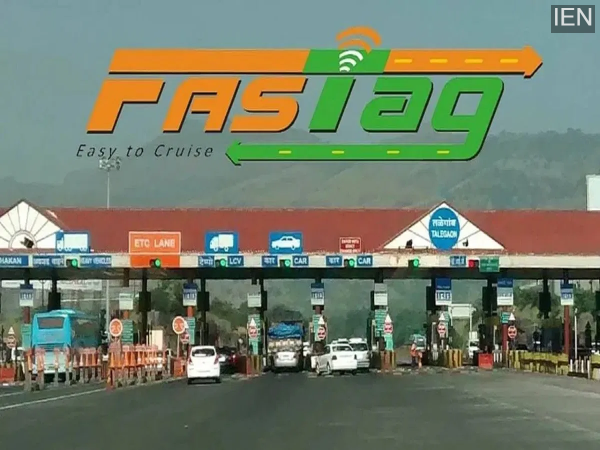
FASTag users across India will receive major relief starting 1 February 2026, as the National Highways Authority of India (NHAI) has simplified the verification process linked to FASTag issuance and maintenance. Under the new guidelines, vehicle owners will no longer be required to undergo routine KYV (Know Your Vehicle) verification repeatedly.
This decision applies not only to newly issued FASTags for cars, jeeps, and vans but also to vehicles that already have FASTags installed. The move is expected to reduce delays, paperwork, and unnecessary visits to banks and service centers, making toll payments smoother and more convenient for millions of motorists.
According to NHAI officials, several complaints were received from FASTag users who faced problems even after their tags were issued and activated. Many vehicle owners reported that despite having valid documents, their FASTags were flagged for re-verification, leading to blocked transactions and inconvenience at toll plazas.
The government stated that the primary objective of this reform is to eliminate operational hurdles that arise after FASTag activation. The new policy aims to make the system user-friendly and transparent while preventing misuse of FASTag services.
Under the revised framework, the KYV process has not been completely abolished. Instead, it has been made need-based.
KYV verification will now be conducted only in the following cases:
If there is a complaint of incorrect FASTag issuance
If misuse or fraudulent activity is suspected
If a tag is found to be loosely fixed or improperly linked
If data mismatches are reported
For regular FASTag users whose tags are functioning correctly, no fresh document submission or repeated KYV verification will be required.
This approach ensures that honest vehicle owners are not burdened with unnecessary formalities while still allowing authorities to monitor and act against misuse.
The new rules also bring changes for banks and agencies that issue FASTags. Banks will now be required to complete pre-activation validation by checking vehicle details directly from the government’s vehicle database before activating a FASTag.
This means:
Vehicle information will be verified digitally
Errors will be detected at the initial stage
Chances of wrong tag issuance will reduce
Customers will not need to run from bank to authority offices later
The system is designed to improve accuracy and prevent post-issuance complications.
NHAI believes that the updated rules will significantly improve the daily travel experience for commuters and highway users.
Key benefits include:
No repeated KYV checks for genuine users
Faster FASTag activation process
Reduced paperwork and manual verification
Less waiting time at toll plazas
Smooth and uninterrupted toll payments
Earlier, post-issuance KYV delays often caused transaction failures even when vehicles had valid registration documents. With the new mechanism, such issues are expected to be minimized.
Officials say that this reform will also help toll plazas operate more efficiently. Since most verification will now happen digitally at the pre-activation stage, toll booths will face fewer disputes and technical interruptions.
As a result, queues at toll gates are likely to reduce, improving traffic flow and saving fuel and time for travelers.
The FASTag KYV reform reflects the government’s broader push toward digital governance and ease of living for citizens. By cutting down unnecessary verification layers and introducing a complaint-based monitoring system, the authorities aim to balance convenience with security.
For millions of private car owners and commercial vehicle operators, this change means freedom from repeated document checks and smoother highway journeys.
From 1 February 2026, FASTag users will no longer have to worry about routine KYV verification. The new rule ensures that verification is conducted only when there is a valid reason, such as misuse or complaints. With mandatory pre-activation validation and reduced post-issuance checks, the FASTag system is set to become faster, smarter, and more reliable.
This reform is expected to save time, reduce frustration, and improve the overall toll payment experience across national highways in India.