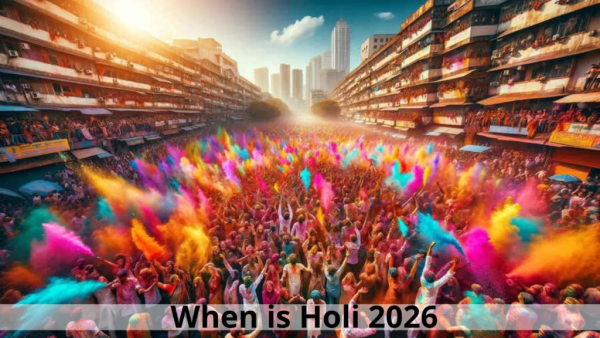
New Delhi: Holi is a festival of colours, yet its date often creates confusion. With the celebrations falling in March this year, many people find themselves asking the same question: Is Rangwali Holi on 3rd March or 4th March?
The answer lies in the two-day structure of the festival and the way dates are calculated in the Hindu Panchang.
This article clearly explains the exact date of Dulhandi in 2026 and the simple logic behind it, helping you understand not just when Holi is celebrated, but why.
Dulhandi or Rangwali Holi will be celebrated on 4 March 2026.
Holi is traditionally observed over two days, each with a different meaning. The confusion around dates arises because Hindu festivals are calculated using the Panchang, not the midnight-based calendar system.
In the Panchang, a day begins at sunrise and ends at the next sunrise. Festival dates depend on the presence of a particular tithi during this period.
Since Purnima Tithi is present during the evening of 3 March, Holika Dahan is performed that night.
The colour celebration, known as Rangwali Holi or Dulhandi, always takes place the following morning, which falls on 4 March 2026.
Holika Dahan, also called Chhoti Holi, is observed in the evening. A ritual bonfire is lit to symbolise the burning away of negativity, ego, and injustice. The ritual is rooted in the legend of Prahlad and represents the victory of devotion and truth over arrogance.
In some regions, this day is also referred to as Jalewali Holi. In parts of South India, it is observed as Kama Dahanam.
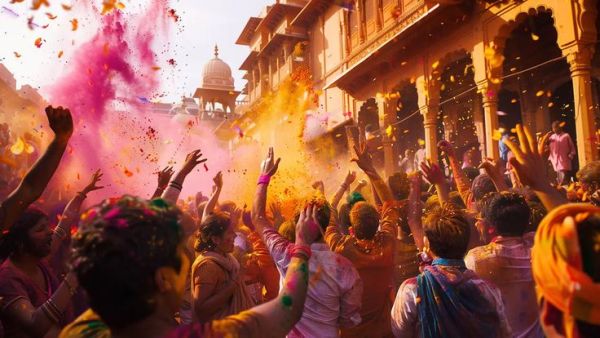
Rangwali Holi is the main celebration associated with the festival. It is celebrated in the morning with gulal, colours, and water. People visit friends and family, exchange sweets, and participate in community celebrations.
Depending on the region, this day is also known as Dulhandi, Dhulendi, or Dhuleti.
Beyond colours and celebration, Rangwali Holi represents emotional release and renewal. It is a time when social barriers soften, old disagreements are set aside, and relationships are refreshed.
In many households, the day begins with dry gulal, followed by playful colour celebrations, festive meals, and relaxed gatherings. The emphasis is on joy, inclusion, and shared experience.
Holi celebrations in the Braj region hold deep cultural and devotional significance due to their association with Lord Krishna. Towns such as Mathura, Vrindavan, Barsana, Nandgaon, Gokul, and Govardhan are known for extended Holi celebrations.
Among them, Barsana’s Lathmar Holi stands out for its ritualistic and symbolic traditions, drawing visitors from across India and abroad.
If you were unsure whether Holi in 2026 falls on 3rd March or 4th March, the answer is now clear.
Holika Dahan will be observed on Tuesday, 3 March 2026, while Rangwali Holi or Dulhandi will be celebrated on Wednesday, 4 March 2026.
Holi is remembered for its colours, but its deeper meaning lies in renewal, reconciliation, and the simple joy of coming together.
Written by: Tanya Singh, Astropatri.com. For feedback, please write to hello@astropatri.com.


