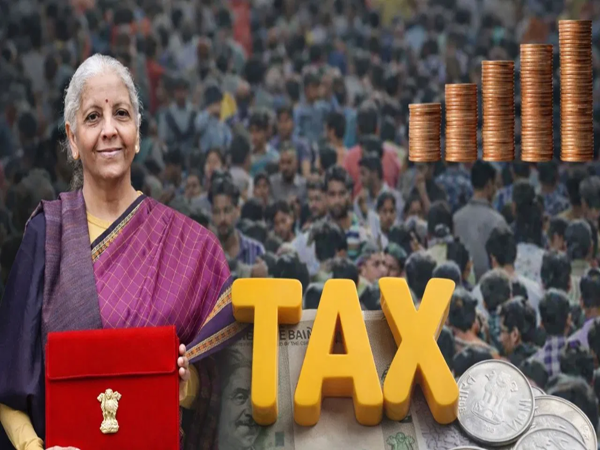
Budget 2026: In the general budget presented for the financial year 2026-27, Finance Minister Nirmala Sitharaman has played a very interesting card. During the budget speech, while the entire country was holding its breath, glued to their TV screens, hoping for changes in the tax slabs, the Finance Minister made it clear that there would be no changes to the existing income tax slabs and standard deductions. On the surface, it seems that nothing significant has happened for the common man, but several major changes are hidden within the budget documents and subtle announcements that will directly impact your financial well-being.
Even though the slabs remain the same, the entire tax ecosystem is about to change. A new Income Tax Act is set to come into effect from April 1, 2026, which will significantly simplify the rules for taxpayers. Let's understand in detail how the budget announcements will affect you.
The world of tax filing will change from April 1, 2026
The biggest announcement in the budget is regarding the new 'Income Tax Act'. The Finance Minister announced that the new law will be effective from April 1, 2026. The aim is to simplify the tax filing process so much that an ordinary citizen can file their return without any professional help. New and simpler rules will be notified soon for this purpose.
Even though the slabs haven't changed, it's important to understand the calculations under the New Tax Regime. Taxable income up to Rs. 12 lakh becomes tax-free due to the rebate under Section 87A. Additionally, salaried individuals will continue to receive a standard deduction of Rs. 75,000. In the new system, there are no separate slabs for those under 60 and those above 80; the rules are the same for everyone. However, for those who choose the Old Regime, the old slabs will continue to apply.
Foreign travel and education become cheaper.
The budget has provided major relief for the middle class and students. If you are planning to travel abroad, it will now be cheaper. The government has reduced the Tax Collected at Source (TCS) rate on foreign tour packages to a flat 2%. Previously, it ranged from 5% to 20%. Additionally, if you send money abroad for your children's education or medical treatment under the Liberalized Remittance Scheme (LRS), the TCS rate will now be only 2%, down from 5%.
Another significant relief concerns the deadline for filing returns. People often want to revise their income tax returns (ITR) due to errors. Previously, the deadline was December 31st, but this has now been extended to March 31st. This means you will now have three extra months to correct any mistakes. New Income Tax Regime for Financial Year 2026-27
Taxable Income Tax Rate
Up to ₹4,00,000 Nil
₹4,00,001 to ₹8,00,000 5%
₹8,00,001 to ₹12,00,000 10%
₹12,00,001 to ₹16,00,000 15%
₹16,00,001 to ₹20,00,000 20%
₹20,00,001 to ₹24,00,000 25%
Above ₹24,00,000 30%
Old Tax Regime for Financial Year 2026-27
1. For citizens below 60 years of age (General Citizens)
Taxable Income Tax Rate
Up to ₹2,50,000 Nil
₹2,50,001 to ₹5,00,000 5%
₹5,00,001 to ₹10,00,000 20%
Above ₹10,00,000 30%
2. For citizens aged 60 years or less than 80 years (Senior Citizens)
Taxable Income Tax Rate
Up to ₹3,00,000 Nil
₹3,00,001 to ₹5,00,000 5%
₹5,00,001 to ₹10,00,000 20%
Above ₹10,00,000 30%
3. For citizens aged 80 years and above (Super Senior Citizens)
Taxable Income Tax Rate
Up to ₹5,00,000: Zero (Nil)
₹5,00,001 to ₹10,00,000: 20%
Above ₹10,00,000: 30%
Changed Rules for Investors
This budget has been a mixed bag for investors. The rules regarding Sovereign Gold Bonds (SGBs) have been tightened. If you buy gold bonds from the secondary market, the profits earned at maturity will now be taxed. However, the tax exemption will continue for original bonds purchased directly from the government.
The rules for share buybacks by companies in the stock market have also changed. Now, the income from share buybacks will be considered capital gains for the shareholder and taxed accordingly. Strict tax provisions have also been introduced for promoters to prevent tax evasion. Additionally, trading in the futures and options (F&O) market has become more expensive due to an increase in the Securities Transaction Tax (STT).
On the other hand, the process has been simplified for Non-Resident Indians (NRIs) buying property in India. Now, buyers will not need to obtain a TAN number; they can deposit TDS using their PAN.
Changes from Crypto to Foreign Assets
The government's stance on the digital world and undisclosed assets is clear. Heavy penalties have been introduced for crypto companies that conceal transaction information. Meanwhile, a one-time disclosure scheme has been introduced for small taxpayers who have not disclosed foreign assets. Under this scheme, students or young professionals can avoid legal action by paying a 30% tax and penalty.
Disclaimer: This content has been sourced and edited from TV9. While we have made modifications for clarity and presentation, the original content belongs to its respective authors and website. We do not claim ownership of the content.