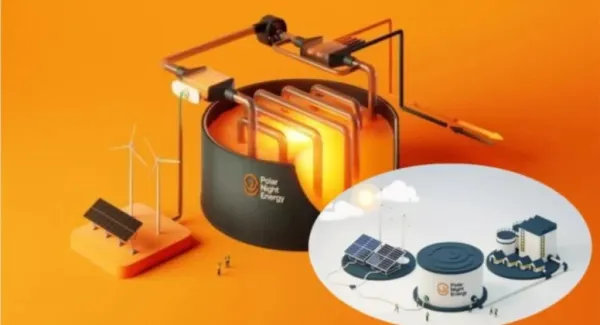
The world is currently facing the dual challenges of energy crisis, climate change and increasing pollution. In such a situation, every country is looking for such technology which is not only affordable but also proves to be sustainable in the long run. Amidst this discovery, a unique and very simple looking technology has suddenly come into global discussion –sand battery technology. This technology, developed by a cleantech startup in Finland, is capable of storing energy for weeks and months using a common substance like sand.
The combination of sand and batteries may seem strange at first glance, but from a scientific point of view the idea is extremely revolutionary. This technology neither depends on lithium nor any rare metal. This is why experts are considering it as the energy storage system of the future.
sand battery technology Works on a completely different principle from conventional batteries. While lithium-ion batteries store electricity as chemical energy, this technology heat (heat energy) Stores as.
When solar energy or wind energy generates more electricity than required, the same electricity is used to heat the sand. This heat is stored inside sand enclosed in a large, insulated steel silo. The special thing is that sand can retain its heat for a long time even after being heated to 500 to 800 degrees Celsius.
This simple but effective process sand battery technology What makes it different from other energy storage systems.
According to the company, sand battery technology By using it, energy expenditure in industrial units can be reduced by up to 70%. Today, oil and gas are used extensively in factories to generate steam and heat, which is expensive and also causes pollution.
Record decline in carbon emissions
This technology can reduce carbon emissions by up to 90%. Industrial heating is a major source of pollution in the world, and sand battery technology Offers a direct solution to this problem.
sand battery technology It is not limited to factories only. It can be adopted on a large scale and used in entire cities. This technology is proving useful for ‘district heating’ in cold countries.
In a district heating system, hot water or steam from a central plant is delivered through pipes to homes and offices. The heat released from sand batteries can make this work very cheap and environment-friendly.
The vast majority of industrial heat used in the world today comes from coal, oil and gas. This not only increases costs but also causes huge harm to the environment. sand battery technology Can reduce this dependence.
The company claims that through this system, it is possible to save millions of dollars in the long run. Additionally, this technology can also help countries achieve their climate goals.
for a country like India sand battery technology Can prove to be very important.
While lithium batteries require rare and expensive metals, sand batteries are based on sand. Sand is available in abundance in India, making this technology economical.
There is immense potential for solar energy in India. Surplus solar electricity generated during the day sand battery technology It can be stored for a long time and can be used at night or in times of need.
The system is much easier to manufacture and maintain than lithium batteries, making it possible to use in both rural and industrial areas.
Experts believe that sand battery technology Power alone is not a complete solution to the crisis, but it is definitely a big step towards energy storage. Especially its contribution to industrial heating and urban heating could be revolutionary.
If this technology is adopted on a large scale in the coming years, it will not only reduce energy costs but can also become a strong weapon in the fight against pollution.
made from something as simple as sand sand battery technology This proves that the biggest discoveries of the future are not always complicated. With the right thinking and scientific approach, even common things can become extraordinary solutions. Energy saving, environmental protection and cost reduction – this technology has brought a new ray of hope on all three fronts.