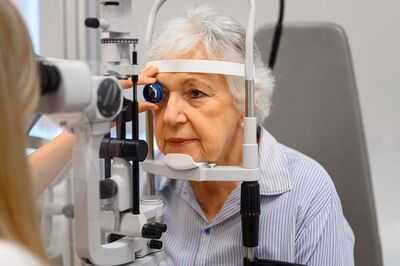
UK scientists have discovered how an everyday drug for diabetes could treat the most common cause of blindness in the western world - a condition recently highlighted by sufferer Dame Judi Dench. Age-related macular degeneration (AMD) is a leading cause of vision loss in the over 50s, damaging the macula - a small area in the centre of the retina at the back of the eye, responsible for sharp and central vision.
But researchers from the University of Liverpool have found that taking metformin, an everyday medicine for diabetes, was associated with less progression of AMD. People with diabetes over the age of 55 and taking metformin were 37 percent less likely to develop the intermediate stage of AMD over a five year period - compared to those not taking metformin.
Dr Nick Beare, an eye doctor who led this research, said: "Most people who suffer from AMD have no treatment, so this is a great breakthrough in our search for new treatments.
"What we need to do now is test metformin as a treatment for AMD in a clinical trial. Metformin has the potential to save many people's sight."
AMD eventually causes the light-sensitive tissue to die off (geographic atrophy, a form of 'dry' AMD) or be damaged by abnormal blood vessel growth ('wet' AMD).
Intermediate and advanced AMD affects 10-15% of people over 65 years of age (1.1 to 1.8 million people in the UK), and is the commonest cause of blindness in high-income countries.
The staggering annual cost of AMD is estimated to be £11.1billion in the UK alone.
Geographic atrophy has no treatment in the UK and Europe, while treatments for wet AMD are expensive and unpleasant - such as repeated injections into the eye.
The research from the University of Liverpool used pictures taken of the eyes of 2,000 people attending the routine diabetic eye disease screening programme in Liverpool over 5 years.
The researchers assessed whether AMD was present on the photographs and how severe it was, and then compared those taking metformin and those who were not.
They also adjusted for factors which might bias the result such as age, sex, and duration of diabetes.
A potential benefit from metformin in AMD has been suspected before, but this is the first study to grade AMD from eye photographs.
Previous studies on metformin have used secondary information on AMD such as GP diagnostic codes, or insurance claims in the US.
Dame Judi Dench, 91, recently described her sight decline caused by age-related macular degeneration as "crushing".
The beloved actress, first diagnosed with AMD in 2012, revealed in a candid interview with the Radio Times that her vision has deteriorated to the point where she can no longer see the television.
"Well, I miss seeing Clive Myrie doing Mastermind, but I can hear the questions," Dame Judi shared, underscoring the personal impact of her condition.
Her continued openness about AMD has consistently drawn vital public attention to the eye disease.

Denise Voon, a clinical adviser at The College of Optometrists, provided further explanation on what age-related macular degeneration entails, outlining its different forms and the key symptoms individuals should be aware of.
What is age-related macular degeneration?
There are two main types of AMD.
"There's dry AMD and wet AMD, and although they fall under the same umbrella, they are quite distinctive," explains Voon. She highlights that dry AMD is the most common type.
"The cells at the back of the eye and the retina gradually degenerate with age and can lead to deposits called drusen," explains Voon.
While a few small drusen are a natural sign of ageing, numerous small drusen, or larger ones, can be a sign of progression towards AMD, according to The College of Optometrists' website.
"Dry AMD is usually very slow progressing and many people don't notice any issues for years," says Voon. "A lot of people have quite near normal vision, but if dry AMD gets a lot worse, it can lead to visual problems."
However, wet AMD tends to develop and impact your vision more rapidly.
"Wet AMD is much less common, but it can impact your vision quite a bit more," notes Voon. "It occurs when abnormal blood vessels grow into the retina and then they leak, and they can cause a very sudden and rapid loss of vision.
"What a lot of people say is that they went to bed and seemed absolutely fine and then when they woke up, they couldn't see."
Who is more likely to be affected?
The older we are, the greater our risk of developing the condition. Around one in every 200 people has AMD at 60, according to Macular Society.
There are also several other risk factors.
"If you've got family history of it, that can be a risk factor," says Voon. "Obesity and having an unhealthy diet can also increase your risk, but the biggest risk factor for AMD is smoking."
What are the main early signs to look out for?
"What people often first notice, and this is both the same with wet and dry AMD, is that the straight lines can appear distorted or bent," says Voon. "They look at a window frame and say hang on, why does that look bent?"
Smudges and bright light sensitivity is another common sign.
"They might also notice spots or smudges in their central vision and bright lights may become much more uncomfortable," says Voon. "When you have AMD it might take your eyes longer to adjust when moving from a dark room from a light room.
"In addition, colours can look faded but distortion and not being able to see in your central vision are usually the most common symptoms."
* The research paper is published in the BMJ Open Ophthalmology: http://dx.doi.org/10.1136/bmjophth-2025-002339