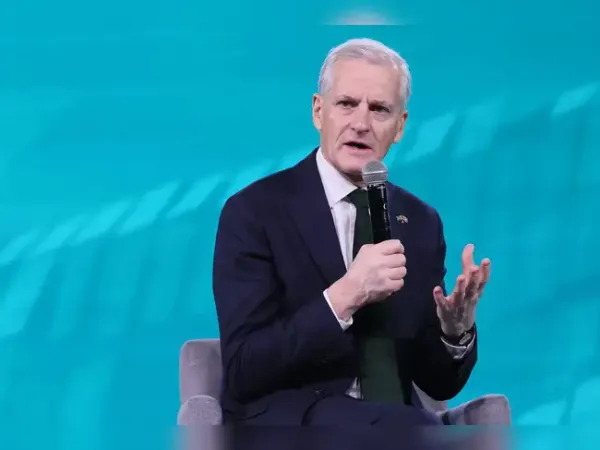
Norwegian Prime Minister Jonas Gahr Støre has delivered one of the strongest public articulations yet of why Norway sees NATO not as charity, but as mutual self-interest. In remarks shared publicly this week, Støre said he told US President Donald Trump while looking directly in his “eyes” that Russian nuclear weapons, the world’s largest, sit barely 100 kilometres from Norway’s border. He asserted that those nukes are not aimed at Norway, instead the United States is on their radar.
The comments were widely interpreted as a reference to Russia’s Northern Fleet and nuclear submarine bases on the Kola Peninsula, a region long regarded by Western defence planners as one of the most strategically dangerous places on earth.
Støre’s most pointed claim was that Norway actively monitors Russian nuclear submarine activity and shares that intelligence with the United States. This assertion aligns with long-established, publicly acknowledged defence cooperation between Oslo and Washington.
“I said this to him, looked him in the eyes and said, it's important for a Norwegian Prime Minister to see a US president in the eyes and say, 100 kilometers from my border is the world's largest nuclear arsenal. And it is not directed against me, Mr. President, but against you. And it makes a difference that we monitor those submarines,” stated Støre in his speech.
Western defence analysts have long described Norway as NATO’s “eyes and ears” in the High North. Intelligence sharing between Norway, the US, and other NATO allies is not secret, it is a foundational pillar of alliance security in the Arctic and North Atlantic.
Støre’s argument was blunt: this intelligence work directly protects the United States, not just Norway.
“I just have to say, it rings completely false when the American president stands in Davos saying that we have given everything to NATO and NATO gives nothing in return. It is wrong,” he mentioned in the speech.
Calling that framing “plain wrong,” Støre said collective security is not charity, but mutual self-interest. Norway’s contribution, he argued, is not measured only in defence spending percentages, but in strategic risk exposure and intelligence value.
Few NATO countries sit closer to a rival’s nuclear forces. Fewer still invest so directly in monitoring them.
He said Norway will strengthen its national defence, rebuild and expand naval capabilities and accept that there will be “less more” in other sectors as defence spending rises.
This reflects a broader European trend following Russia’s invasion of Ukraine, with even traditionally low-tension states re-prioritising military readiness.
Norway has already committed to meeting and exceeding NATO’s 2% defence spending target, with particular emphasis on Arctic operations, naval forces, and undersea warfare.
According to intelligence reports, this region hosts a major part of Russia’s naval nuclear deterrent, including strategic missile submarines that are capable of worldwide strike.
These submarines, part of Russia’s Northern Fleet, represent a key pillar of Moscow’s nuclear triad. While the exact number and details of deployed nuclear weapons are classified, Russia maintains a substantial fleet of nuclear-armed ballistic missile submarines (SSBNs) and attack submarines in the Arctic.
In that sense, Støre was not issuing a threat, but reminding Washington that deterrence begins far from American shores, and that Norway absorbs real risk to make that deterrence work.
The comments were widely interpreted as a reference to Russia’s Northern Fleet and nuclear submarine bases on the Kola Peninsula, a region long regarded by Western defence planners as one of the most strategically dangerous places on earth.
Støre’s most pointed claim was that Norway actively monitors Russian nuclear submarine activity and shares that intelligence with the United States. This assertion aligns with long-established, publicly acknowledged defence cooperation between Oslo and Washington.
“I said this to him, looked him in the eyes and said, it's important for a Norwegian Prime Minister to see a US president in the eyes and say, 100 kilometers from my border is the world's largest nuclear arsenal. And it is not directed against me, Mr. President, but against you. And it makes a difference that we monitor those submarines,” stated Støre in his speech.
Western defence analysts have long described Norway as NATO’s “eyes and ears” in the High North. Intelligence sharing between Norway, the US, and other NATO allies is not secret, it is a foundational pillar of alliance security in the Arctic and North Atlantic.
Støre’s argument was blunt: this intelligence work directly protects the United States, not just Norway.
NATO, Trump, and the “charity” accusation
Støre’s remarks appear aimed at a recurring claim made by Donald Trump that NATO allies, particularly in Europe, take more from the alliance than they give.“I just have to say, it rings completely false when the American president stands in Davos saying that we have given everything to NATO and NATO gives nothing in return. It is wrong,” he mentioned in the speech.
Calling that framing “plain wrong,” Støre said collective security is not charity, but mutual self-interest. Norway’s contribution, he argued, is not measured only in defence spending percentages, but in strategic risk exposure and intelligence value.
Few NATO countries sit closer to a rival’s nuclear forces. Fewer still invest so directly in monitoring them.
Norway’s defence pivot: less welfare, more security
In perhaps the most politically significant part of his statement, Støre acknowledged the domestic cost of this strategic reality.He said Norway will strengthen its national defence, rebuild and expand naval capabilities and accept that there will be “less more” in other sectors as defence spending rises.
This reflects a broader European trend following Russia’s invasion of Ukraine, with even traditionally low-tension states re-prioritising military readiness.
Norway has already committed to meeting and exceeding NATO’s 2% defence spending target, with particular emphasis on Arctic operations, naval forces, and undersea warfare.
Russia’s northern fleet and Norway’s role
The reference to “world’s largest nuclear arsenal” relates to Russia’s strategic nuclear forces, of which a significant portion is based on the Kola Peninsula, right across the Norwegian border.According to intelligence reports, this region hosts a major part of Russia’s naval nuclear deterrent, including strategic missile submarines that are capable of worldwide strike.
These submarines, part of Russia’s Northern Fleet, represent a key pillar of Moscow’s nuclear triad. While the exact number and details of deployed nuclear weapons are classified, Russia maintains a substantial fleet of nuclear-armed ballistic missile submarines (SSBNs) and attack submarines in the Arctic.
Is Støre implicitly warning about Russia?
While Støre did not explicitly accuse Russia of preparing an attack, the strategic implication is unmistakable. His reference to nuclear weapons “not directed at Norway, but at you” underscores a reality often glossed over in political debates: Norway’s security role exists primarily because of Russia’s nuclear posture toward the US.In that sense, Støre was not issuing a threat, but reminding Washington that deterrence begins far from American shores, and that Norway absorbs real risk to make that deterrence work.