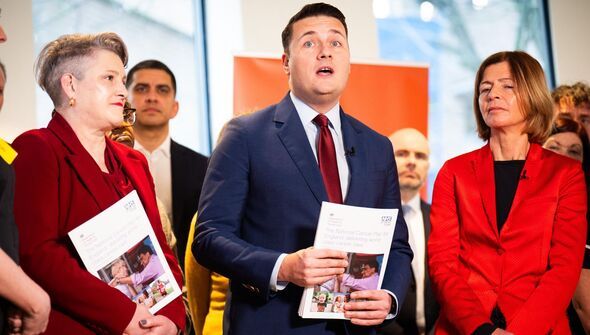
Every cancer patient will be given a Personalised Cancer Plan to help them cope with the psychological toll of a diagnosis in a major victory for the Express Cancer Care campaign. Announced in Labour's National Cancer Plan today, the plans will cover all aspects of a patient's life including their physical, mental and social needs. Health Secretary Wes Streeting, who was treated for kidney cancer in 2021, said the change marked "the biggest shift in how we support cancer patients in a generation". He added: "If you've ever sat in a waiting room dreading what comes next or laid awake at 3am wondering how you'll pay the bills while you're off work for treatment, you'll know that cancer doesn't just attack your body - it takes over your whole life.
"I was fortunate. I had a supportive employer, a family who could rally around me, and the financial security to focus on getting better. But I know that's not everyone's reality - and it shouldn't be based on luck. For too long, we've treated the tumour and left patients to figure out the rest on their own. That ends now."
Express reporter Robert Fisk has fought for better NHS mental health support for cancer patients for more than a year, after witnessing how too many people were falling through the cracks during his own treatment for stage four bowel cancer.
He highlighted how NHS holistic needs assessments - questionnaires that identify a patient's physical, emotional, social, spiritual, and practical concerns - were not being used consistently.
And he led a coalition of 17 cancer charities and three survivors who wrote to Mr Streeting ahead of the plan's publication. Their letter told how the Express had uncovered cases of patients taking their own lives after cancer treatment.
From this year, all patients will be given personalised needs assessments at the point of diagnosis which will be used to develop a Personalised Cancer Plan.
They will also receive an end-of-treatment summary to end the cliff edge many face when chemotherapy or surgery finishes, providing clear guidance on warning signs, who to call with concerns, and where to find ongoing support like physiotherapy, counselling or local cancer groups.
Labour's plan said the documents will help patients and clinicians understand the support needed, much of which will be accessed through new neighbourhood health services.
The change was welcomed by charities including Macmillan Cancer Support, which said the personalised assessments "will make a real difference".
Macmillan chief executive Gemma Peters said: "Someone in the UK is now diagnosed with cancer at least every 75 seconds. This National Cancer Plan is an opportunity to ensure every one of them gets the support they need from the moment they hear the words, 'You have cancer'."
Dame Laura Lee, chief executive of Maggie's, said: "A cancer diagnosis knocks the ground from under you. People come into Maggie's centres with the weight of the world on their shoulders, not only worried about treatment and its physical side effects but the wider impact of cancer on their work and finances, relationships, and much more.
"It is hugely encouraging that the government has recognised the toll cancer takes on every aspect of someone's life, which can continue long after treatment ends, and we welcome the new measures that will ensure everyone receives tailored support covering everything from exercise and employment to mental health and nutrition."
Professor Peter Johnson, NHS England's national clinical director for cancer, said a diagnosis "affects every part of your life and the lives of the people around you which is why the NHS is committed to supporting people with cancer in every possible way, from the best treatment and clear information through to psychological and practical help".
He added: "A personalised cancer plan will bring all this together, helping people face cancer with the right care, at the right time, in the right way."
Other key points from the plan include a pledge to increase five-year survival rates from 60% to 75% by 2035. Some £2.3 billion will be invested in scanners, digital technology and automated testing to deliver 9.5 million additional tests by 2029.
The families of children with cancer will also be able to apply for financial support with travel costs from a £10 million-a-year fund. In a foreword to the National Cancer Plan, Mr Streeting recalled the moment he was told he had cancer.
He wrote: "I still remember being sat in my car on a cold, overcast day, with the snow about to fall, when my urologist called to say that I had kidney cancer and my world turned upside down.
"Nothing quite prepares you for it. It was like time stood still as I felt the rising sense of fear and foreboding that all cancer patients describe."
Wes Streeting has listened - now we must see real change in our NHSBy Robert Fisk
Happiness isn't an emotion I'm used to feeling, as someone with stage 4 incurable bowel cancer who doesn't know when will be the last day I wake up. Usually, I scream while I'm in the shower as a way to get out all of the internal rage I'm feeling about going to my grave early. But today I'm allowing myself a scream of joy as it seems that Wes Streeting has listened to the key messages of the Daily Express's Cancer Care campaign. Cancer is the hardest thing that most people will ever go through in their lifetime, with mental health issues a core side effect of the devastating disease.
But for too long cancer teams have failed to acknowledge this and have instead preferred to tackle the easy side effects, like fatigue, diarrhoea, and rashes caused by immunotherapy. With the support of readers like you and charities, and campaigners across the land, we have highlighted how the toughest part of cancer is coping with the mental health aspects.
It's great to have cancer experts who know exactly what combination of chemotherapy drugs to give on what day.
But why aren't medical teams helping their patients deal with the 3am thoughts of despair where they wonder whether every ache and pain is due to the cancer spreading?
Why aren't the medical teams referring people to charities and community organisations to help them get support for loneliness, and to support groups full of like-minded people who can help them when they are struggling?
These questions end today. For more than a year, the Daily Express has been calling for all cancer patients to have mental health support both during and after treatment.
And, in measures revealed at a Maggie's Centre this morning, the Health Secretary Wes Streeting shows he has listened.
For the first time, he says every patient will get a personalised cancer plan that goes beyond treatment and diagnosis and will cover the full impact of cancer on their life - from anxiety and fatigue to diet and getting back to work.
It's vital that medical teams don't just see this as a one-off checkbox exercise. It must be regularly updated as the impact that cancer has on a patient's life will change throughout their treatment, just like the disease is changing inside them.
I won't end treatment until I'm in an overpriced wooden box six feet under, but thankfully, many cancer patients do end treatment by getting the all-clear and getting on with their lives.
But once the feelings of joy and relief fade away it becomes clear just how much their lives have been permanently changed by cancer. This is why the Cancer Care campaign has always stressed the importance of support after treatment.
So it's worth an extra scream of joy as the Health Secretary has recognised that this is an issue. And today he pledged that there will be help for survivors to get them through the psychological toll that cancer has had on their lives.
Now is the time for hospitals to step up and ensure the measures outlined today actually happen for their patients.
Personalised cancer plans can't just be another NHS thing that's seen as nice to have but doesn't happen. They need to be in all cancer hospitals as soon as possible, to help people with cancer live the best lives they can.