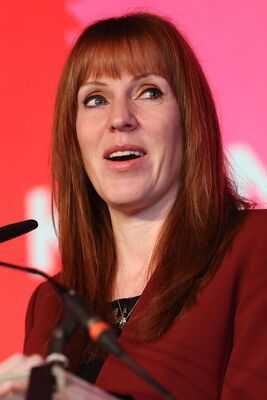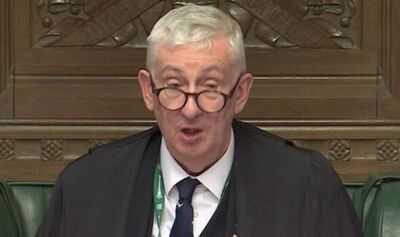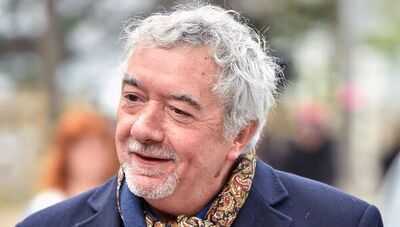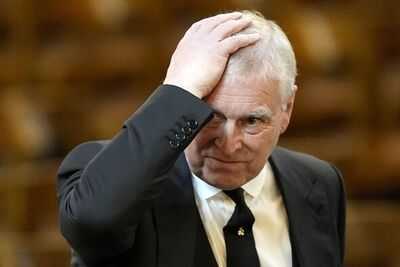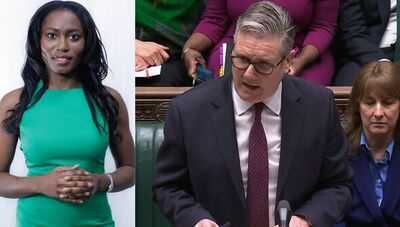
Watching Prime Minister's Questions, you could almost see Keir Starmer wishing the ground would open beneath him. Every prime minister has uncomfortable Wednesdays, but this one felt different. The discomfort wasn't just political theatre. It was the look of a man forced to answer for a mess very much of his own making.
Because however serious the allegations now swirling around Peter Mandelson about his past relationship with Jeffrey Epstein, the question in the Commons chamber was simpler: Why on earth did Starmer bring Mandelson back in the first place? Kemi Badenoch didn't need to overplay it. She simply threw Starmer's own words back at him. Mandelson, the Prime Minister now says, "betrayed party and country" by allegedly passing sensitive information during the financial crisis.
Yet this was the same Mandelson Starmer appointed as ambassador to Washington, one of the most sensitive diplomatic postings Britain has to offer. Watching the PM try to square that circle was painful. It felt like seeing someone swing repeatedly at a target that kept turning out to be his own reflection.
Starmer's defence was that he did not know the full extent of Mandelson's ties to Epstein. But that simply doesn't hold up. The association was already public knowledge, with reports circulating that Mandelson had stayed at Epstein's properties after his conviction.
Journalists had raised concerns well before the appointment. And, as Badenoch reminded the PM, Sir Keir was publicly celebrating Mandelson's return before vetting had even finished. At some point, no matter how serious the potential criminal implications, this stops being about Mandelson and becomes a question of Starmer's judgement.
Mandelson's record hardly required investigative digging to raise alarm bells either. Long before Epstein entered the picture, his career was already littered with controversy. He resigned from government in 1998 over an undisclosed loan from fellow minister Geoffrey Robinson used to buy a house. Then two years later, he was forced out again after intervening in the British passport application of an Indian billionaire whose company had donated to Labour.
Most politicians are grateful if they survive one scandal. Mandelson managed two departures in disgrace and still kept being wheeled back whenever Labour's leadership ran short of operators who could get things done. Clearly, Labour is so bereft of talent that they felt the need to resurrect the carcass of Mandelson's political career - dragging back a figure whose record should have ruled out a return to high office long ago.
The latest allegations only deepen the sense that this appointment was reckless from the start. Emails now under scrutiny appear to show Mandelson sharing market-sensitive information during the financial crisis with Epstein, including discussions around bailout decisions and banking policy. There are also claims he lobbied internally on issues affecting bankers' bonuses while Epstein and associates pressed from the outside.
The case is now with the police. And if proven true, it would mean a staggering breach of trust at a time when governments were desperately trying to keep both markets and public confidence from falling apart.
But again, none of this was a secret. Mandelson's attraction to wealthy benefactors and his habit of drifting too close to power and money were already part of his political reputation. How else did he earn the nickname "the Prince of Darkness"? It was all there in plain sight.
And his appointment fits a wider pattern. Starmer's leadership has already made questionable personnel calls, most notably the chaotic Sue Gray episode.
Then there are Labour ministers' infamous rows over gifts and freebies while lecturing everyone else about standards in public life. And who can forget Angela Rayner - the former deputy PM who could hardly pass up an opportunity to sully the news cycle with her expletive-laden outbursts about bloodsucking, elitist Tories, only to find herself embroiled in controversy over her own property tax affairs.
That is why this week's PMQs felt so revealing. The Prime Minister was not really being asked to defend Mandelson. He was being asked to defend his own judgement, and his answers suggested a leader caught between reliance on political fixers and the common-sense instinct most people reached long ago.
Mandelson's long and improbable return to public life may finally be over. But the political damage now sits squarely with the Prime Minister, who decided bringing him back was a good idea. And watching Starmer squirm under questioning, you couldn't help thinking that, this time, his opponents barely needed to land a blow.
He had already done the job himself.