


When Trump slapped a 50% tariff on Indian imports last August, a workaround was suggested from some quarters - double down on tourism. The logic was sound: tourism is one sector that reliably pulls in forex, generates employment at scale and cushions external shocks. In theory, it offered India a pathway to offset at least part of the damage wreaked by Trump tariffs.
In practice, however, the idea never took off. No special marketing push followed. No bold campaign was rolled out. And with Trump tariffs now pared down to a more manageable 18%, any such 'proposal' for a push for tourism is unlikely to see the light of day.
Persistently low levels of foreign tourist arrivals should set off warning bells in New Delhi. With about 7 mn foreign visitors between January and October 2025 -roughly 11% below the corresponding pre-pandemic period - India remains an outlier in global tourism recovery.
Much of Europe has not only shaken off the pandemic shock but has moved decisively beyond it. Tourism in West Asia, led by Dubai and Doha, has surged well past pre-Covid levels.
What India urgently needs is an aggressive tourism campaign overseas - one that moves decisively beyond the old Incredible !ndia tagline 'selling' the charms of India still framed by Taj Mahal, dancers in 'ethnic costumes' and snake charmers. Today, India's tourism story must be pitched as an experiential journey of wonder, comfort and 'ease of visiting'. The moment calls for a new brand and a fresh approach combining traditional strengths with new ideas, and speaking directly to the young, global, digitally-native traveller.
In such an exercise, the right slogan can be a catalyst. Brand fatigue is a familiar phenomenon that pushes companies to refresh names, logos and identities to keep pace with changing times. Country tourism taglines are no different. However successful they may have been at one point, slogans eventually outlive their utility, prompting agile nations to let go of them and embrace new ones.
Two years ago, ahead of the Paris Olympics, Taiwan did precisely that. It retired its popular 'Heart of Asia' tagline and unveiled a refreshed identity, 'Taiwan: Waves of Wonder', complete with a new logo and a theme song. Last year, Australia gave a new twist to its shout-out to tourists with 'Come and Say G'Day'.
For years, Bhutan was known to the outside world for its 'Happiness is a Place' line, paired with the now-familiar blue poppy logo. But in 2022, as the pandemic began to recede, the country reopened its doors to foreign visitors with a higher sustainable development fee - and a brand-new slogan: 'Bhutan: Believe'.
Denmark also used the pandemic pause to rethink its tourism pitch. Long marketed as the 'Happiest Place on Earth', it recast itself as 'The Land of Everyday Wonder', a tagline designed to showcase the country's relaxed, informal way of life. Earlier still, China refreshed its tourism identity to blend its civilisational heritage with a modern, confident nation, adopting the slogan, 'China Like Never Before'.
If the recently tabled Economic Survey and budget documents are anything to go by, India's policymakers, too, see tourism as an important pillar of the country's growth story. The survey underscores the sharp rise in domestic and NRI travel, while candidly acknowledging the lacklustre performance of foreign tourist arrivals, partly attributing it to 'growth weakness and political turmoil in key source destinations'.
Nirmala Sitharaman also devoted a significant portion of her budget speech on Sunday to outline GoI's tourism push, announcing schemes aimed at promoting heritage and cultural tourism, developing Buddhist circuits, creating hubs for medical-value tourism, and providing incentives to indigenise manufacturing of seaplanes.
There is little doubt about intent to develop tourism. The problem is approach and execution that's stuck in '80s-style 'Bharat Ek Khoj' mode. Not only is the approach to bringing tourism into the thick of the 2020s still fragmented, but it has very little marketing firepower to address the sector's weakest link - sluggish return of foreign visitors to pre-pandemic levels, never mind beyond. That gap can't be bridged without a decisive reset in branding.
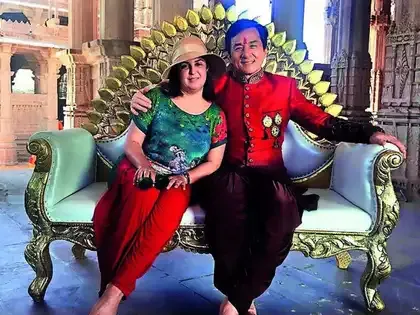
In an age of reels, rampant social media and influencers, 'storylines' can be publicity hooks. Celebrity endorsements with 'namastes' cut no ice. Strategies like using celebs from the countries of tourist origin to 'sell' India - say, Jackie Chan in Konark, Billie Eilish in the Andamans, or Novak Djokovic in Kerala to draw Chinese, American and European tourists respectively - can be fleshed out.
To expect tourists to come to India simply by dint of it being 'Incredible', or for its rich culinary heritage, is to be naive. India must get smart and creative to tap its much-untapped tourism potential.
In practice, however, the idea never took off. No special marketing push followed. No bold campaign was rolled out. And with Trump tariffs now pared down to a more manageable 18%, any such 'proposal' for a push for tourism is unlikely to see the light of day.
Persistently low levels of foreign tourist arrivals should set off warning bells in New Delhi. With about 7 mn foreign visitors between January and October 2025 -roughly 11% below the corresponding pre-pandemic period - India remains an outlier in global tourism recovery.
Much of Europe has not only shaken off the pandemic shock but has moved decisively beyond it. Tourism in West Asia, led by Dubai and Doha, has surged well past pre-Covid levels.
What India urgently needs is an aggressive tourism campaign overseas - one that moves decisively beyond the old Incredible !ndia tagline 'selling' the charms of India still framed by Taj Mahal, dancers in 'ethnic costumes' and snake charmers. Today, India's tourism story must be pitched as an experiential journey of wonder, comfort and 'ease of visiting'. The moment calls for a new brand and a fresh approach combining traditional strengths with new ideas, and speaking directly to the young, global, digitally-native traveller.
In such an exercise, the right slogan can be a catalyst. Brand fatigue is a familiar phenomenon that pushes companies to refresh names, logos and identities to keep pace with changing times. Country tourism taglines are no different. However successful they may have been at one point, slogans eventually outlive their utility, prompting agile nations to let go of them and embrace new ones.
Two years ago, ahead of the Paris Olympics, Taiwan did precisely that. It retired its popular 'Heart of Asia' tagline and unveiled a refreshed identity, 'Taiwan: Waves of Wonder', complete with a new logo and a theme song. Last year, Australia gave a new twist to its shout-out to tourists with 'Come and Say G'Day'.
For years, Bhutan was known to the outside world for its 'Happiness is a Place' line, paired with the now-familiar blue poppy logo. But in 2022, as the pandemic began to recede, the country reopened its doors to foreign visitors with a higher sustainable development fee - and a brand-new slogan: 'Bhutan: Believe'.
Denmark also used the pandemic pause to rethink its tourism pitch. Long marketed as the 'Happiest Place on Earth', it recast itself as 'The Land of Everyday Wonder', a tagline designed to showcase the country's relaxed, informal way of life. Earlier still, China refreshed its tourism identity to blend its civilisational heritage with a modern, confident nation, adopting the slogan, 'China Like Never Before'.
If the recently tabled Economic Survey and budget documents are anything to go by, India's policymakers, too, see tourism as an important pillar of the country's growth story. The survey underscores the sharp rise in domestic and NRI travel, while candidly acknowledging the lacklustre performance of foreign tourist arrivals, partly attributing it to 'growth weakness and political turmoil in key source destinations'.
Nirmala Sitharaman also devoted a significant portion of her budget speech on Sunday to outline GoI's tourism push, announcing schemes aimed at promoting heritage and cultural tourism, developing Buddhist circuits, creating hubs for medical-value tourism, and providing incentives to indigenise manufacturing of seaplanes.
There is little doubt about intent to develop tourism. The problem is approach and execution that's stuck in '80s-style 'Bharat Ek Khoj' mode. Not only is the approach to bringing tourism into the thick of the 2020s still fragmented, but it has very little marketing firepower to address the sector's weakest link - sluggish return of foreign visitors to pre-pandemic levels, never mind beyond. That gap can't be bridged without a decisive reset in branding.
In an age of reels, rampant social media and influencers, 'storylines' can be publicity hooks. Celebrity endorsements with 'namastes' cut no ice. Strategies like using celebs from the countries of tourist origin to 'sell' India - say, Jackie Chan in Konark, Billie Eilish in the Andamans, or Novak Djokovic in Kerala to draw Chinese, American and European tourists respectively - can be fleshed out.
To expect tourists to come to India simply by dint of it being 'Incredible', or for its rich culinary heritage, is to be naive. India must get smart and creative to tap its much-untapped tourism potential.





Shantanu Nandan Sharma