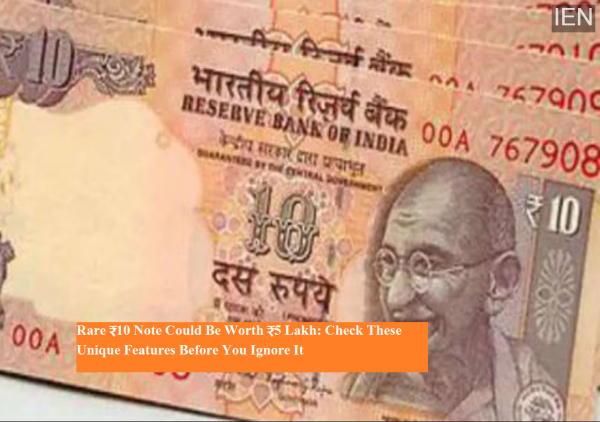
Most people treat old currency notes as useless paper and either spend them quickly or keep them forgotten in drawers. However, in the world of currency collectors and numismatics, certain rare notes can be worth a fortune. Recently, a particular ₹10 Indian currency note has caught massive attention, with collectors reportedly willing to pay up to ₹5 lakh for the right piece.
This surprising valuation depends entirely on specific features, not on every ₹10 note you come across. If you own old currency notes, this might be the perfect time to look at them more carefully.
Not all ₹10 notes have high resale value. Only those with rare characteristics attract serious collectors. Here are the key features that can dramatically increase a note’s worth:
Currency notes with unique serial numbers are in extremely high demand. Notes carrying numbers like 786, repeated digits (000001, 111111), or palindromic patterns are often considered lucky and collectible. Among them, the 786 serial number is especially popular, and buyers may offer exceptionally high prices for it.
₹10 notes issued during the British colonial era or immediately after India’s independence are among the most valuable. Notes featuring early designs such as the Ashoka Pillar, or outdated fonts and layouts no longer in circulation, are considered rare historical artifacts.
Some older ₹10 notes had a peacock illustration on the reverse side. These notes are no longer printed, and collectors actively search for them. A well-preserved peacock-design note can fetch a premium price in auctions.
Notes with printing mistakes—such as missing text, misaligned images, double prints, or incorrect colors—are called error notes. Since such mistakes are rare, collectors value them highly, sometimes even more than standard rare notes.
If you believe you own a rare ₹10 note, you don’t need to visit collectors in person. Several online platforms allow you to connect directly with buyers:
Register as a seller on platforms like OLX, Quikr, or eBay
Upload clear photos of both sides of the note
Mention all unique features clearly (serial number, year, condition, errors)
Interested buyers will contact you directly, allowing you to negotiate the price
In many cases, bidding wars between collectors can significantly increase the final selling price.
Due to rising interest, online scams related to old currency trading have also increased. The Reserve Bank of India (RBI) has clearly stated that it does not conduct auctions or charge fees for buying or selling old notes.
Never pay registration or processing fees to unknown individuals
Avoid sharing personal banking details
Use trusted platforms and verify buyers carefully
That forgotten ₹10 note tucked away in an old wallet or family locker might be far more valuable than you think. Rare currency is not just money—it’s history, culture, and prestige rolled into one. Before dismissing old notes as worthless, take a closer look. You may be holding a hidden treasure capable of changing your financial fortune.